Wize University Physiology Textbook > Immunology
Introduction to the Immune System
Popular Courses
MCAT
General Course
DAT
General Course
Intro to Physiology
University Study Guides
PHYSIOL 1021
Western University
PHYSIOL 2130
Western University
Intro to Physiology
University Study Guides
PSL300H1
University of Toronto
PHYSL 210
University of Alberta
PHGY 210
McGill University
PHGY 215
Queen's University
BIOL 1011
Dalhousie University
KNES 259
University of Calgary
PHGY 216
Queen's University
BIOL 273
University of Waterloo
BIOL 260
University of British Columbia
PHYSIOL 3120
Western University
KNES 260
University of Calgary
BIOL 116
Case Western Reserve University
PPT 301
University of North Dakota
ANAT 212
McGill University
0:00 / 0:00
Introduction to the Immune System
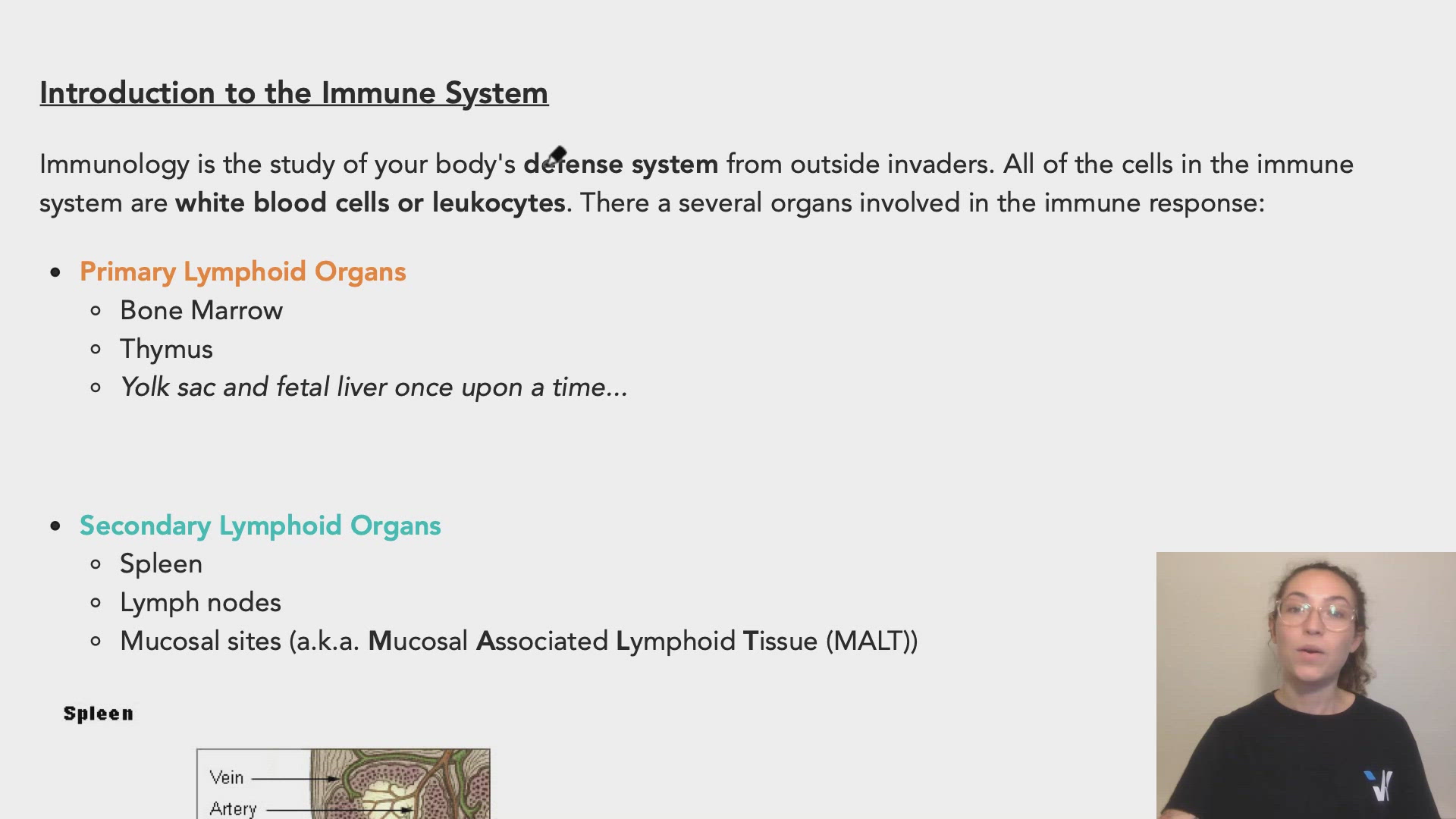
Immunology is the study of your body's defense system from outside invaders. All of the cells in the immune system are white blood cells or leukocytes. There a several organs involved in the immune response:
- Primary Lymphoid Organs
- Bone Marrow
- Thymus
- Yolk sac and fetal liver once upon a time...
- Secondary Lymphoid Organs
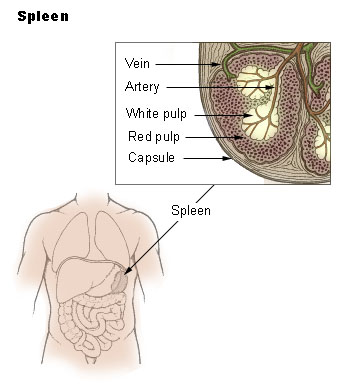
- Spleen
- Lymph nodes
- Mucosal sites (a.k.a. Mucosal Associated Lymphoid Tissue (MALT))
Wize Tip
During development, the sites of hematopoiesis (where the cells of the immune system are formed) migrate from the yolk sac -> to the fetal liver -> to the bone marrow. Remembering this sequence can be useful in exams!
The immune system can be divided into two categories: innate and adaptive immune system.
- The interaction between the two is very important!
- Vaccination is way to show the immune system what a particular invader (virus, bacteria or parasite) might look like to allow it to prepare ahead of time and be able to quickly react when/if they encounter the actual offender!
KEY TERM: Antigen means a toxin or foreign substance that induces an immune response in the body.
Watch Out!
Immunology is a complex topic so do not fret if you feel overwhelmed with the details of the material. Understand the big picture first and go from there!
Which of the following are not secondary lymphoid organs?
In a normal immunological response, an antigen can be: