Wize University Physiology Textbook > Immunology
Innate Immune System
Popular Courses
MCAT
General Course
DAT
General Course
Intro to Physiology
University Study Guides
PHYSIOL 1021
Western University
PHYSIOL 2130
Western University
Intro to Physiology
University Study Guides
PSL300H1
University of Toronto
PHYSL 210
University of Alberta
PHGY 210
McGill University
PHGY 215
Queen's University
KNES 259
University of Calgary
PHGY 216
Queen's University
BIOL 273
University of Waterloo
BIOL 260
University of British Columbia
PHYSIOL 3120
Western University
KNES 260
University of Calgary
BIOL 116
Case Western Reserve University
PPT 301
University of North Dakota
ANAT 212
McGill University
HTHSCI 2FF3
McMaster University
0:00 / 0:00
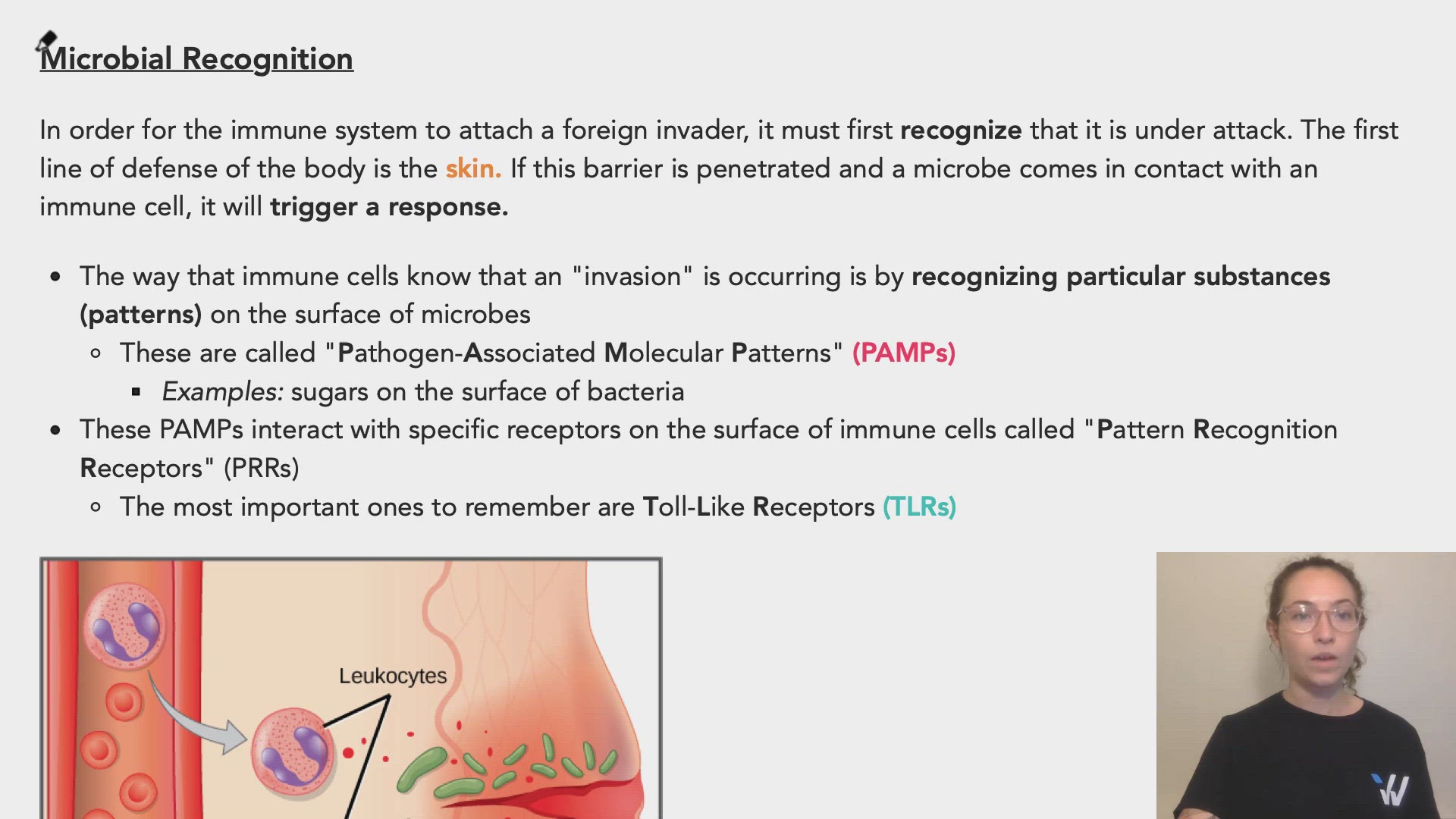
Microbial Recognition
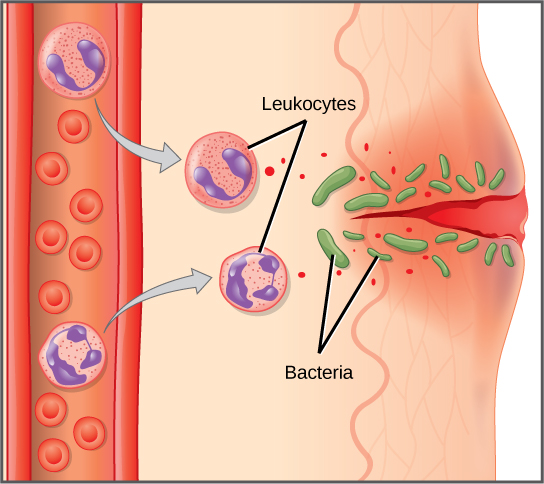
In order for the immune system to attack a foreign invader, it must first recognize that it is under attack. The first line of defense of the body is the skin. If this barrier is penetrated and a microbe comes in contact with an immune cell, it will trigger a response.
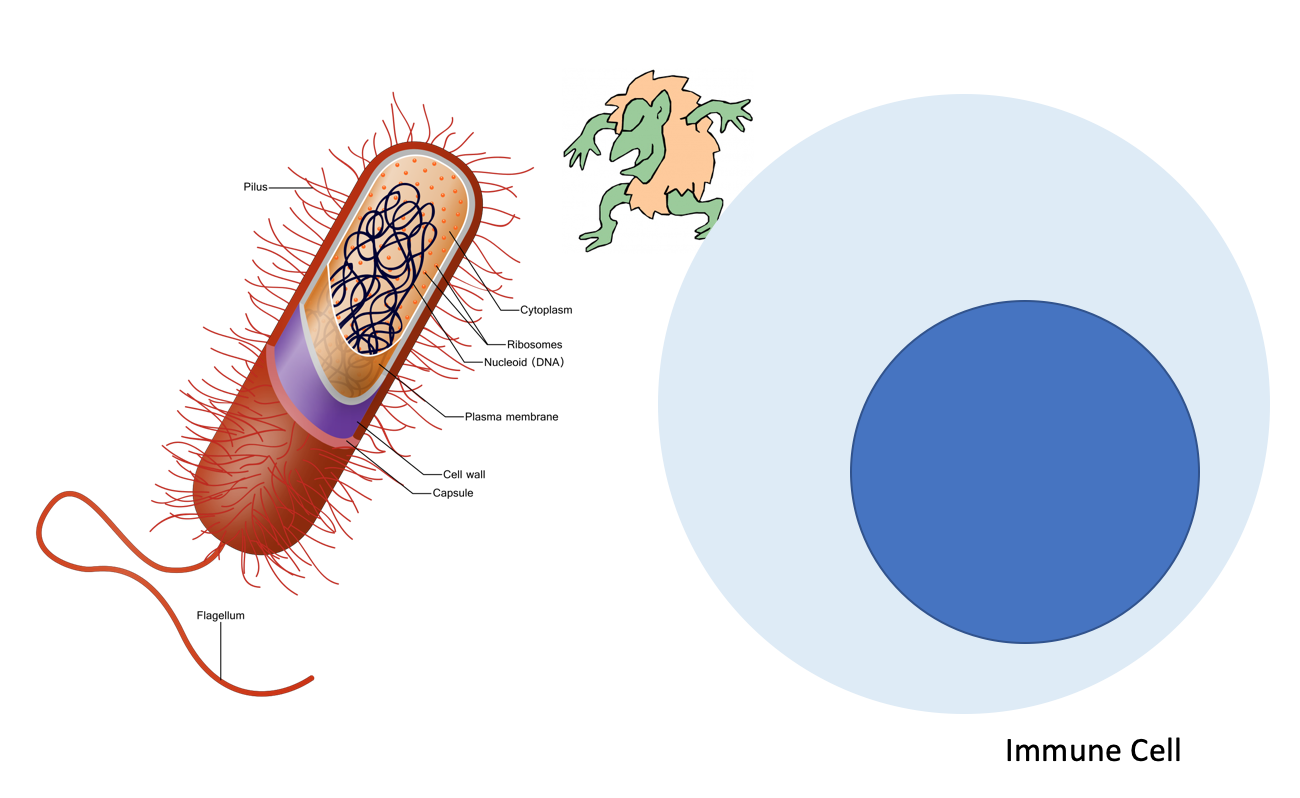
- The way that immune cells know that an "invasion" is occurring is by recognizing particular substances (patterns) on the surface of microbes
- These are called "Pathogen-Associated Molecular Patterns" (PAMPs)
- Examples: sugars on the surface of bacteria
- These PAMPs interact with specific receptors on the surface of immune cells called "Pattern Recognition Receptors" (PRRs)
- The most important ones to remember are Toll-Like Receptors (TLRs)
0:00 / 0:00
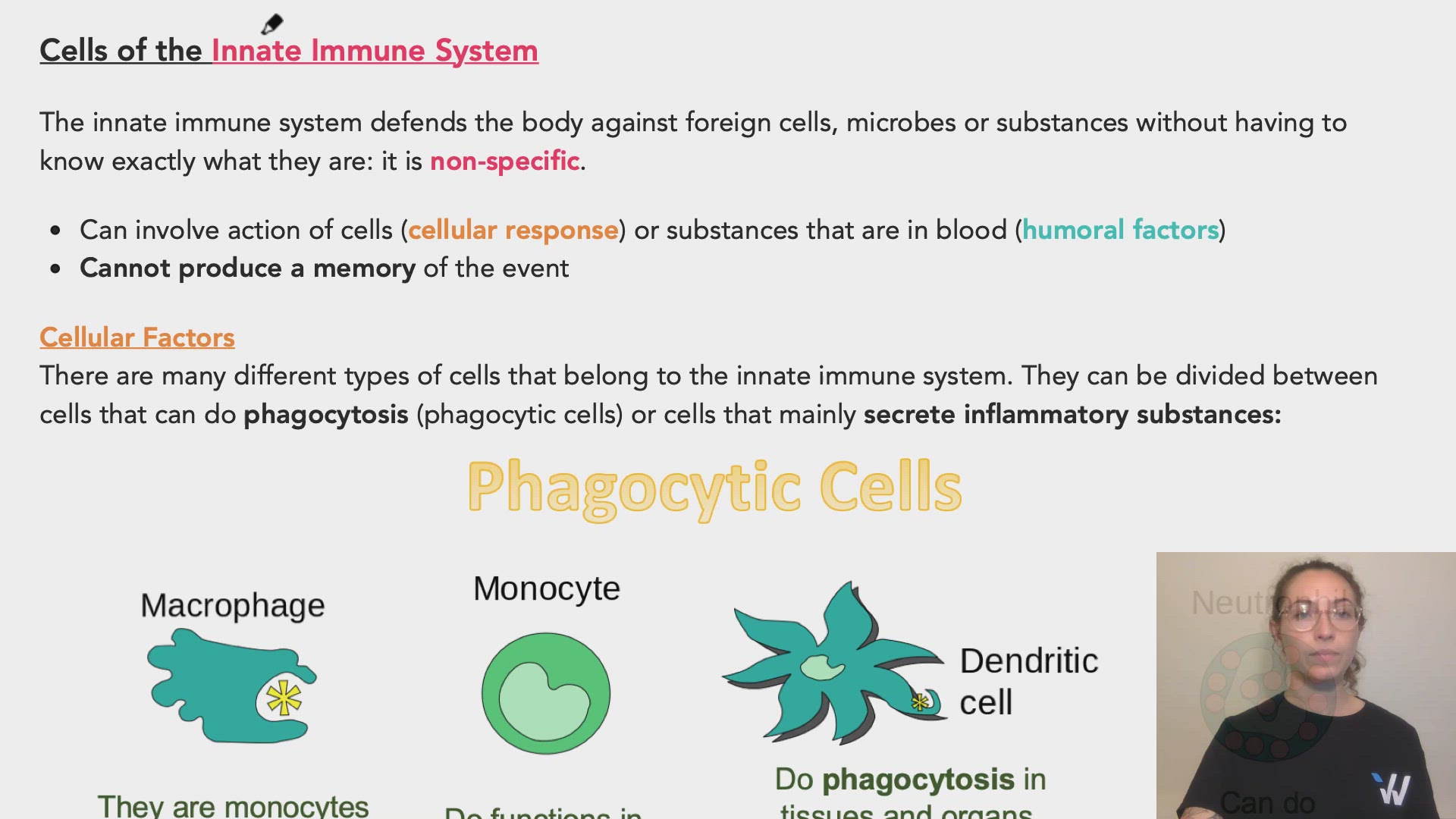
Cells of the Innate Immune System
The innate immune system defends the body against foreign cells, microbes or substances without having to know exactly what they are: it is non-specific.
- Can involve action of cells (cellular response) or substances that are in blood (humoral factors)
- Cannot produce a memory of the event
Cellular Factors
There are many different types of cells that belong to the innate immune system. They can be divided between cells that can do phagocytosis (phagocytic cells) or cells that mainly secrete inflammatory substances:

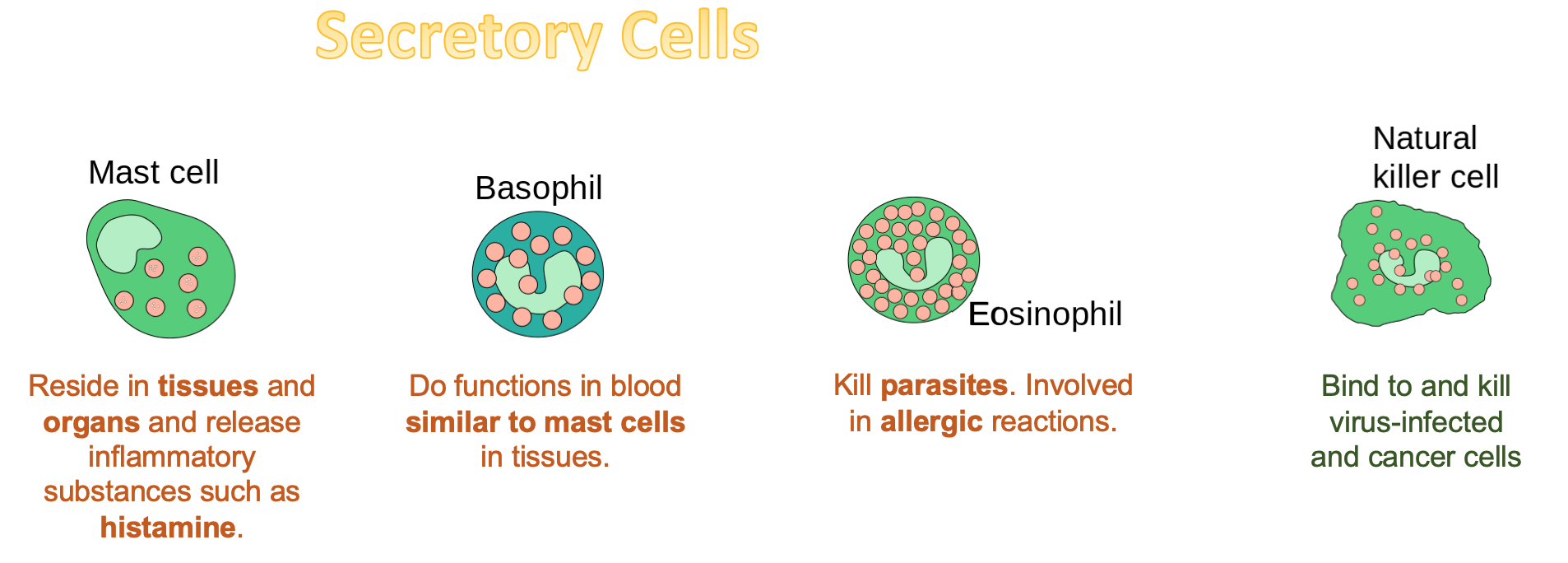
What would be sequence of events if a macrophage encounters a bacterium?
0:00 / 0:00
Humoral Factors
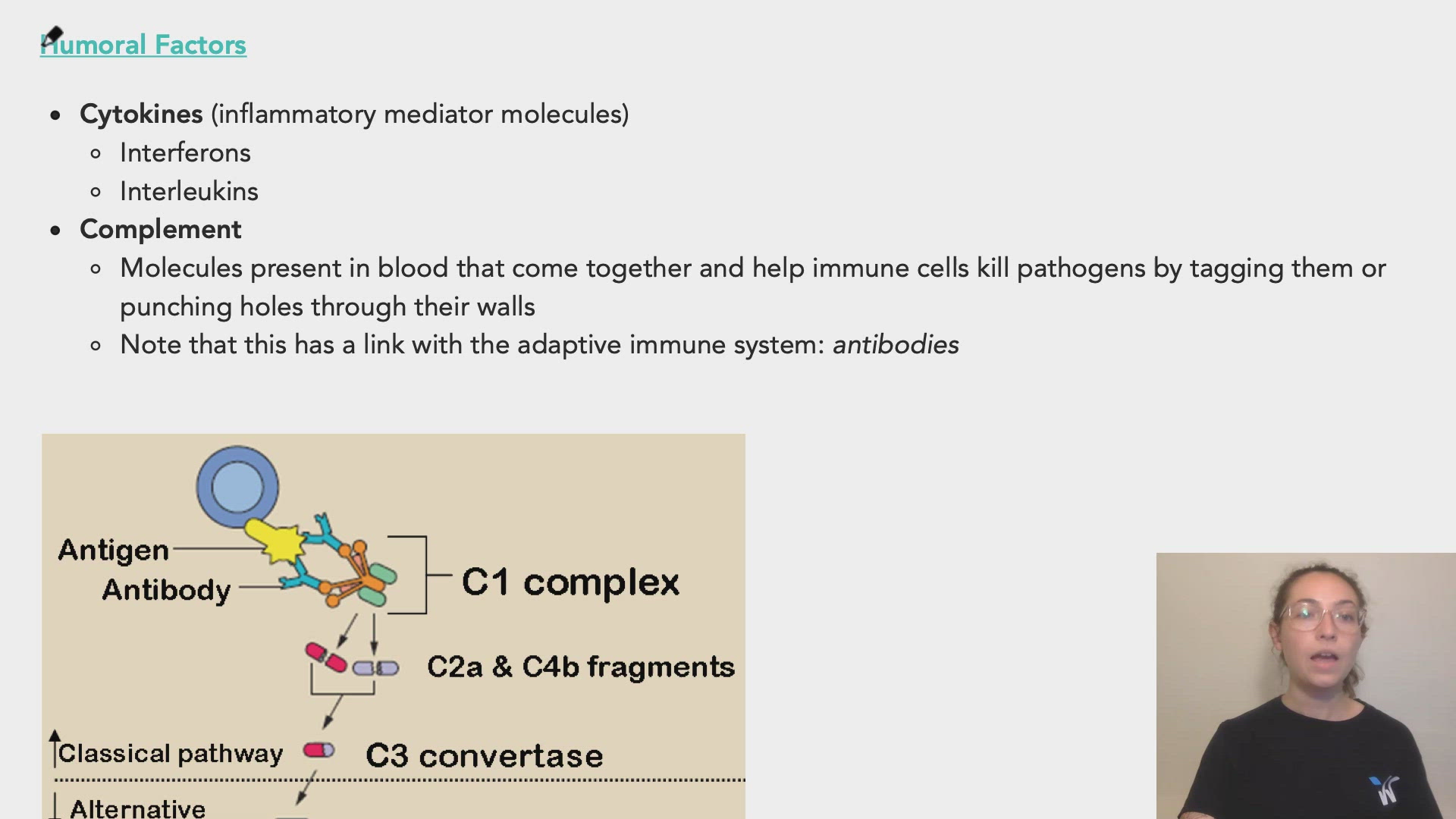
- Cytokines (inflammatory mediator molecules)
- Interferons
- Interleukins
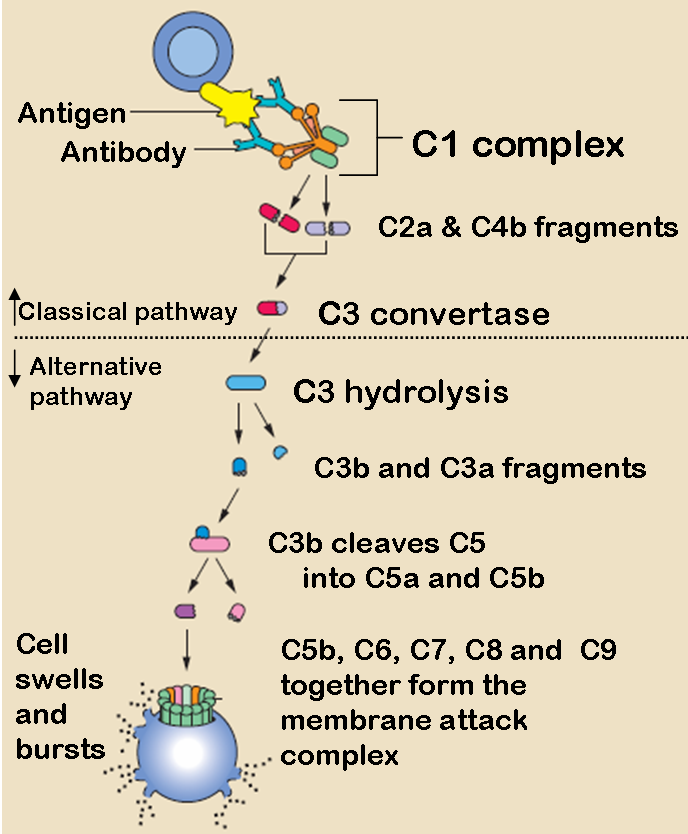
- Complement
- Molecules present in blood that come together and help immune cells kill pathogens by tagging them or punching holes through their walls
- Note that this has a link with the adaptive immune system: antibodies
- Classical pathway most effectively activated by IgM and IgG antibodies
- Requires crosslinking of C1q to Fc portion of antibodies bound to antigens
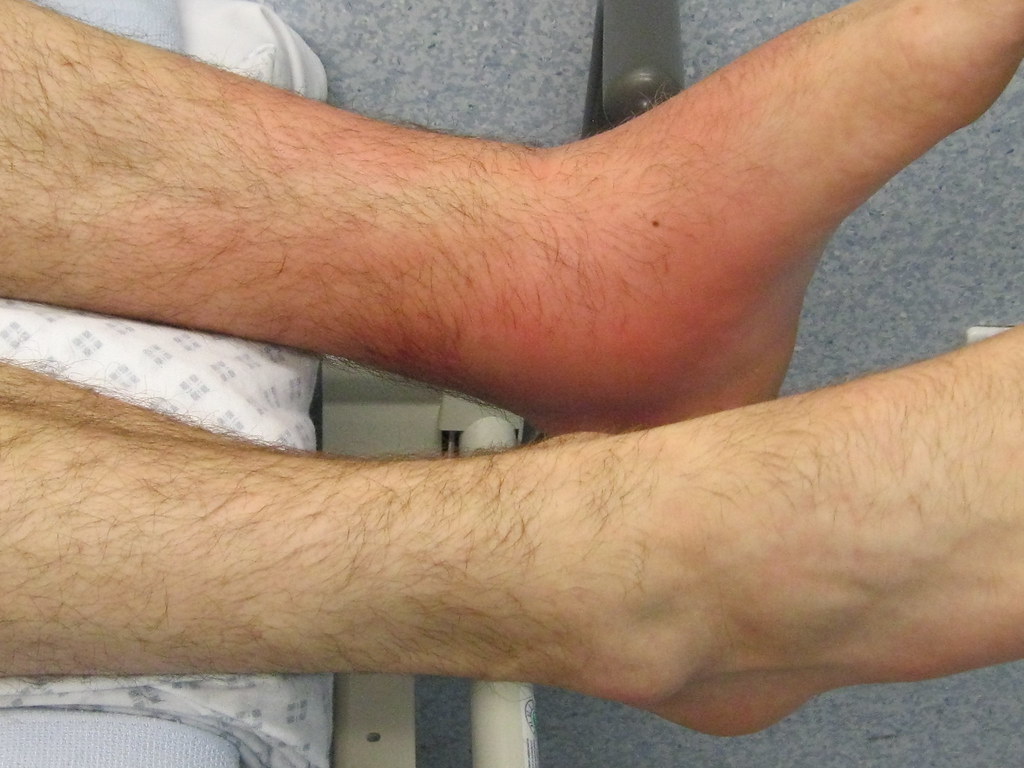
These inflammatory mediators are responsible for the bad feeling of having an infection. The four classical signs of inflammation are: RUBOR (redness), DOLOR (pain), CALOR (heat) and TUMOR (swelling).
0:00 / 0:00
A macrophage is patrolling its favorite tissue and encounters a bacterium. Having no memory of ever seeing such a thing, it reacts. What is sequence of events that occurs, starting from the recognition of the invader?
The bacterium has a pathogen associated molecular pattern (PAMP) -> a toll-like receptor (TLR) on the macrophage binds to the PAMP, thus recognizing an invasion -> the macrophage phagocytoses the bacterium -> the macrophage releases cytokines to recruit other cells such as macrophage derived neutrophil chemotactic factor (MDNCF)
Which of the following is false about the innate immune system?
Which of the following statements is true about leukocytes?
What are the classical signs of inflammation?