Popular Courses
MCAT
General Course
DAT
General Course
Intro to Physiology
University Study Guides
PHYSIOL 1021
Western University
PHYSIOL 2130
Western University
Intro to Physiology
University Study Guides
PSL300H1
University of Toronto
PHYSL 210
University of Alberta
PHGY 210
McGill University
PHGY 215
Queen's University
KNES 259
University of Calgary
PHGY 216
Queen's University
BIOL 273
University of Waterloo
BIOL 260
University of British Columbia
PHYSIOL 3120
Western University
KNES 260
University of Calgary
BIOL 116
Case Western Reserve University
PPT 301
University of North Dakota
ANAT 212
McGill University
HTHSCI 2FF3
McMaster University
0:00 / 0:00
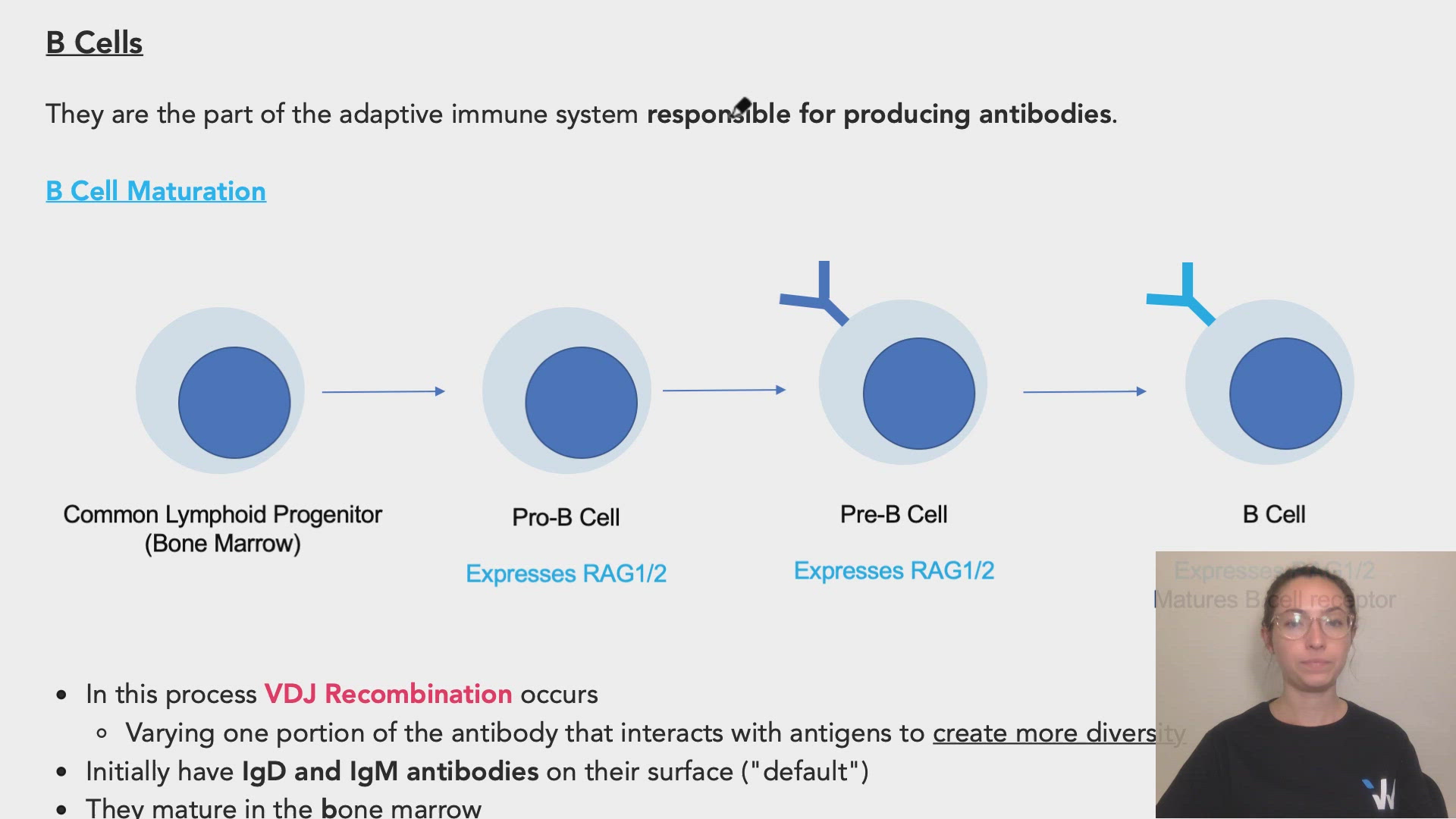
B Cells
They are the part of the adaptive immune system responsible for producing antibodies.
B Cell Maturation
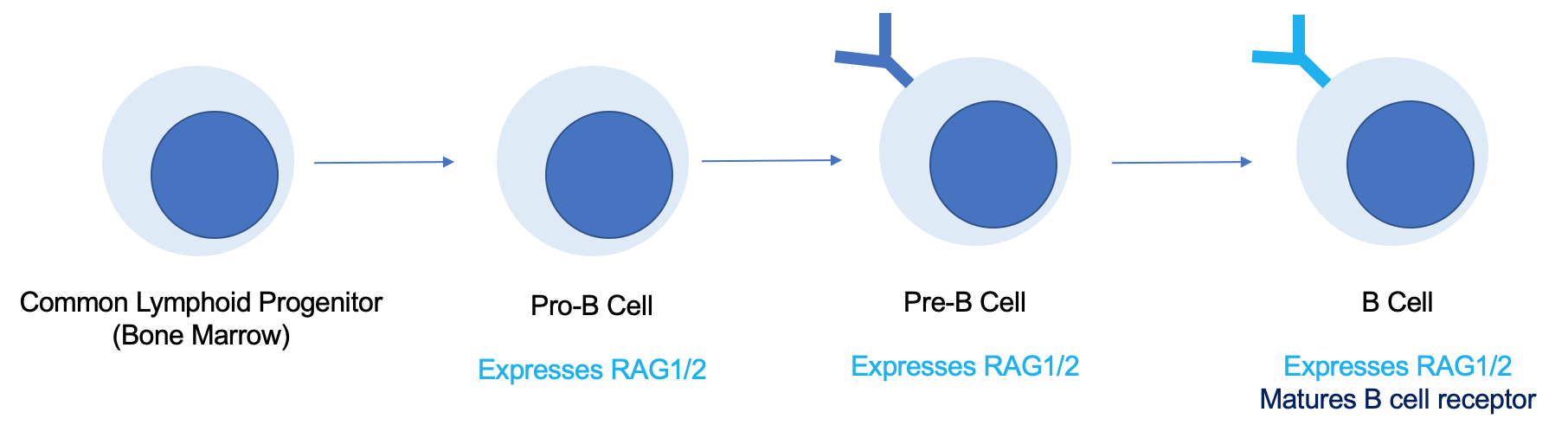
- In this process VDJ Recombination occurs
- Varying one portion of the antibody that interacts with antigens to create more diversity
- Initially have IgD and IgM antibodies on their surface ("default")
- They mature in the bone marrow
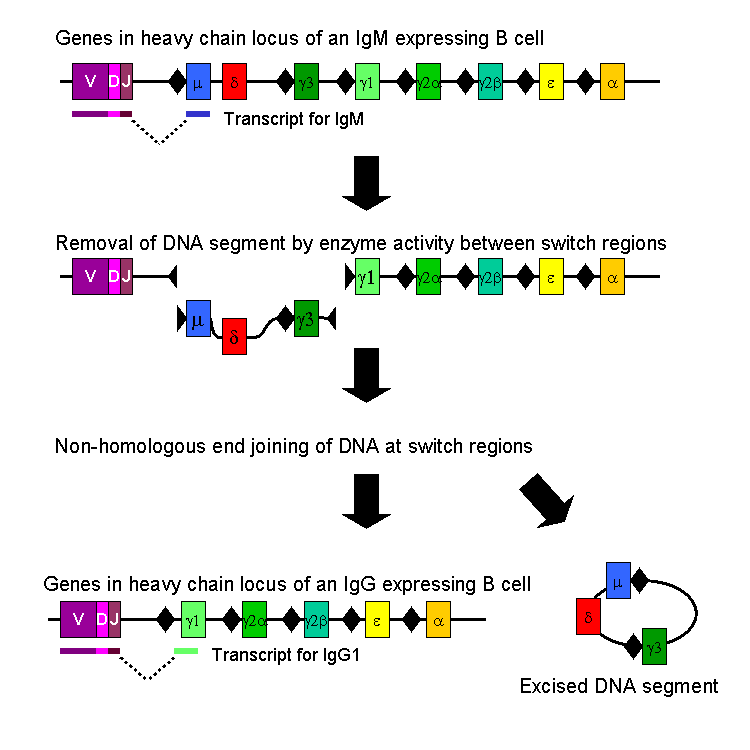
- Antibody class switching (becoming more specialized) can occur upon interaction and signaling from TH2 helper cells
0:00 / 0:00
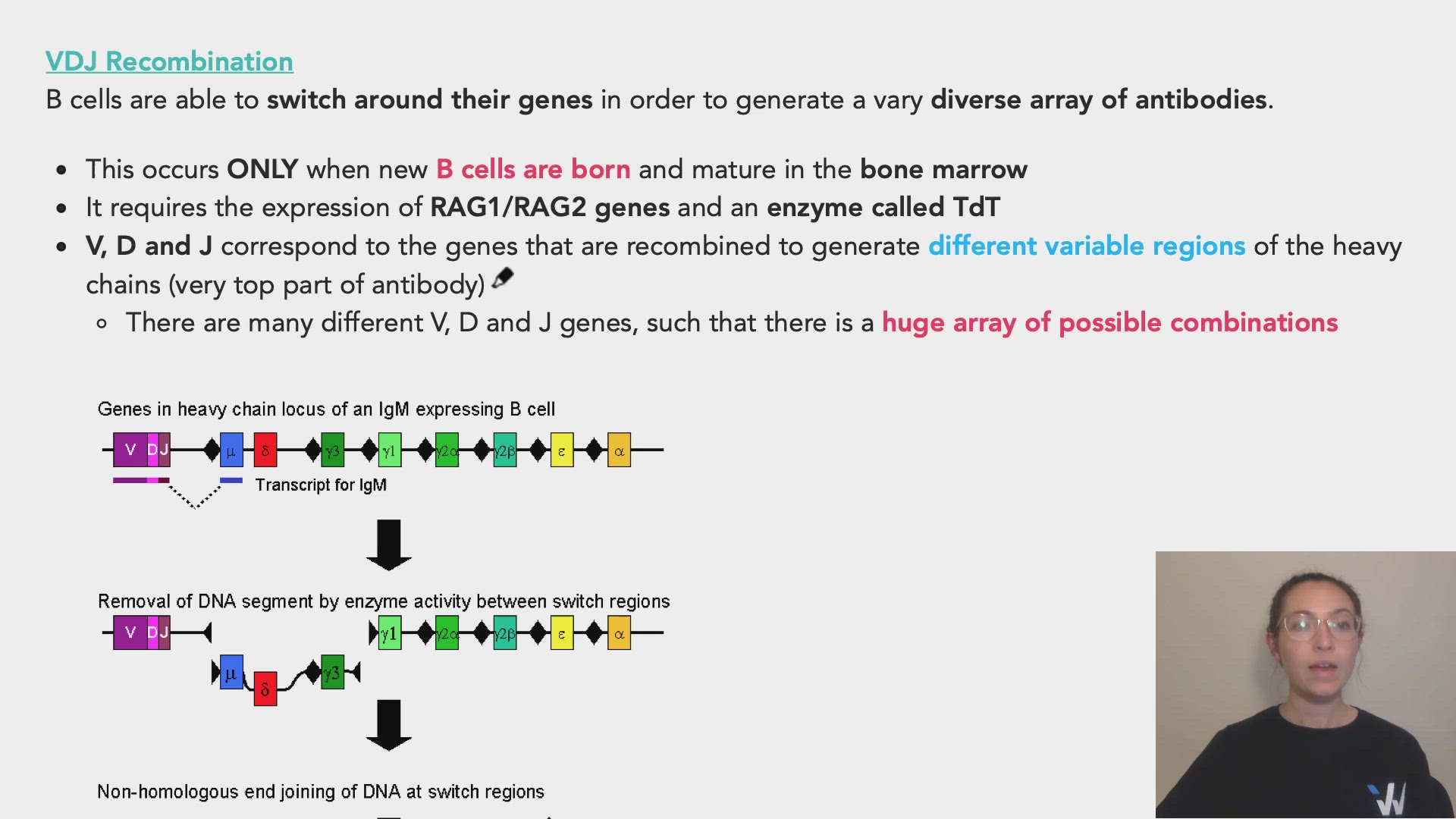
VDJ Recombination
B cells are able to switch around their genes in order to generate a vary diverse array of antibodies.
- This occurs ONLY when new B cells are born and mature in the bone marrow
- It requires the expression of RAG1/RAG2 genes and an enzyme called TdT
- V, D and J correspond to the genes that are recombined to generate different variable regions of the heavy chains (very top part of antibody)
- There are many different V, D and J genes, such that there is a huge array of possible combinations
The process of generating this diverse array of antibodies goes in the order: RAG1/RAG2 expression >> D-J rearrangement >> V rearrangement >> generation of mRNA with all parts >> immunoglobulin.
0:00 / 0:00
Antibodies
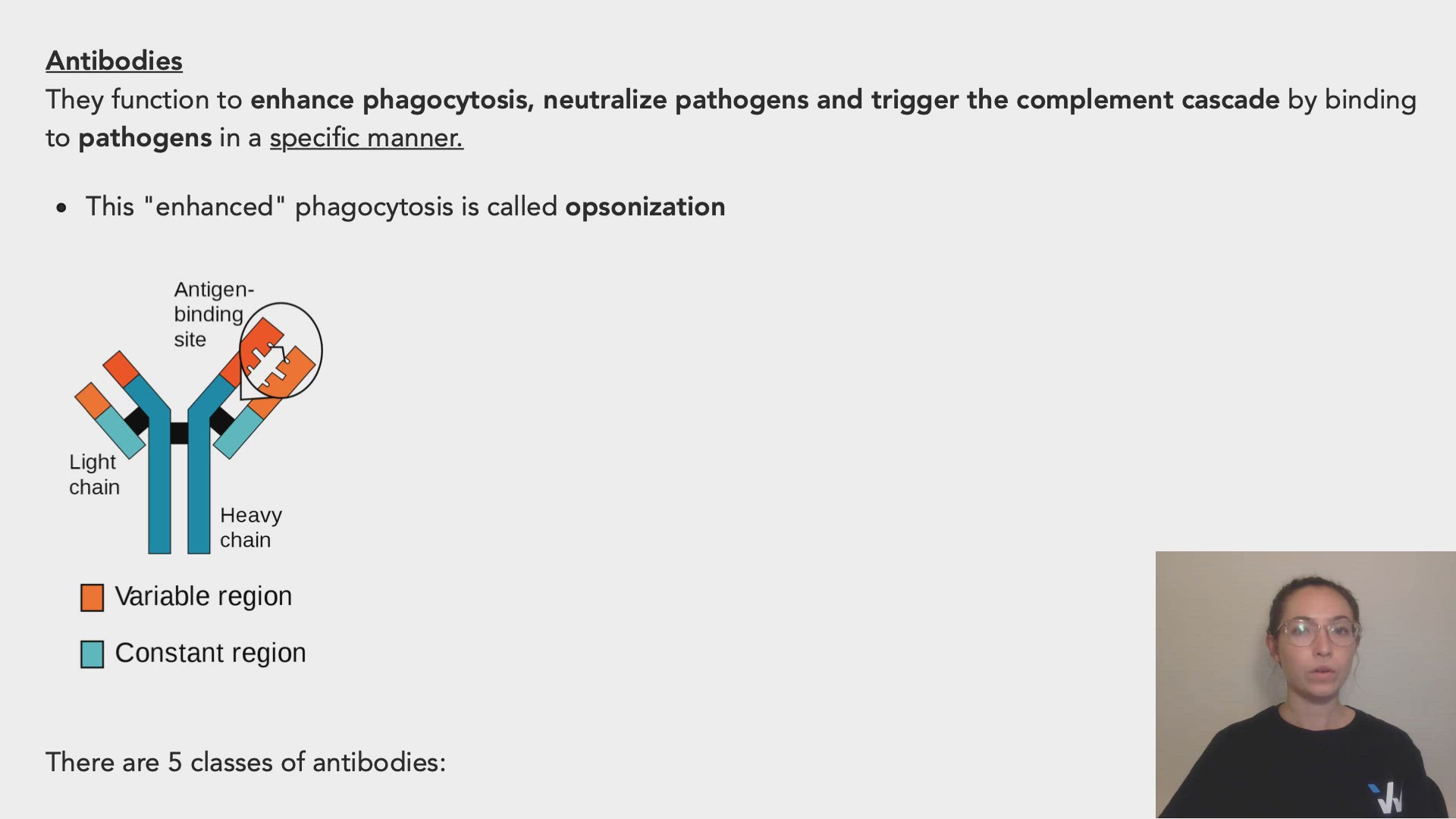
They function to enhance phagocytosis, neutralize pathogens and trigger the complement cascade by binding to pathogens in a specific manner.
- This "enhanced" phagocytosis is called opsonization
There are 5 classes of antibodies:
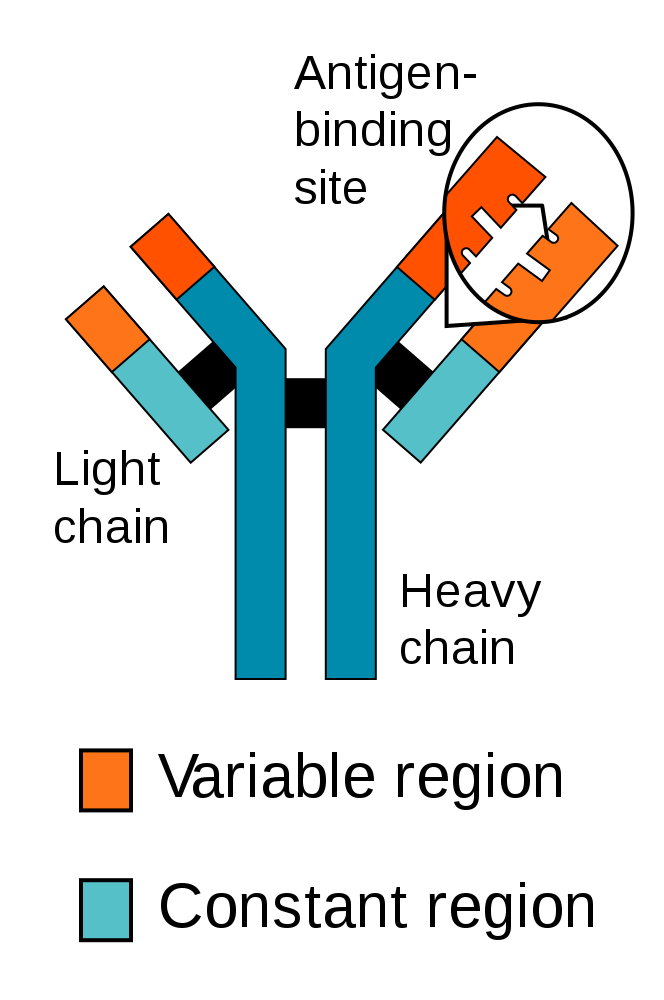
- Antibody class is determined by the constant region of the heavy chain
- The heavy chain also has a variable region
- Fc region is biologically active (cell binding)
- The light chain can be kappa or lambda
- Antibody class switching can occur upon interaction and signaling from TH2 helper cells

The two most abundant antibodies are:
- IgM is always the first antibody to be produced
- IgG is the antibody generated upon re-exposure to the antigen
Watch Out!
When class switching occurs, only the constant region of the heavy chain changes, while the variable region stays the same. This means that specificity to a particular antigen DOES NOT CHANGE, but now the antibody can interact with different types of cells of the immune system.
0:00 / 0:00
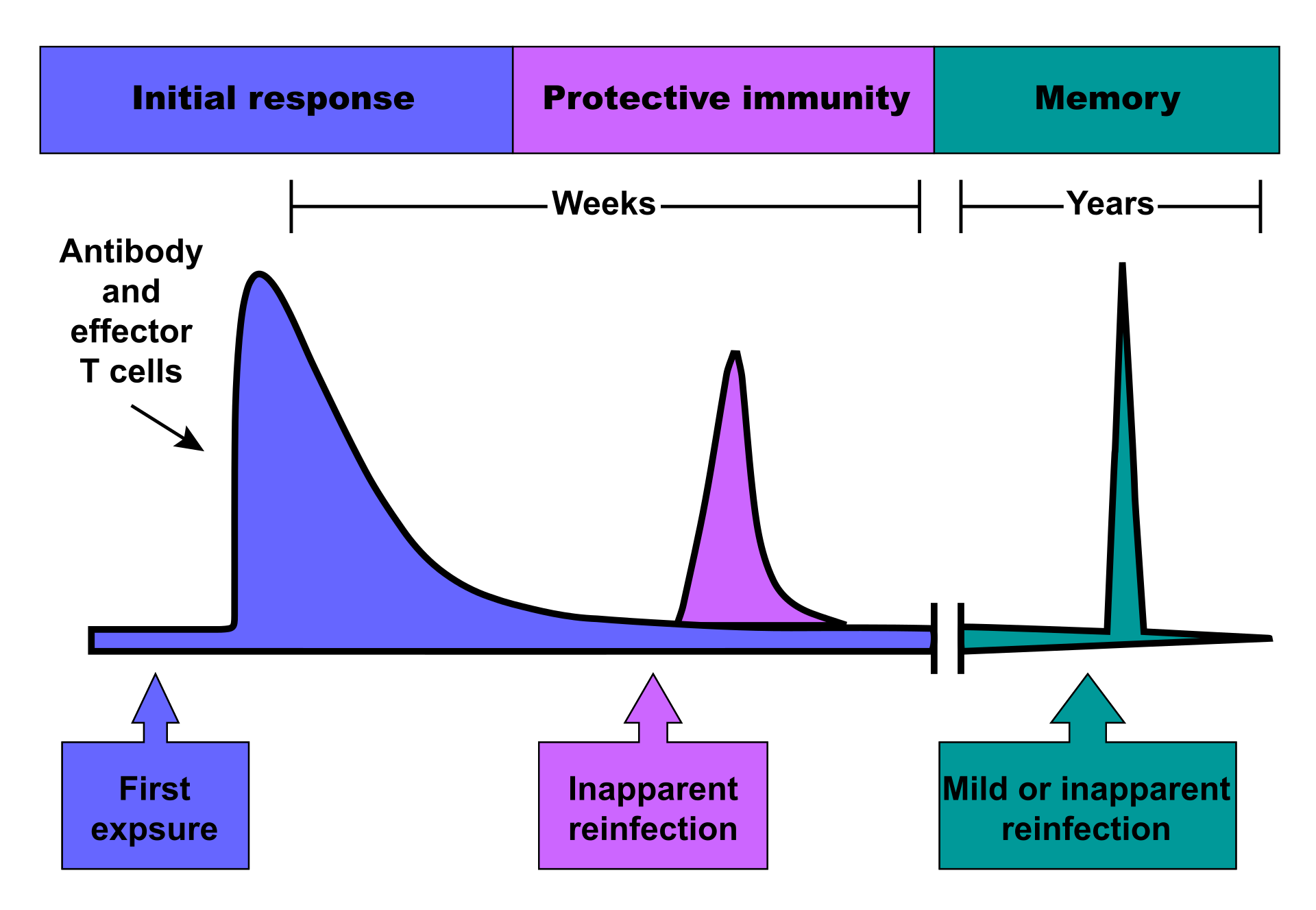
Immunological Memory
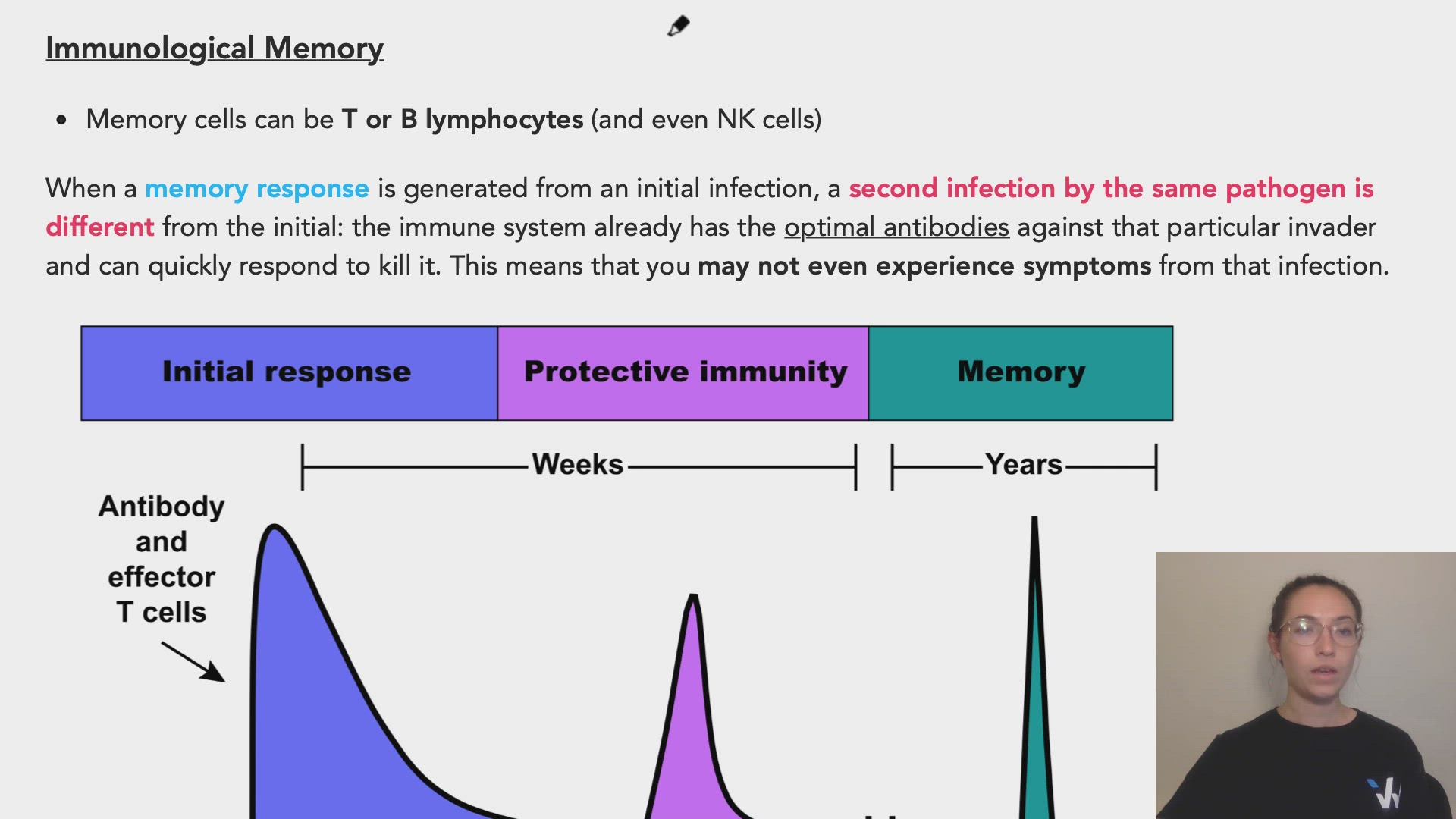
- Memory cells can be T or B lymphocytes (and even NK cells)
When a memory response is generated from an initial infection, a second infection by the same pathogen is different from the initial: the immune system already has the optimal antibodies against that particular invader and can quickly respond to kill it. This means that you may not even experience symptoms from that infection.
Immune System Disorders
When the immune system is not working properly, this leaves an individual more susceptible to infections.
- One such disease is Severe Combined Immune Deficiency (SCID)
- "Bubble boy disease"
- BOTH B and T cells do not work properly: simple infections can be fatal
Others:
- Human Immunodeficiency Virus (HIV)
- Virus infects and kills CD4+ T cells
- Without these T cells, the person cannot fight most infections properly
- Hypersensitivity Reactions
- There are 4 different types
- Allergies are a type of hypersensitivity
- When the body reacts to something (pollen, or peanuts for example) that most people tolerate
- Can be seriously life threatening: anaphylaxis
- Transfusion reactions
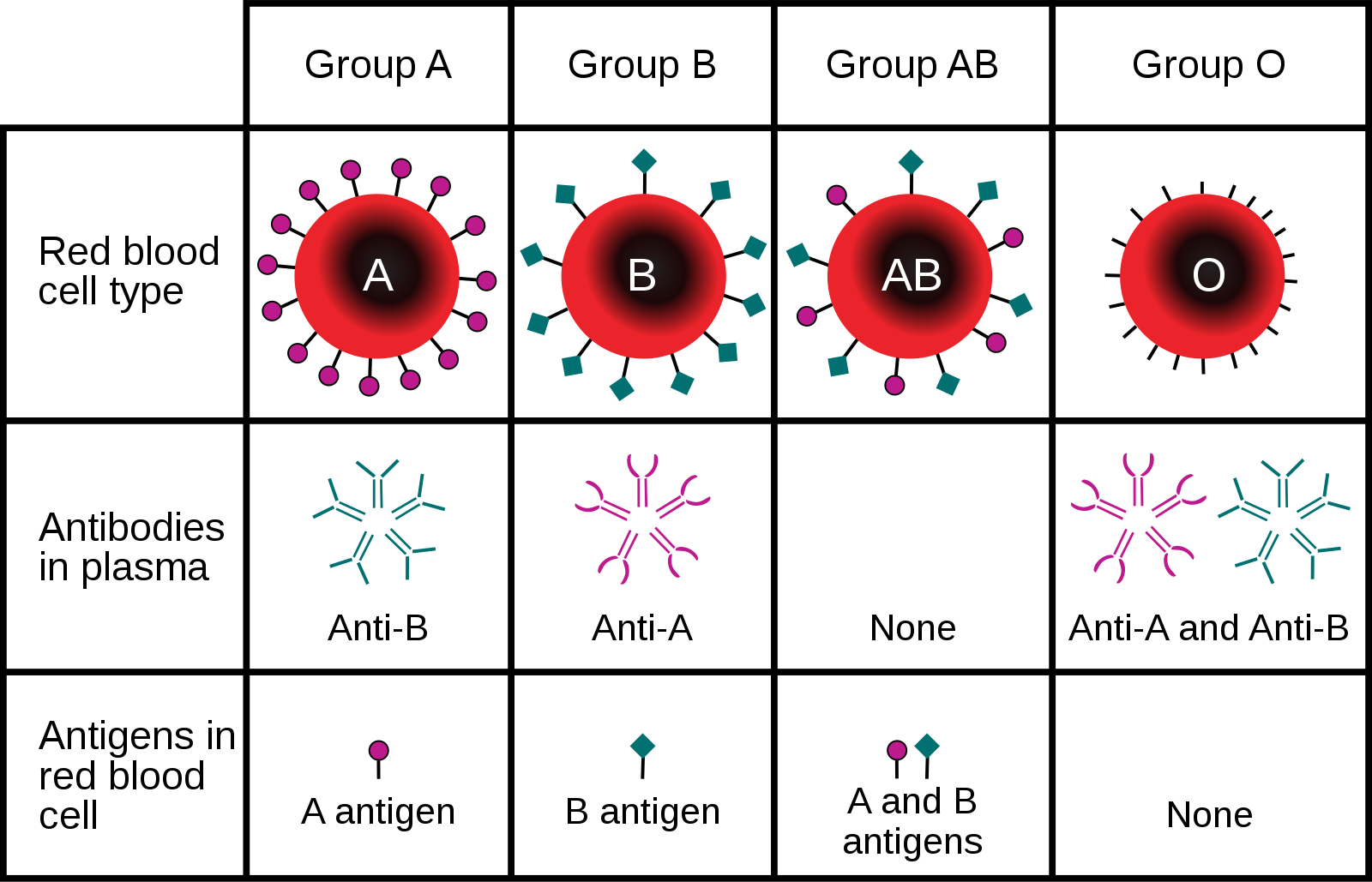
- Individuals should only receive blood that is compatible to theirs, otherwise it will be catastrophic
- RBCs have markers on their surface (this determines blood type)
- We have antibodies to the markers we do not have
- For example, someone with A blood, has antibodies to B blood type markers
0:00 / 0:00
What happens when an APC encounters an antigen? Link the innate and adaptive immune responses.
Dendritic cells and macrophages when patrolling the tissues:
1. When an APC encounters an antigen is phagocytoses it.
2. The APC processes this antigen and presents it on its MHC class II molecule to a CD4+ T cell at a lymph node; it also provides a co-stimulatory signal to ensure T cell activation
3. The T cell becomes activated and differentiates into other subtypes (TH1, TH2, etc.) which further helps mount an appropriate immune response.
B cells:
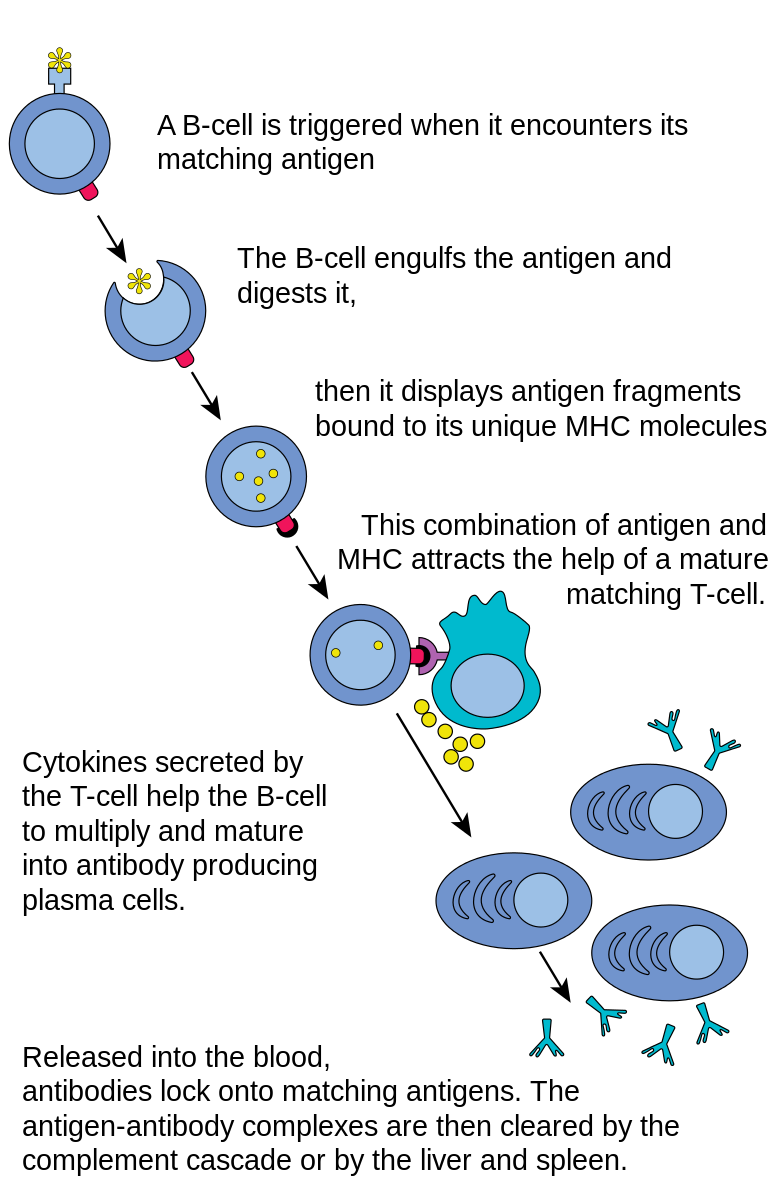
1. When a B cell has an antigen bind to its immunoglobulin receptor, it internalizes the antigen and presents it on its MHC class II protein.
2. The B cell presents the antigen to a CD4+ T cell
3. An activated T cell provides a co-stimulatory signal to activate the B cell and produces other cytokines that help B cells class switch.
Which of the following is false regarding B cells?
Which of the following is false regarding antibodies:
Select the true statements: