Wize University Psychology Textbook > Research Methods in Psychology
Research Ethics in Psychology
Popular Courses
MCAT
General Course
Psychology
University Study Guides
PSYC 100
Queen's University
PSYCH 1000
Western University
PSYCH 104
University of Alberta
PSYCHOL 1002A/B
Western University
Psychology
University Study Guides
PSYC*1000
University of Guelph
PSYC 100
McGill University
PSY100H1
University of Toronto
PSYC 101
University of British Columbia
HH/PSYC 1010 6.00
York University
PSYC 200
University of Calgary
PSYC 102
University of British Columbia
PSYC 100B
Queen's University
PSYC 100A
University of Victoria
PSYC 200
Concordia University
PSYC 1004
Virginia Tech
PSYCH 100
Pennsylvania State University
PSC 001
University of California - Davis
0:00 / 0:00
Research Ethics

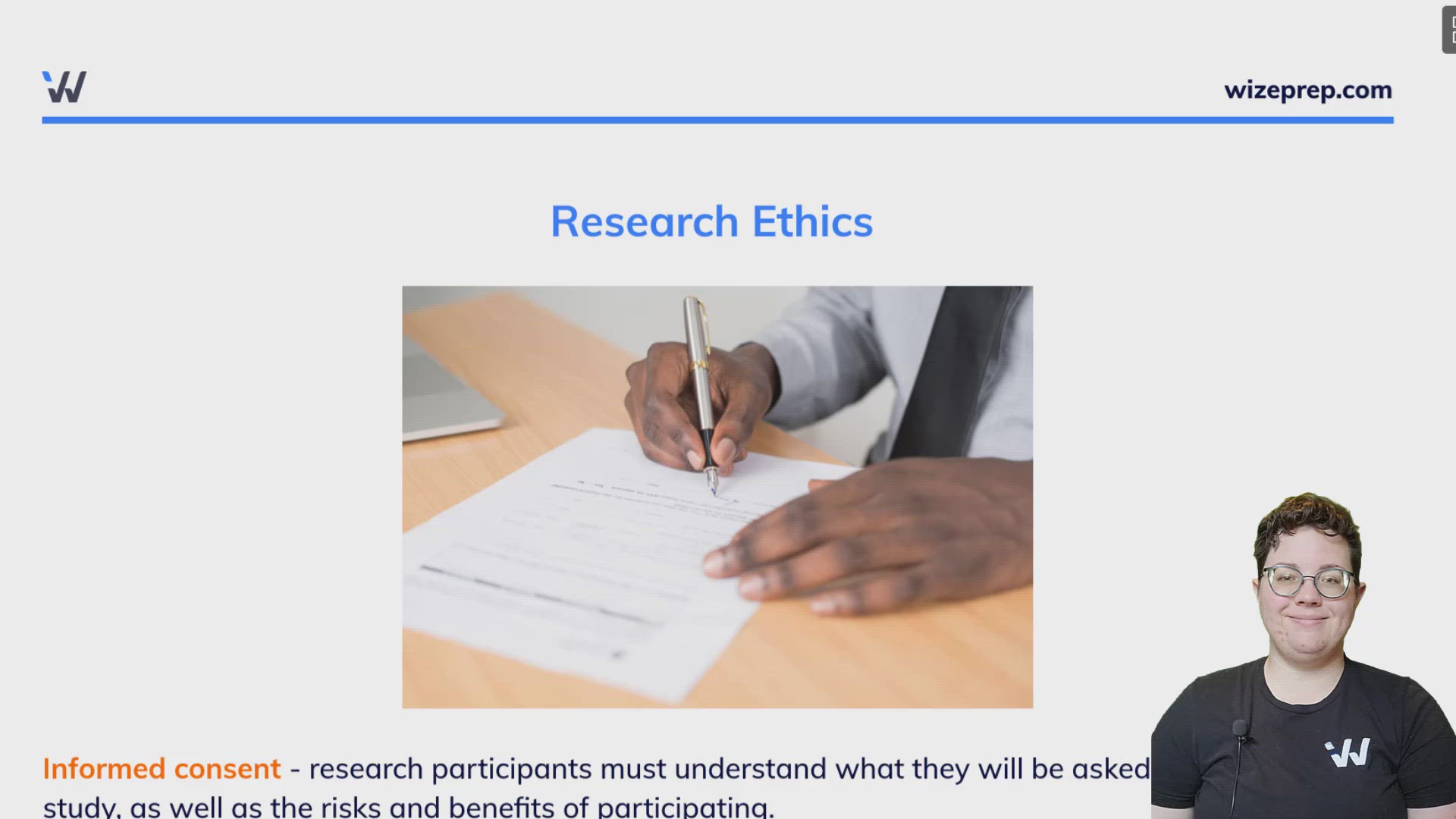
Informed consent - research participants must understand what they will be asked to do during a study, as well as the risks and benefits of participating.
For people who are not capable of informed consent, we still require their assent, or agreement to participate, in addition to the consent of an authorized third party.
Deception is rarely used in psychological studies. It is only approved by research ethics boards if it is necessary for the study to be conducted. In cases where deception is used, participants must be debriefed - told about the true purpose of the study after the fact.
Research in psychology must be reviewed by a research ethics board, usually at a university, to determine whether it complies with research ethics requirements.
Practice: Research Ethics
Maude is an elderly woman with advanced dementia. Dr. Kim is conducting a research study on the effects of music therapy in people with dementia. Who needs to give their agreement in order for Maude to participate in the study?
I. Maude
II. Maude's daughter, who has power of attorney
III. Dr. Kim