Popular Courses
MCAT
General Course
Psychology
University Study Guides
PSYC 100
Queen's University
PSYCH 1000
Western University
PSYCH 1X03
McMaster University
PSYCH 104
University of Alberta
PSYCHOL 1002A/B
Western University
Psychology
University Study Guides
PSYC*1000
University of Guelph
PSYC 100
McGill University
PSY100H1
University of Toronto
PSYC 101
University of British Columbia
HH/PSYC 1010 6.00
York University
PSYC 200
University of Calgary
PSYC 102
University of British Columbia
PSYC 100B
Queen's University
PSYC 100A
University of Victoria
PSYC 200
Concordia University
PSYC 1004
Virginia Tech
PSYCH 100
Pennsylvania State University
0:00 / 0:00
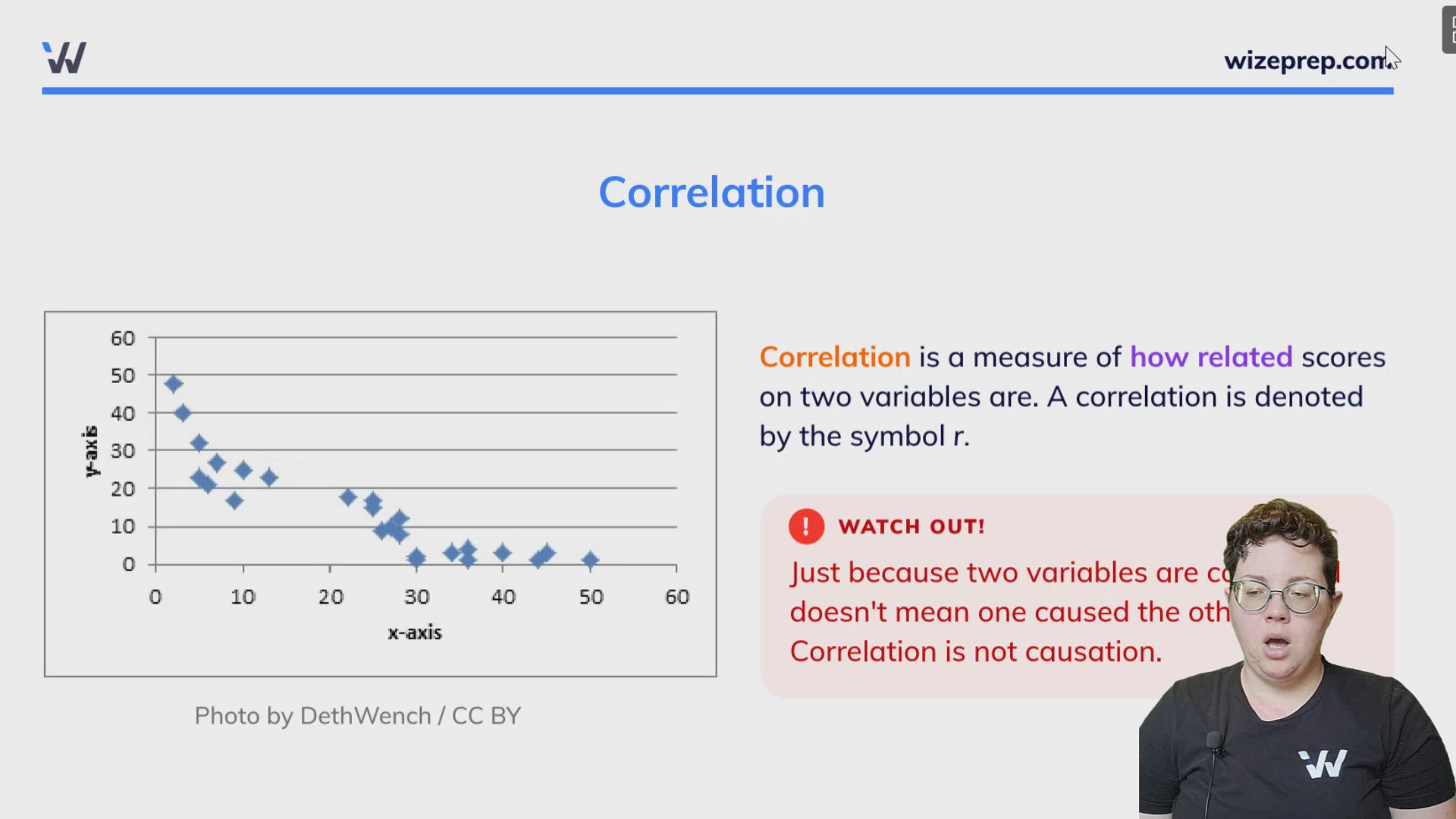
Correlation
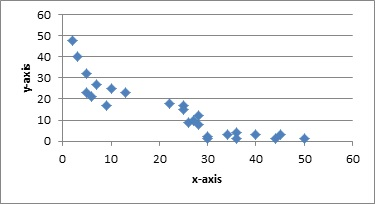
Correlation is a measure of how related scores on two variables are. A correlation is denoted by the symbol r.
Watch Out!
Just because two variables are correlated doesn't mean one caused the other! Correlation is not causation.
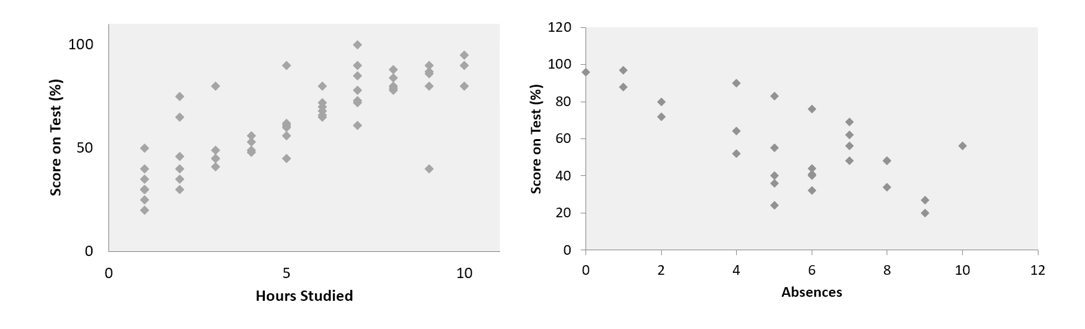
A correlation has two components:
- Positivity or negativity - which direction does the relationship go?
- Value - how strong is the relationship, from 0 (no relationship) to 1.00 (perfect relationship). A correlation of -.70 and +.70 are equal in strength
Watch Out!
A correlation cannot be stronger than +1.00 or -1.00. If you see a correlation coefficient outside of those bounds it is a trap!
Practice: Correlations
We can best predict the value of one variable from another variable if they have a correlation coefficient of:
Practice: Correlation VS Causation
Research shows there is a positive correlation between the number of night clubs and churches in cities. We can conclude that: