Wize University Psychology Textbook > Research Methods in Psychology
Cross-sectional and Longitudinal Designs
Popular Courses
MCAT
General Course
Psychology
University Study Guides
PSYC 100
Queen's University
PSYCH 104
University of Alberta
PSYCHOL 1002A/B
Western University
Psychology
University Study Guides
PSYC*1000
University of Guelph
PSYC 100
McGill University
PSY100H1
University of Toronto
PSYC 101
University of British Columbia
HH/PSYC 1010 6.00
York University
PSYC 200
University of Calgary
PSYC 102
University of British Columbia
PSYC 100B
Queen's University
PSYC 100A
University of Victoria
PSYC 200
Concordia University
PSYC 1004
Virginia Tech
PSYCH 100
Pennsylvania State University
PSC 001
University of California - Davis
PSY 2012
University of Florida
0:00 / 0:00
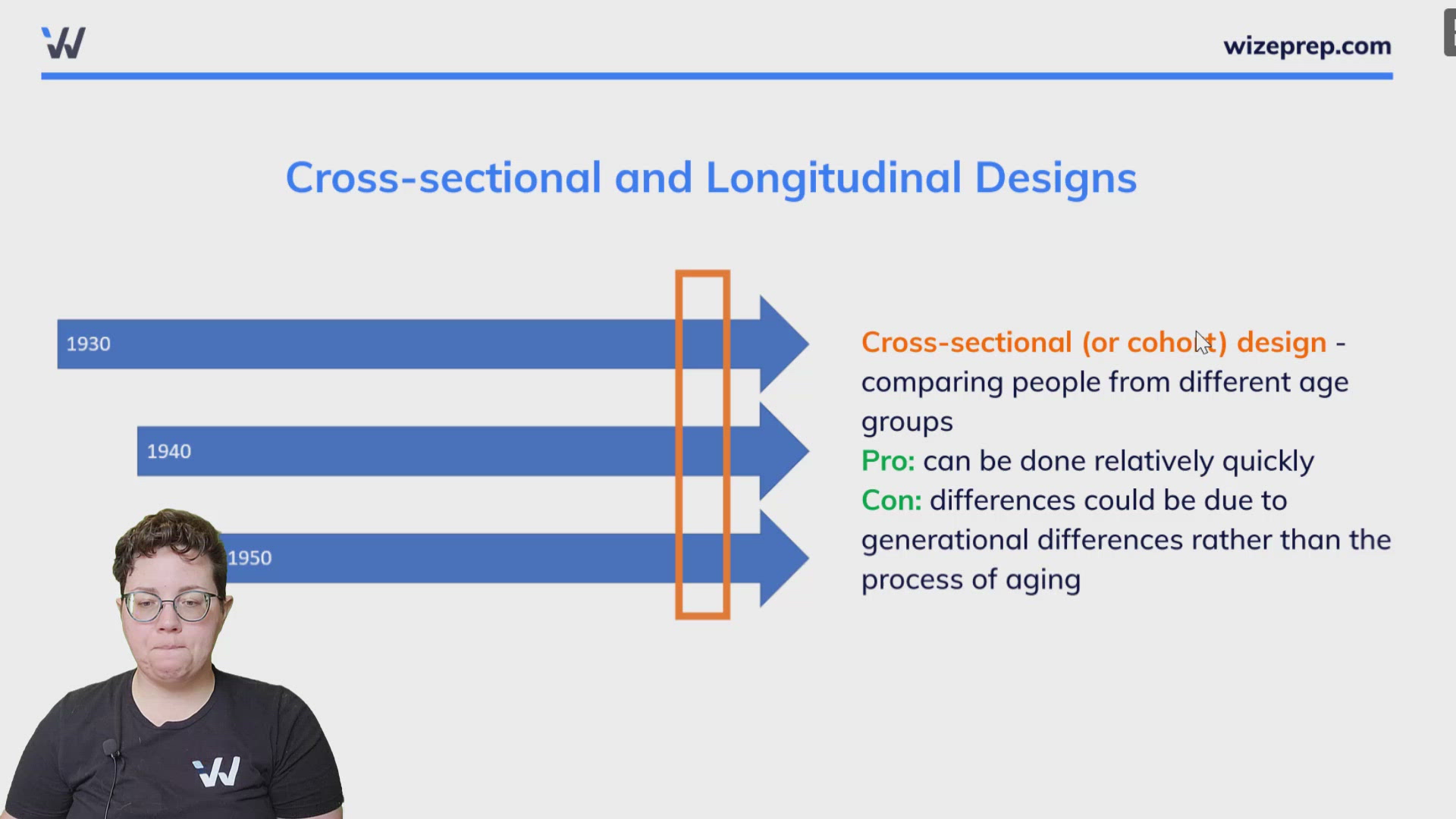
Cross-sectional and Longitudinal Designs
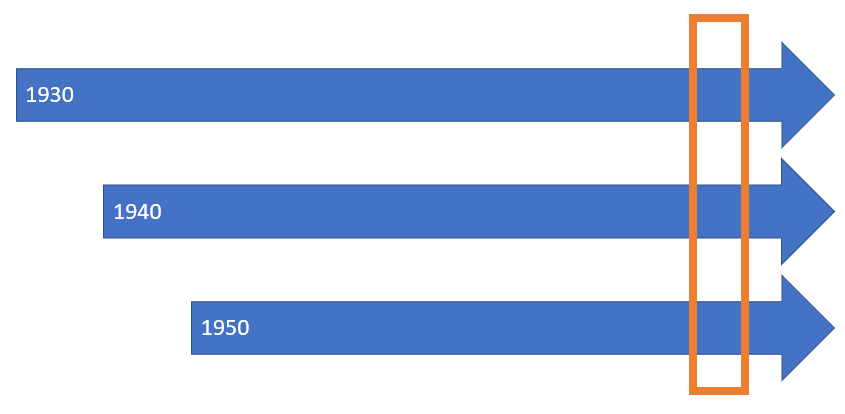
Cross-sectional (or cohort) design - comparing people from different age groups
Pro: can be done relatively quickly
Con: differences could be due to generational differences rather than the process of aging
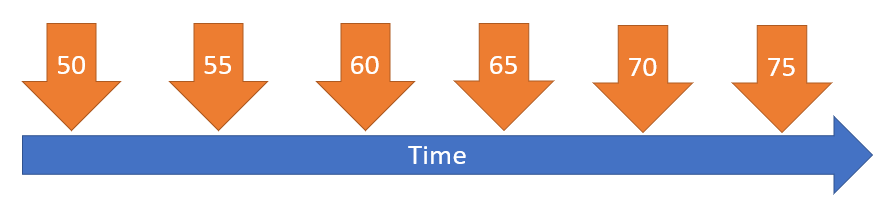
Longitudinal design - following a group of people for a long period of time, measuring at regular intervals
Pro: can look for differences due to aging
Con: takes a really long time, high experimental mortality (dropout rate)
Practice: Cross-sectional and Longitudinal Designs
A researcher wants to study whether older adults are more conscientious than younger adults as part of her PhD, which must be completed in 4 years. Which method should she use?