Popular Courses
Psychology
University Study Guides
PSYC 100
Queen's University
PSYCH 1000
Western University
PSYCH 104
University of Alberta
PSYCHOL 1002A/B
Western University
Psychology
University Study Guides
PSYCH 1XX3
McMaster University
PSYC 100
McGill University
PSY100H1
University of Toronto
PSYC 101
University of British Columbia
HH/PSYC 1010 6.00
York University
PSYC 200
University of Calgary
PSYC 100B
Queen's University
PSYC 100A
University of Victoria
PSYC 200
Concordia University
PSYC 1004
Virginia Tech
PSYCH 100
Pennsylvania State University
PSC 001
University of California - Davis
PSY 2012
University of Florida
PSY 101
Michigan State University
0:00 / 0:00
Hearing
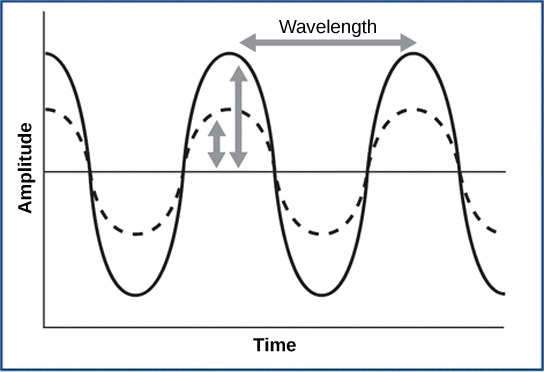
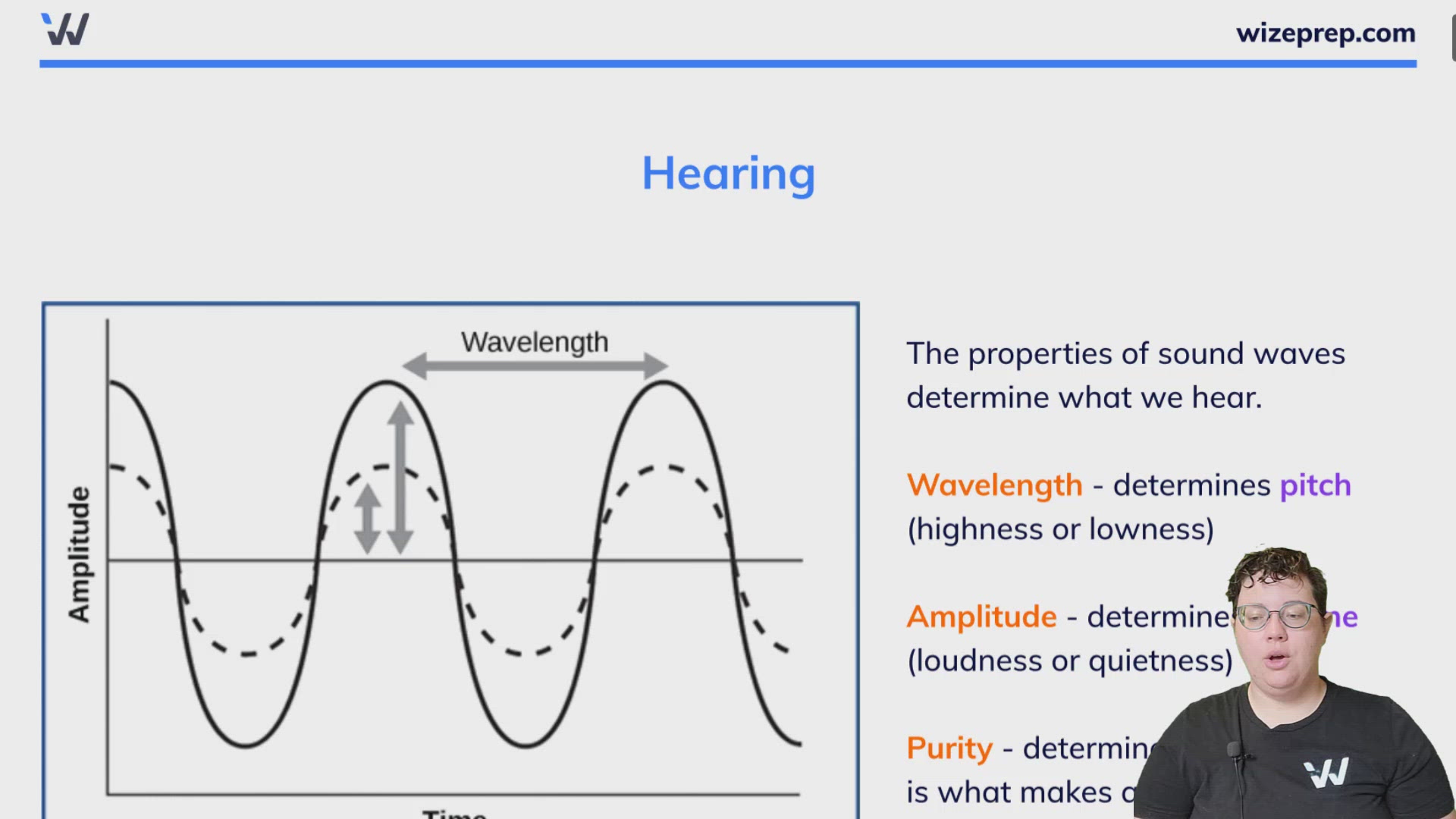
The properties of sound waves determine what we hear.
Wavelength - determines pitch (highness or lowness)
Amplitude - determines volume (loudness or quietness)
Purity - determines timbre. Timbre is what makes an oboe and a piano sound different when they play the same note.
Sound waves pass from the outer ear to the inner ear. As the sound travels, the form of the wave changes:
- Outer ear - movement of air
- Middle ear - movement of bone
- Inner ear - movement of fluid

The Cochlea
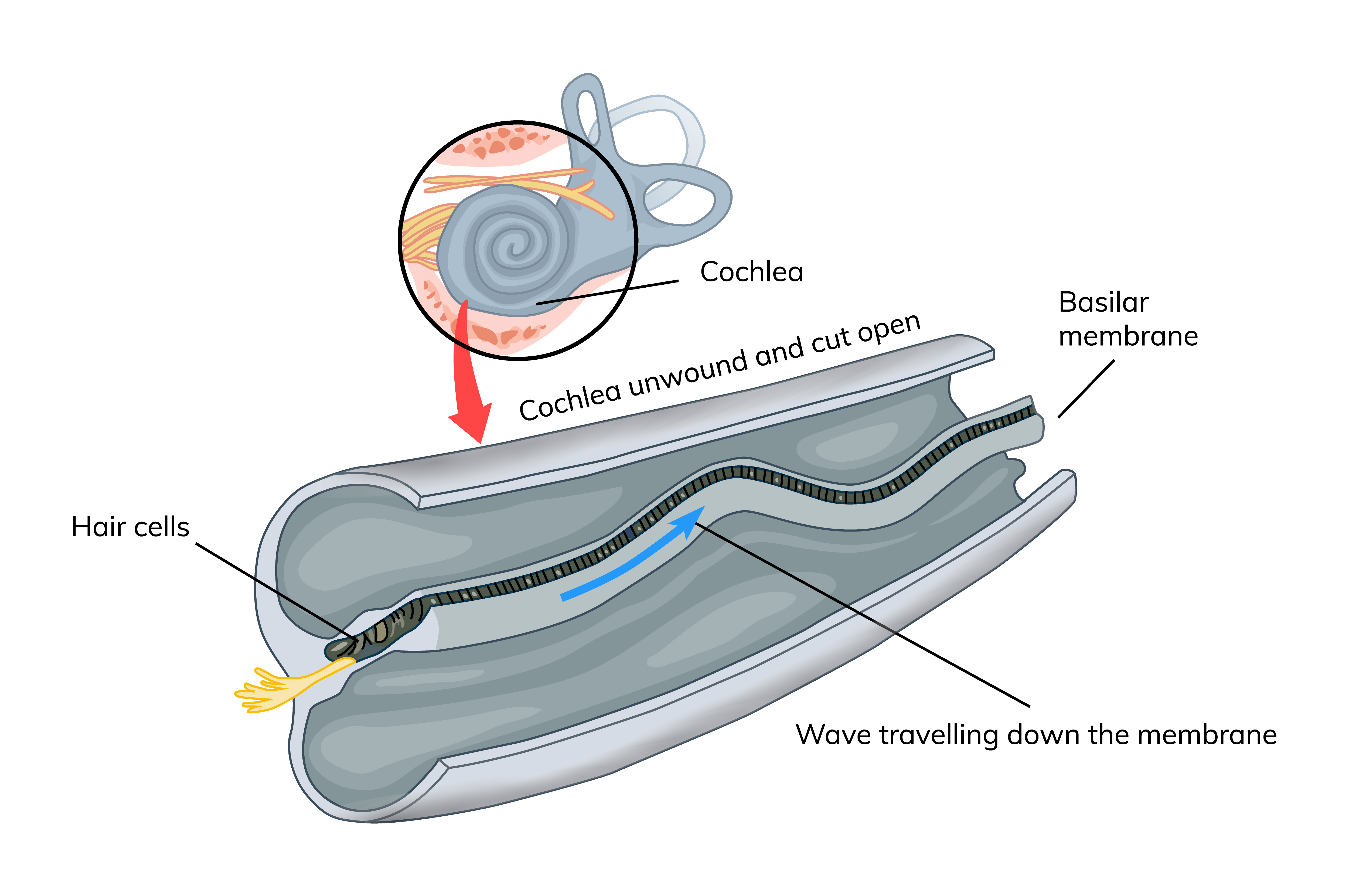
The cochlea in the inner ear is lined with hair cells.
When the fluid in the cochlea moves, the hair cells on the basilar membrane vibrate.
The vibration of the hair cells is transduced into a neural signal and sent to the brain.
Pitch Perception
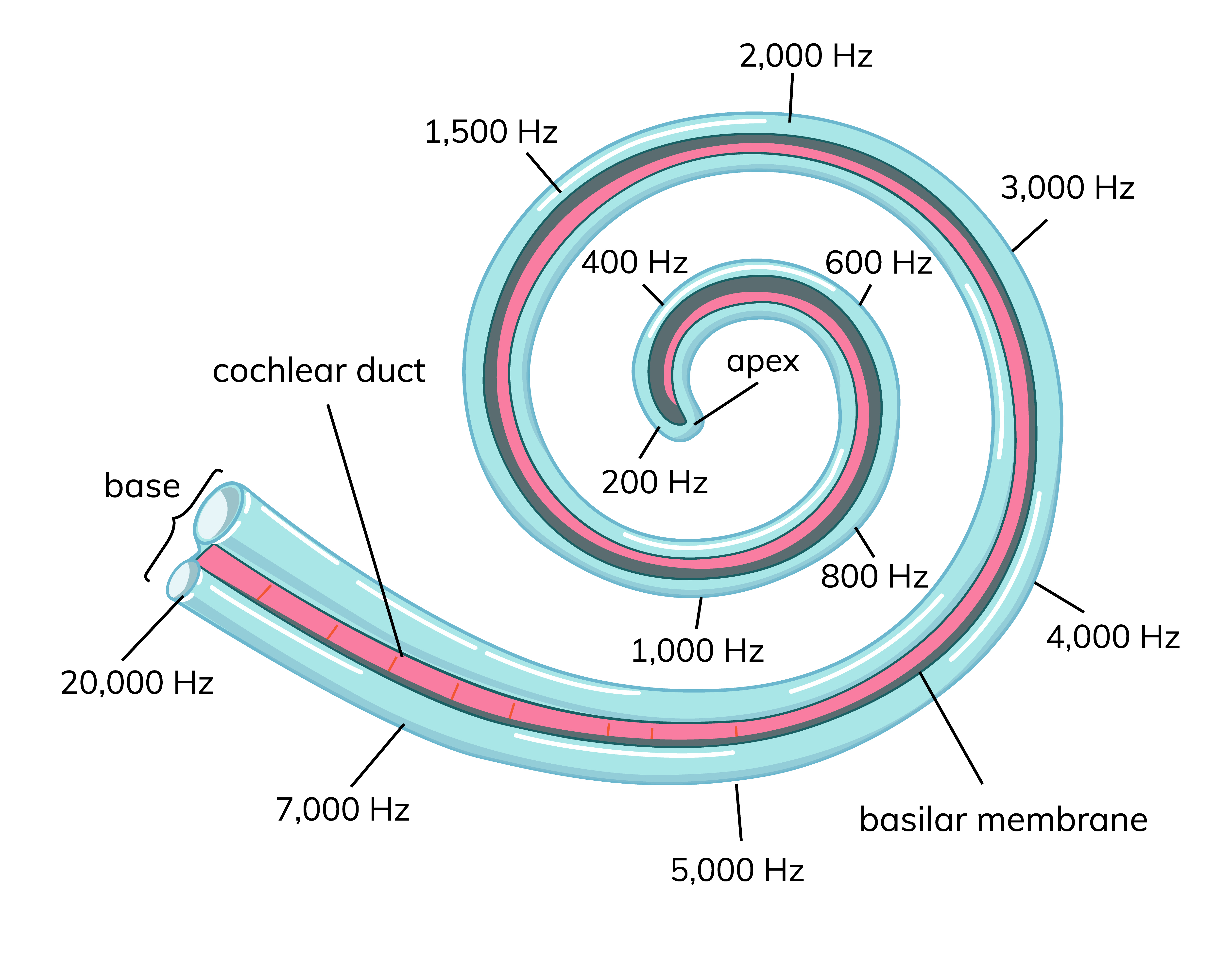
Place Theory - the vibration of particular hair cells corresponds to particular pitches. Think of plucking a string on a guitar or harp .
Corresponds well to evidence from age-related hearing loss - we tend to lose high pitches before low pitches.
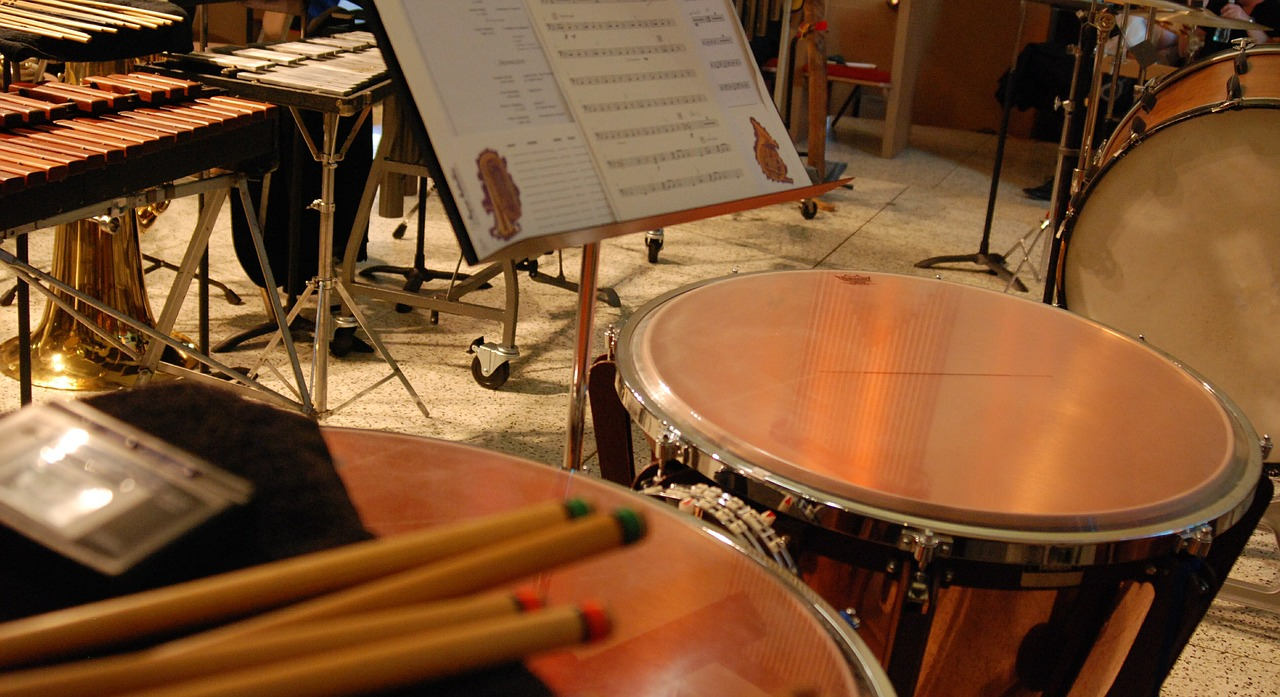
Frequency Theory - the whole basilar membrane vibrates at the rate of the pitch you are hearing. The firing of the auditory nerve corresponds to the rate of vibration. Think of a tympani.
- The auditory nerve cannot fire at the rate of the highest pitches we can hear
- Volley principle - different axons in the auditory nerve fire at different rates and it adds up to the right rate.
We use a combination of place theory and frequency theory to explain pitch perception - place for high sounds and frequency for low sounds.
Practice: Hearing
If the basilar membrane in the human ear were longer, place theory would predict that humans would be able to: