Wize University Psychology Textbook > Consciousness
Levels of Consciousness
Popular Courses
Psychology
University Study Guides
PSYC 100
Queen's University
PSYCH 1000
Western University
PSYCH 104
University of Alberta
PSYCHOL 1002A/B
Western University
Psychology
University Study Guides
PSYC*1000
University of Guelph
PSYC 100
McGill University
PSYC 101
University of British Columbia
HH/PSYC 1010 6.00
York University
PSYC 200
University of Calgary
PSYC 100B
Queen's University
PSYC 100A
University of Victoria
PSYC 200
Concordia University
PSYC 1004
Virginia Tech
PSYCH 100
Pennsylvania State University
PSC 001
University of California - Davis
PSY 2012
University of Florida
PSY 101
Michigan State University
PSYCH10
University of California - Los Angeles

0:00 / 0:00
Levels of Consciousness
Psychodynamic Perspective
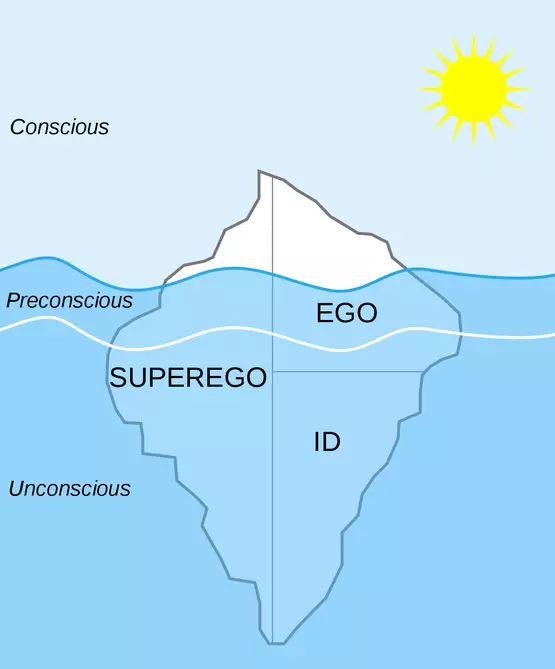
Conscious- things that we are currently aware of
Preconscious - things that we are not currently aware of, but can be brought to mind with relative ease.
Unconscious - things that cannot be brought to awareness in most circumstances.
Non-conscious processes do influence behaviour.
Example: placebo effects, subliminal perception
Cognitive Perspective
Unconscious processes are necessary to support conscious processes.
Controlled vs. Automatic Processing - some tasks are completed in an automatic way, that requires little or no awareness or effort. Some tasks are completed in a controlled way, that requires significant awareness and effort. Automatic processing is fast, but can result in errors and rarely comes up with novel solutions. Controlled processing is slow, but more creative.
Divided attention - the ability to perform more than one task at a time. Dividing attention is more difficult when tasks are more similar.
Low vs. High Awareness
Low awareness - processing of stimuli is largely unconscious, with only some stimuli making it into conscious awareness.
Examples: Priming (responding in a particular way because the concept has been "activated" without conscious awareness), Implicit Associations Test (IAT) that looks at reaction times to stimuli and categories to determine biases.
High awareness - effortful attention and decision making, of the kind required to solve a logic puzzle or listen to the details of a conversation.
We alternate between high and low awareness. We are more susceptible to influence by non-conscious stimuli when in a state of low awareness.
Flexible Correction Model - if we are aware that our thoughts or behaviours are being influenced by an outside source, we can correct against that bias.
Practice: Levels of Consciousness
During a particularly difficult exam, you are engaged in which level of consciousness?