Wize University Psychology Textbook > Consciousness
Stages of Sleep & Sleep Disorders
Popular Courses
Psychology
University Study Guides
PSYC 100
Queen's University
PSYCH 1000
Western University
PSYCH 104
University of Alberta
PSYCHOL 1002A/B
Western University
Psychology
University Study Guides
PSYC*1000
University of Guelph
PSYC 100
McGill University
PSYC 101
University of British Columbia
HH/PSYC 1010 6.00
York University
PSYC 200
University of Calgary
PSYC 100B
Queen's University
PSYC 100A
University of Victoria
PSYC 200
Concordia University
PSYC 1004
Virginia Tech
PSYCH 100
Pennsylvania State University
PSC 001
University of California - Davis
PSY 2012
University of Florida
PSY 101
Michigan State University
PSYCH10
University of California - Los Angeles

0:00 / 0:00
Stages of Sleep & Sleep Disorders
Watch Out!
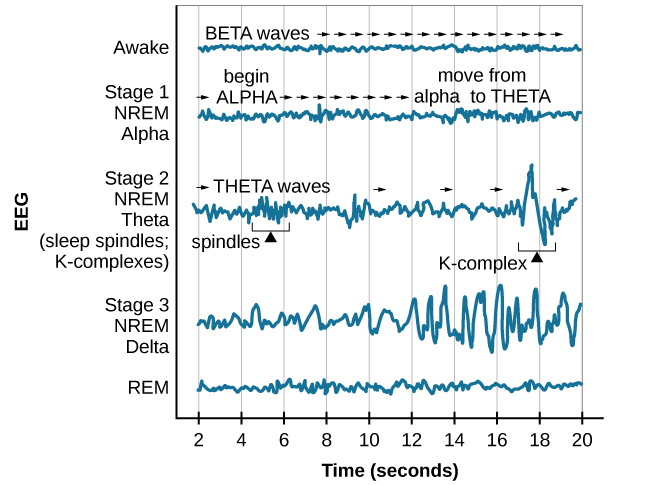
Although it's more intuitive, the order of waves from awake to most deeply asleep isn't alpha, beta, delta, theta! Remember BATD - beta, alpha, theta, delta
K-complex - a brief burst of high amplitude waves in Stage 2 sleep
Sleep spindle - a brief burst of high frequency waves in Stage 2 sleep
Rapid Eye Movement sleep (REM) - stage of sleep characterized by EEG waves that resemble wakefulness, while the body is unable to move. Eyes dart rapidly back and forth. Most dreaming happens in this stage.
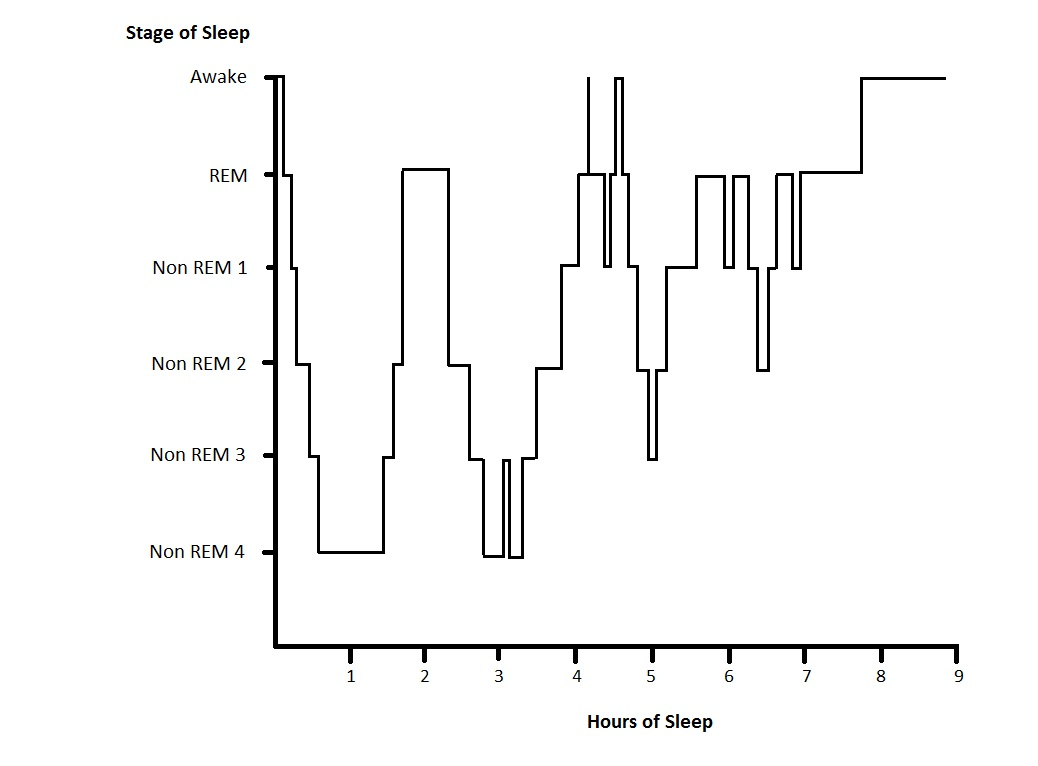
On average, sleep cycle is 90 minutes, but it gets shorter throughout the night.
When awoken during REM sleep we are more likely to report vivid dreaming.
Sleep-wake disorders
Insomnia - persistent difficulty falling asleep (onset insomnia) or staying asleep (maintenance insomnia).
Sleep terror - nightmare-like stage, but lacking in imagery. Occurs during NREM sleep, so the body is not immobilized. Often cause a sense of panic.
Sleep terror disorder - persistent, recurring episodes of sleep terrors.
Narcolepsy - Sleep takes over waking states, especially when relaxed. Can be disruptive and dangerous.
Sleep apnea - disorder characterized by pauses in breathing during that can last up to a minute. These pauses can cause the person to wake up, though they may not be aware of it. Can be caused by the brain not sending the right signals during sleep (central sleep apnea) or by the muscles in the throat relaxing too much, causing a blockage of the airway (obstructive sleep apnea)
Practice: Stages of Sleep
Mara is completing a sleep study. About 2.5 hours into her sleep, her EEG is recording predominantly theta waves. Which stage of sleep is she in?