Wize University Psychology Textbook > Consciousness
Circadian Rhythms
Popular Courses
Psychology
University Study Guides
PSYC 100
Queen's University
PSYCH 1000
Western University
PSYCH 104
University of Alberta
PSYCHOL 1002A/B
Western University
Psychology
University Study Guides
PSYC*1000
University of Guelph
PSYC 100
McGill University
PSYC 101
University of British Columbia
HH/PSYC 1010 6.00
York University
PSYC 200
University of Calgary
PSYC 100B
Queen's University
PSYC 100A
University of Victoria
PSYC 200
Concordia University
PSYC 1004
Virginia Tech
PSYCH 100
Pennsylvania State University
PSC 001
University of California - Davis
PSY 2012
University of Florida
PSY 101
Michigan State University
PSYCH10
University of California - Los Angeles

0:00 / 0:00
Circadian Rhythms
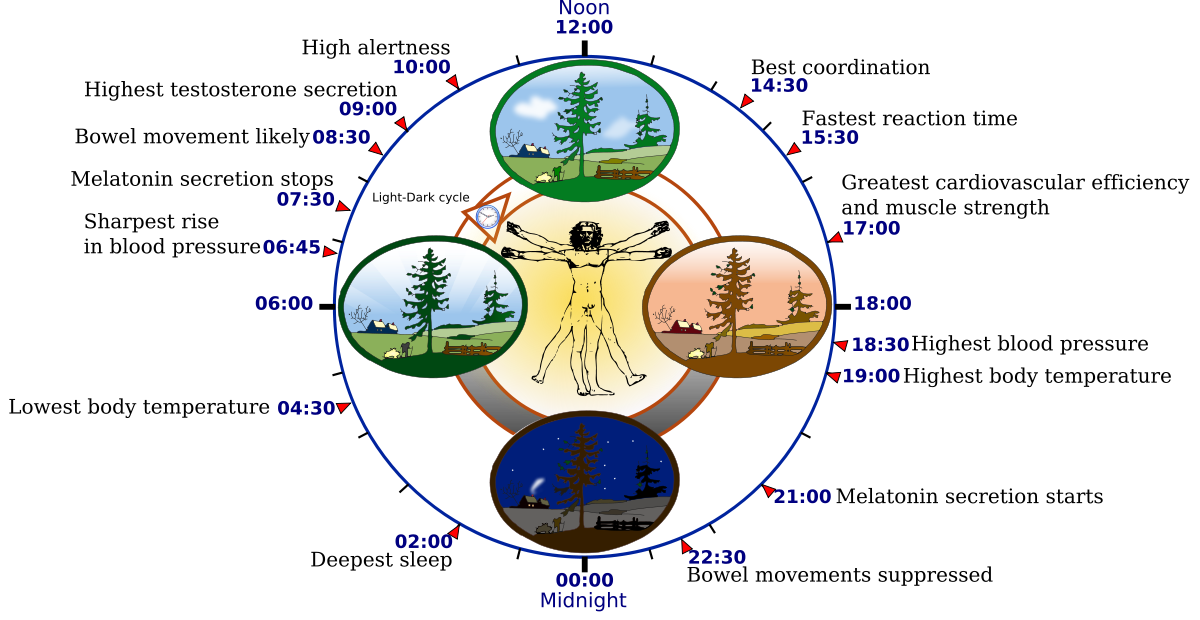
Circadian Rhythms - biological cycles that include our sleep/wake cycle, digestive system, body temperature, blood pressure and blood sugar. Most run on an approximately 24 hour cycle.
The sleep/wake cycle is highly influenced by exposure to light and dark.
Changes in light and dark trigger the release of melatonin - a hormone that signals the onset of sleep. In an environment with unchanging light (always light or always dark), the sleep/wake cycle lengthens to approximately 25 hours.
Jet lag is the result of the difference between your biological clock and the time of day - your body needs some time to adjust your sleep and wake times. Generally, jet lag is worse when travelling east because it is harder to advance the biological clock (i.e., go to bed when you aren't sleepy) than to push it back (i.e., stay up a little longer even though you're sleepy).
Practice: Circadian Rhythms
Without changes in light and dark, the human sleep cycle: