Popular Courses
Psychology
University Study Guides
PSYC 100
Queen's University
Psychology
University Study Guides
PSYC 100B
Queen's University
PSYC 200
Concordia University
PSYCH 100
Pennsylvania State University
PSC 001
University of California - Davis
PSY 2012
University of Florida
PSY 101
Michigan State University
PSYCH10
University of California - Los Angeles
PSY 101
San Diego State University
PSC 001Y
University of California - Davis
PSY 101
University of Arizona
PSYC 1001
University of Cincinnati
PSY 200
North Carolina State University
PSY 101
Arizona State University - Tempe
PSY-P 101
Indiana University - Bloomington
PSYC 1315
University of Texas at Arlington
PY 101
The University of Alabama
01:830:101
Rutgers University - New Brunswick (Busch)

0:00 / 0:00
Illusions
Our brains interpret sensory information using our past experiences, expectations, and surrounding information. Occasionally, this results in an incorrect perception of what is happening. When there is a mismatch between expectations and reality, optical illusions occur.
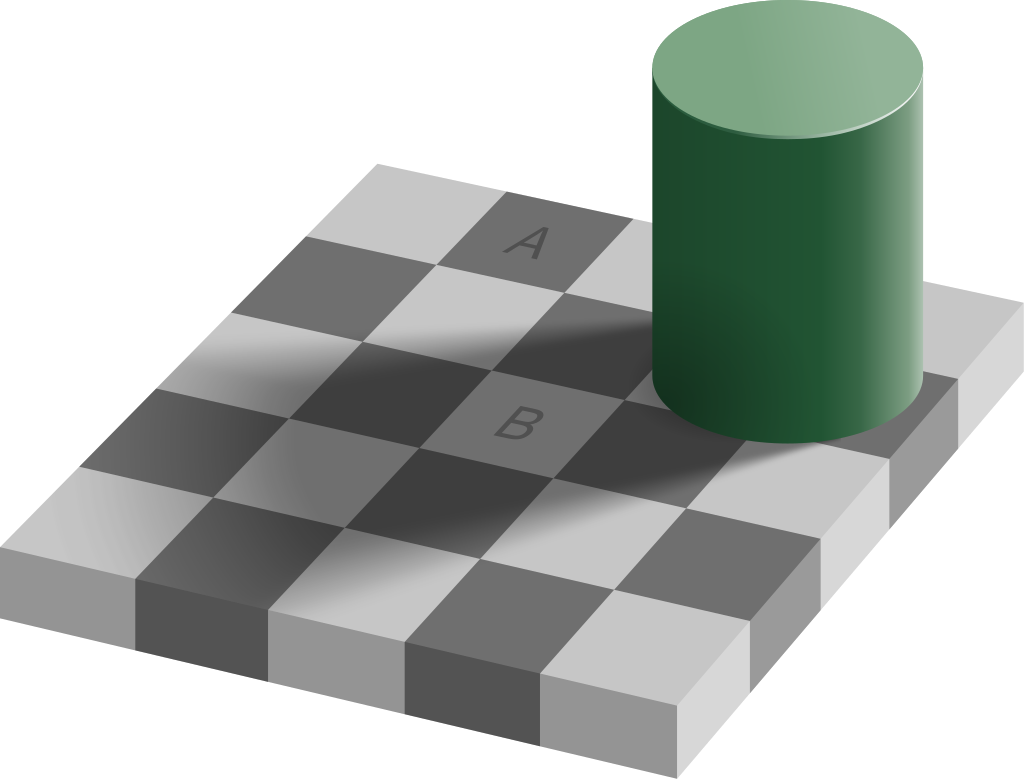
In the checker shadow illusion, we believe that the squares labelled A and B are different colours, even though in reality they are identical.
This is because our interpretation of the checkered surface relies on our knowledge of checkered surfaces (alternating colours) and colour constancy (that colours do not change when they are in relative dark or light).
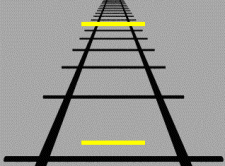
In the Ponzo illusion, we interpret the two yellow lines as being different lengths because of our expectation that as parallel lines get further away from us they visually converge (like railroad tracks).
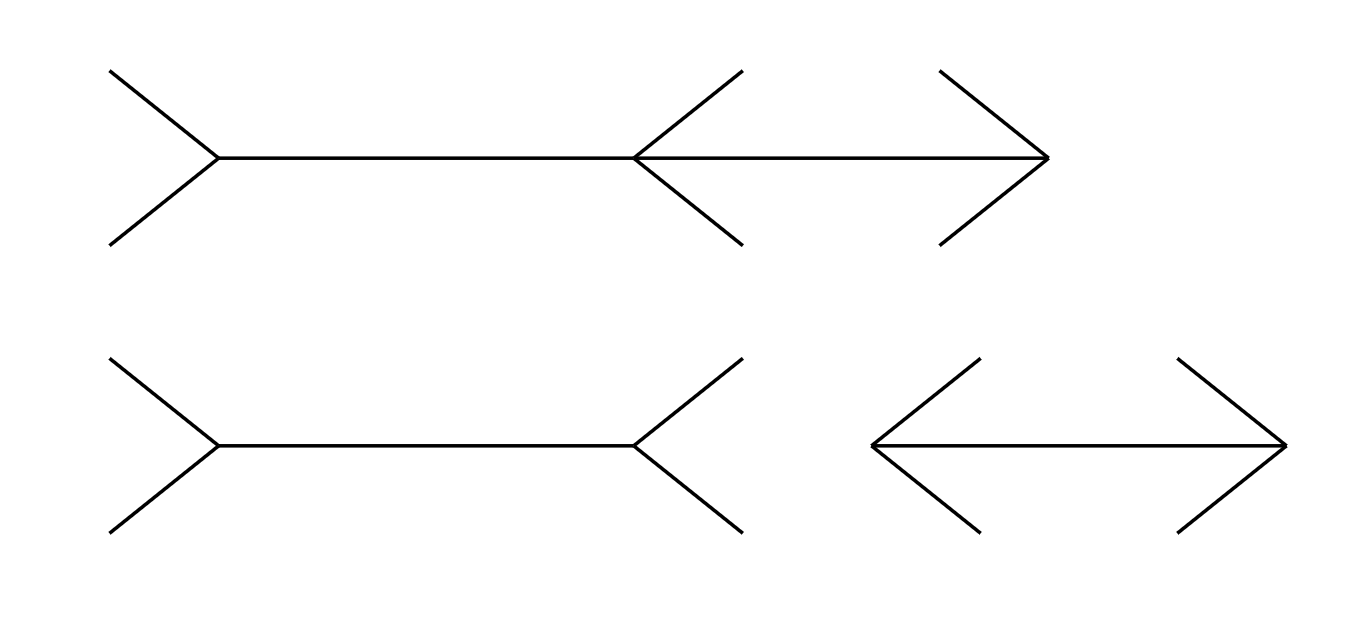
In the Muller-Lyer illusion, the line segment bordered by inward facing arrows is perceived as longer than the line segment bordered by outward facing arrows, even though both are the same length.
This illusion does not occur in people who are raised in environments without right angles. It is a result of our expectations for inner vs. outer corners of objects.

Mark Yourself Question
- Grab a piece of paper and try this problem yourself.
- When you're done, check the "I have answered this question" box below.
- View the solution and report whether you got it right or wrong.
Practice: Optical Illusions
Why do most optical illusions occur?