Wize University Psychology Textbook > Memory
Short-Term & Working Memory
Popular Courses
MCAT
General Course
Psychology
University Study Guides
PSYC 100
Queen's University
PSYCH 1000
Western University
PSYCH 1X03
McMaster University
PSYCH 104
University of Alberta
PSYCHOL 1002A/B
Western University
Psychology
University Study Guides
PSYC*1000
University of Guelph
PSYC 100
McGill University
PSY100H1
University of Toronto
PSYC 101
University of British Columbia
HH/PSYC 1010 6.00
York University
PSYC 200
University of Calgary
PSYC 100B
Queen's University
PSYC 100A
University of Victoria
PSYC 200
Concordia University
PSYC 1004
Virginia Tech
PSYCH 100
Pennsylvania State University
PSC 001
University of California - Davis

0:00 / 0:00
Short-Term & Working Memory

Short-term memory stores a limited number of items (5-9) for up to approximately one minute.
This allows us to complete many daily tasks, like remembering our grocery list while walking through the produce section.
Information from sensory memory is moved into short-term memory through attention. Information from short-term memory is moved into long-term memory through rehearsal.
Watch Out!
The way psychologists use the term "short-term memory" is very different from how it is used in every day life!
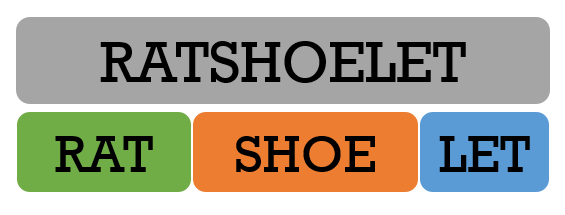
Chunking is a process by which we reduce the number of items we have to remember by grouping them. This is usually on the basis of prior knowledge. Instead of remembering 10 individual letters, we remember 3 words.
Working Memory
Short-term memory is a storage system, whereas working memory is a way of processing and manipulating information.
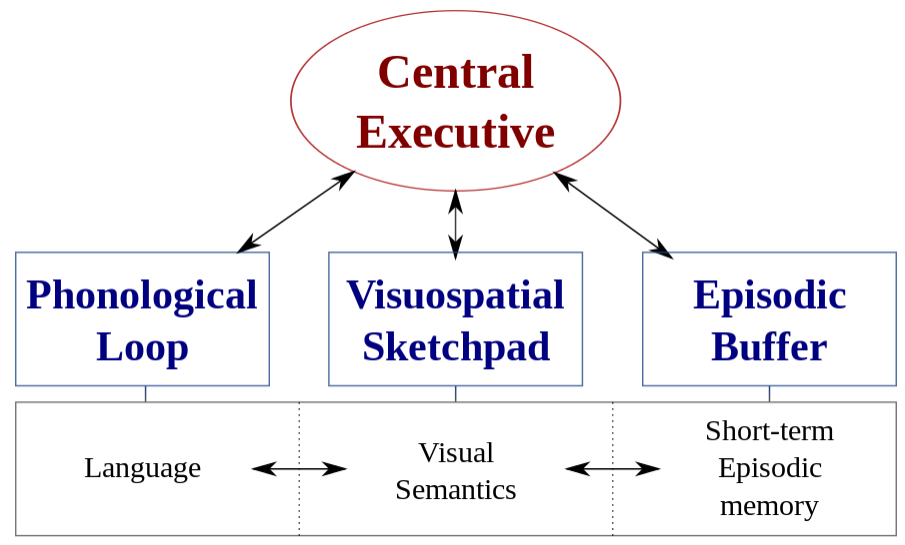
Four components:
- phonological loop - processing of speech and speech-like sounds through articulatory rehearsal (repeating it to ourselves)
- visuospatial sketchpad - processing of visual and spatial information
- episodic buffer - multi-model storage
- central executive - directs and maintains attention, coordinates the actions of the subsystems
Practice: Short-Term & Working Memory
Which of the following is not true about short-term memory?
Practice: Short-Term & Working Memory
Which of the following is a strategy used to remember more items in short term memory?
Practice: Short-Term & Working Memory
The main difference between working memory and short term memory is: