Wize University Psychology Textbook > Neuroscience
Development of the Nervous System
Popular Courses
MCAT
General Course
Psychology
University Study Guides
PSYC 100
Queen's University
PSYCH 1000
Western University
Psychology
University Study Guides
PSYC*1000
University of Guelph
PSYCH 1XX3
McMaster University
PSYC 100
McGill University
HH/PSYC 1010 6.00
York University
PSYC 100B
Queen's University
PSYC 200
Concordia University
PSYC 1004
Virginia Tech
PSYCH 100
Pennsylvania State University
PSC 001
University of California - Davis
PSY 2012
University of Florida
PSY 101
Michigan State University
PSYCH10
University of California - Los Angeles
PSY 101
San Diego State University
PSC 001Y
University of California - Davis
PSY 101
University of Arizona
0:00 / 0:00
Prenatal Development
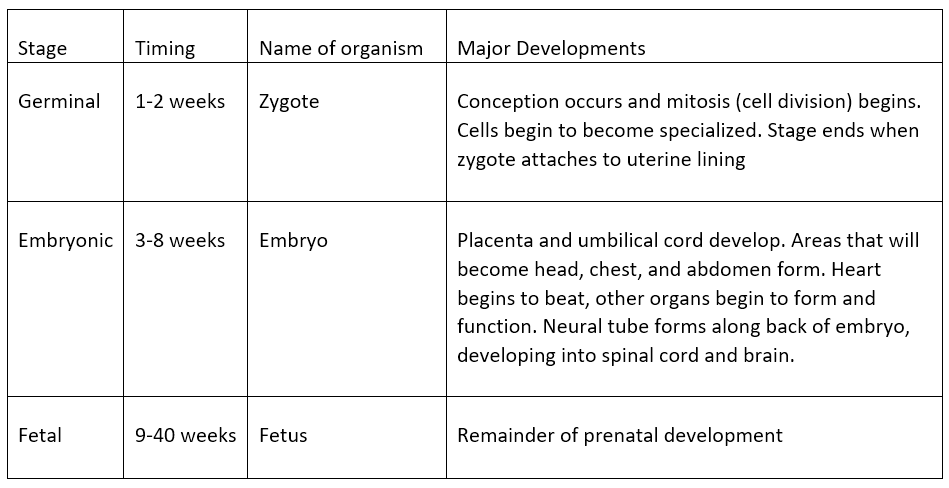
Nervous System Development
Shortly after fertilization, the zygote develops the ectoderm, mesoderm, and endoderm.
Throughout development:
- Ectoderm develops into outer coverings of the body: skin, nails, cells of the nervous system and sense organs.
- Mesoderm develops into structures between the ectoderm and endoderm: bone, muscle, blood, etc.
- Endoderm develops into our inner lining (digestive tract), as well as liver, pancreas (also related to digestion).
Neural Tube
At about 4-6 weeks after fertilization, the neural tube forms. The brain and spinal cord will develop out of this neural tube.
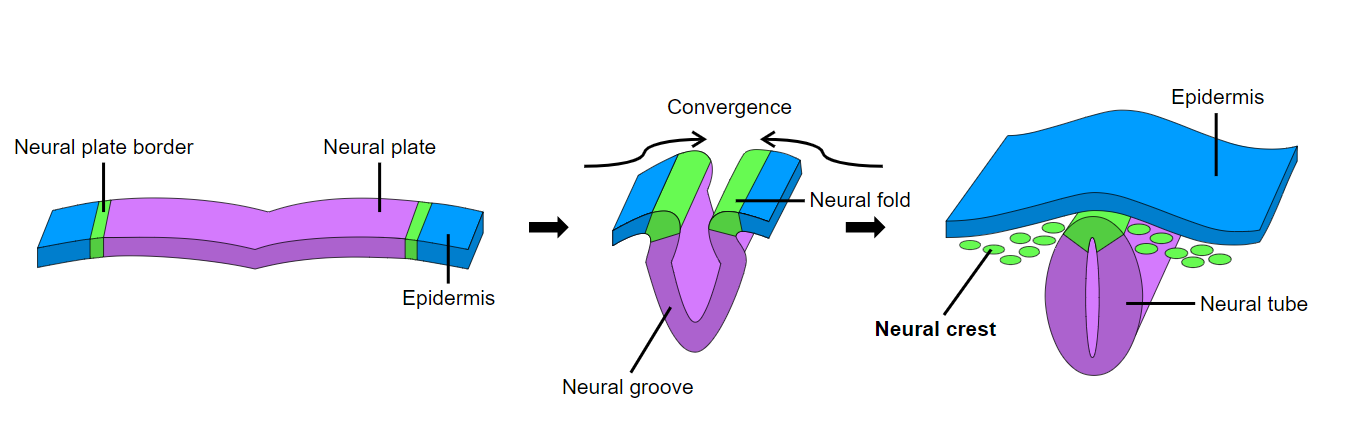
If the neural tube fails to close properly, spina bifida and anencephaly can result.
Spina bifida results when the bottom part of the neural tube fails to close. Spina bifida can result in paralysis of the legs, lack of bowel and bladder control, and learning disabilities.
Anencephaly results when the top part of the neural tube fails to close. The brain either fails to develop or does not develop completely. Anencephaly is fatal.
Prenatal Brain Development
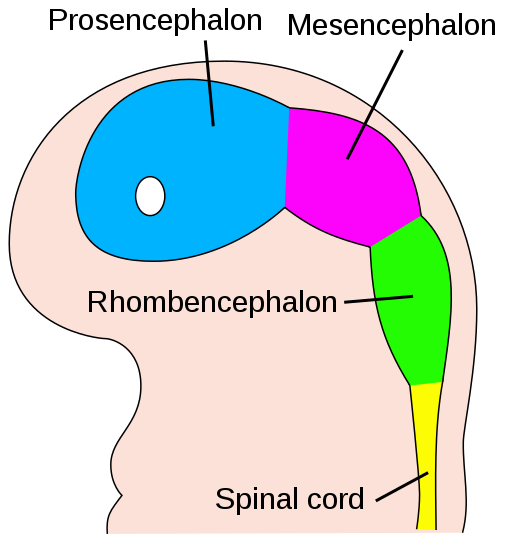
Beginning at approximately 25 days, the brain begins to develop.
The prosencephalon becomes the forebrain.
The mesencephalon becomes the midbrain.
The rhombencephalon becomes the hindbrain.
Prenatal Environment
Teratogen - an environmental agent (biological, chemical, or physical) that causes damage to the embryo or fetus during development.
- Alcohol use can result in intellectual disability or Fetal Alcohol Spectrum Disorder
- Smoking reduces oxygen in the developing fetus or embryo and can result in premature birth, low birth weight, stillbirth, and sudden infant death syndrome (SIDS)
- Many drugs, including illegal drugs, prescription drugs, and over-the-counter drugs, can affect the developing fetus
- Illnesses such as measles, HIV, herpes, and rubella can affect the developing fetus
- Exposure to radiation can result in impaired growth, birth defects, abnormal brain function, and cancer later in life
Practice: Development of the Nervous System
The prosencephalon develops into the: