Wize University Psychology Textbook > Neuroscience
Studying the Brain
Popular Courses
MCAT
General Course
Psychology
University Study Guides
PSYC 100
Queen's University
PSYCH 1000
Western University
PSYCH 104
University of Alberta
PSYCHOL 1002A/B
Western University
Psychology
University Study Guides
PSYC*1000
University of Guelph
PSYCH 1XX3
McMaster University
PSYC 100
McGill University
PSY100H1
University of Toronto
PSYC 101
University of British Columbia
HH/PSYC 1010 6.00
York University
PSYC 200
University of Calgary
PSYC 100B
Queen's University
PSYC 100A
University of Victoria
PSYC 200
Concordia University
PSYC 1004
Virginia Tech
PSYCH 100
Pennsylvania State University
PSC 001
University of California - Davis
0:00 / 0:00
Studying the Brain
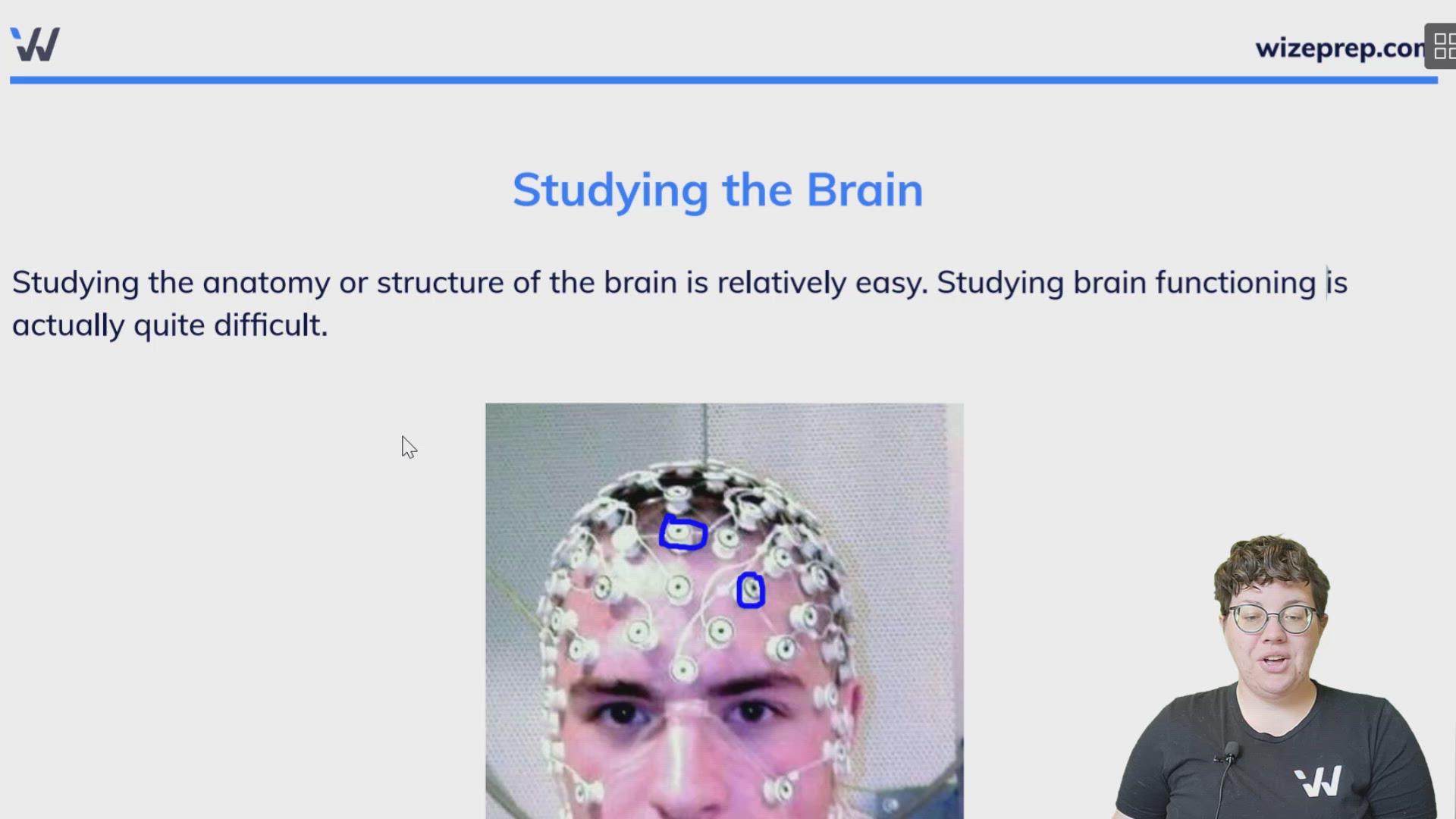
Studying the anatomy or structure of the brain is relatively easy. Studying brain functioning is actually quite difficult.
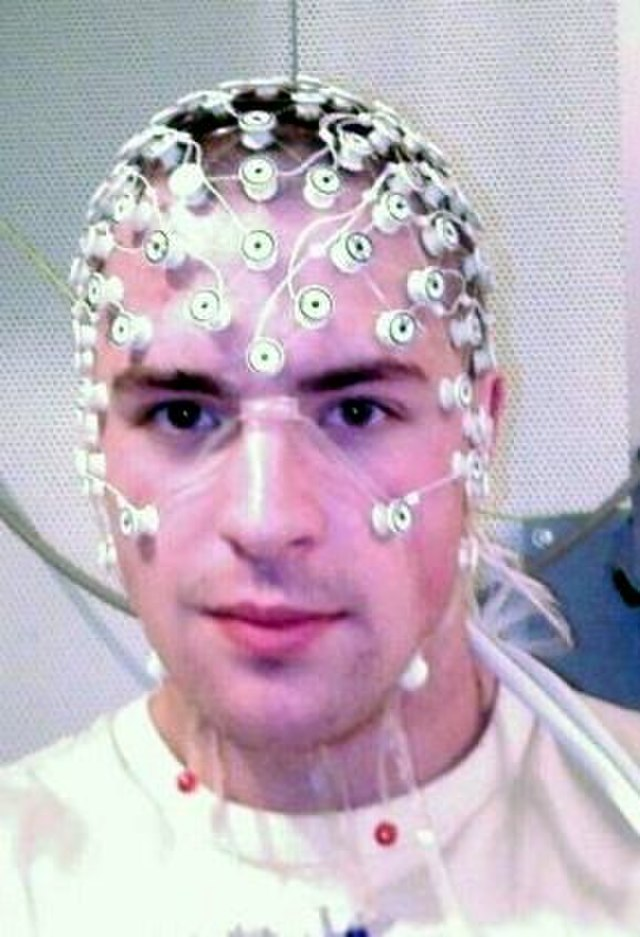
EEG
- Electroencephalogram
- Measures brain activity through electrical impulses
- Electrodes are placed on the scalp, typically using a brain cap
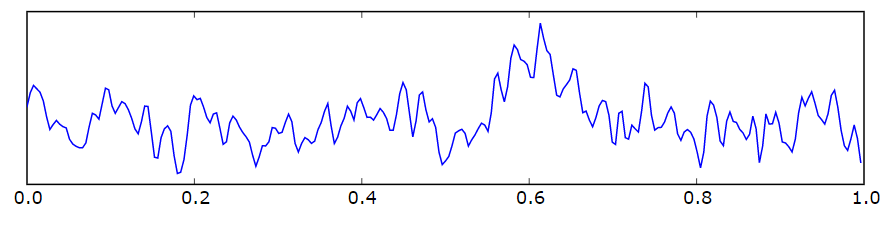
- Brain activity shows up as lines measuring each area of brain
- It is important to remain as still as possible during testing as EEGs can pick up the slightest of movements, such as eye blinks and jaw tension
CAT (or CT)
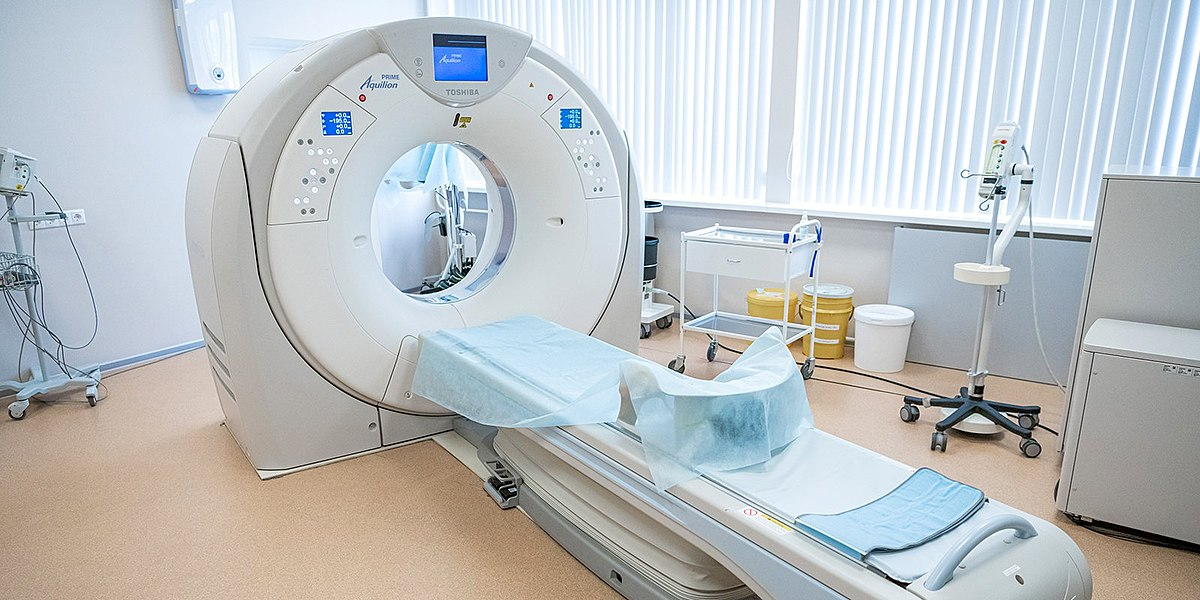
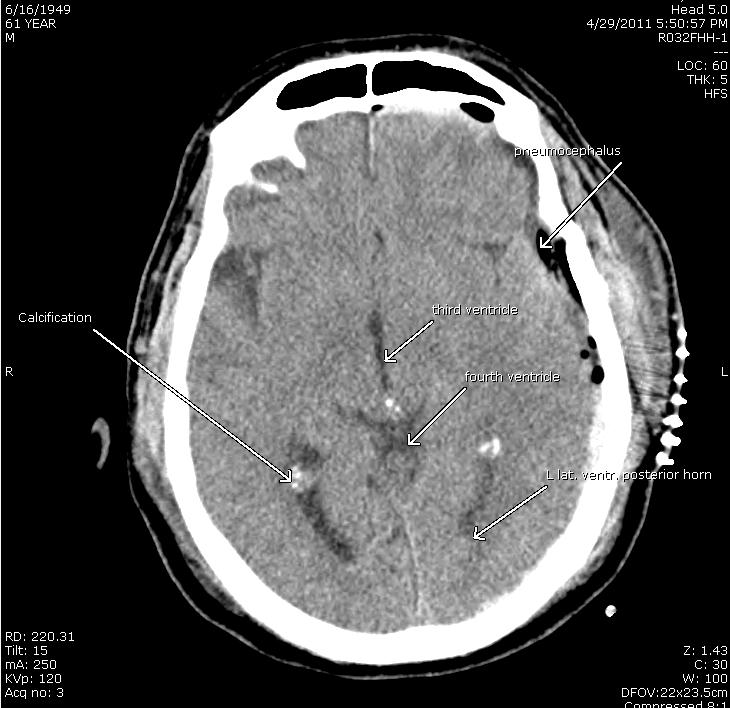
Computerized Axial Tomography
Computer processing allows neurologists to create cross-sectional imaging using several X-Ray images
Provides images inside the brain without cutting
Does not show brain activity - only structure
PET
Positron Emission Tomography
Uses a form of radioactive sugar to creates images that evaluate biological functions of cells
PET scan images show bright spots where higher levels of chemical activity is present
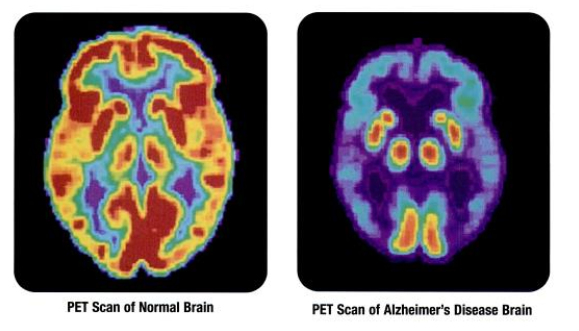
Photo by 7mike5000/ Public Domain
MRI
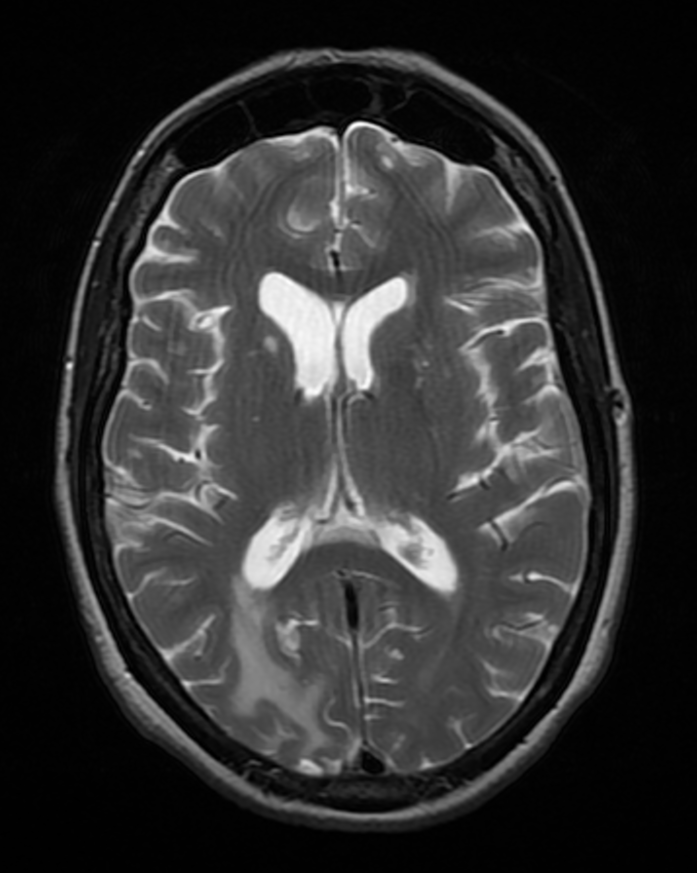
Magnetic Resonance Imaging
Uses powerful magnets to make detailed images of the inside of your brain
Does not show brain activity - only structure
fMRI
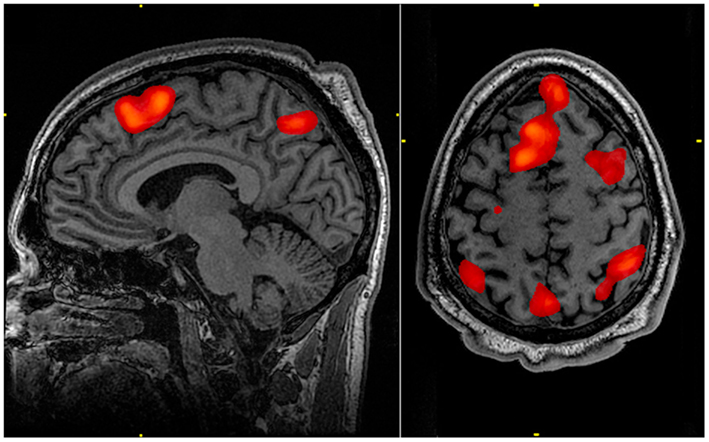
Functional Magnetic Resonance Imaging
Assesses brain activity by measuring blood flow in the brain
Practice: Studying the Brain
An EEG measures the relationship between brain and behaviour using: