Wize University Psychology Textbook > Emotion & Motivation
Emotional Communication
Popular Courses
MCAT
General Course
Psychology
University Study Guides
PSYC 100
Queen's University
PSYCH 104
University of Alberta
Psychology
University Study Guides
PSYC*1000
University of Guelph
PSYCHOL 1003A/B
Western University
HH/PSYC 1010 6.00
York University
PSYC 100B
Queen's University
PSYC 201
University of Calgary
PSYC 200
Concordia University
PSYC 1004
Virginia Tech
PSYCH 100
Pennsylvania State University
PSC 001
University of California - Davis
PSY 2012
University of Florida
PSY 101
Michigan State University
PSYCH10
University of California - Los Angeles
PSY 101
San Diego State University
PSC 001Y
University of California - Davis
PSY 101
University of Arizona
0:00 / 0:00
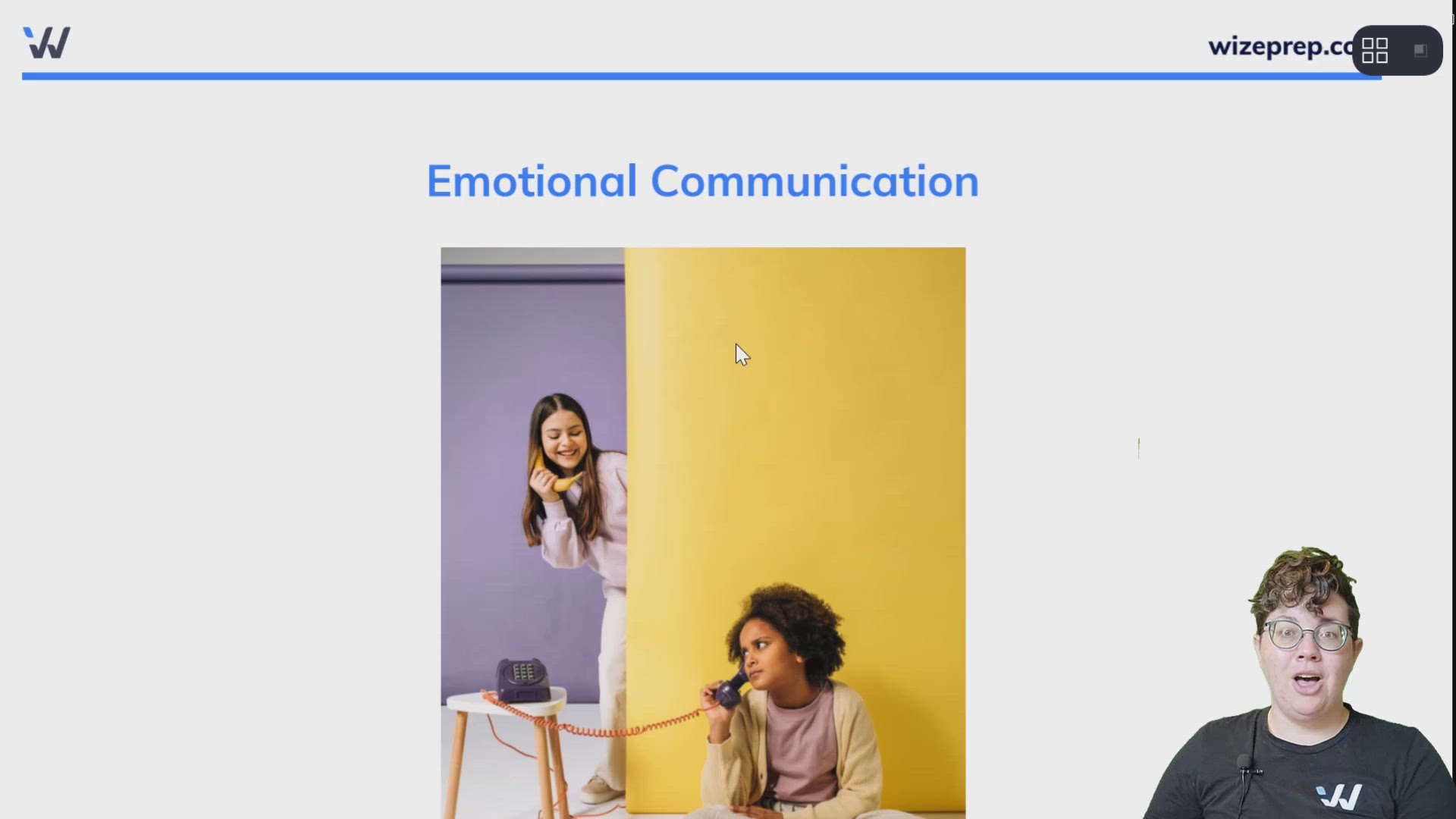
Emotional Communication

Emotional expression - observable sign of an internal emotional state.
Emotions are expressed through:
- facial expressions
- tone of voice
- gait
- direction of gaze
- physical interactions with others
Emotional expressions communicate with others, which has an evolutionary advantage - we can warn off enemies and indicate submission.
Universality hypothesis - human facial expressions are innate and shared across all human populations. Appears true for basic emotions and possibly embarrassment, surprise, amusement, guilt, shame, and pride as well.
- Congenitally blind people display smiles when happy
- Babies make disgusted faces when given bitter tastes
- We are pretty good at identifying facial expressions made by people from other cultures
Facial feedback hypothesis - emotional expressions can cause the emotional experiences they signify.
Deceptive expression
We sometimes (intentionally or unintentionally) display emotional expressions that are inconsistent with our internal state.
Display rules - norms for the appropriate expression of emotion. Vary between cultures and even between situations.
Example - it may be appropriate to roll your eyes at a friend, but not at a professor or grandparent.
Techniques for obeying display rules:
- Intensification - exaggerating the expression of an emotion. Example - pretending to be thrilled when your partner's parent makes a meal you don't like.
- Deintensification - muting the expression of one’s emotion. Example - being a "good sport" when you lose an important game.
- Masking - expressing one emotion while feeling another. Example - feigning interest when your friend tells you every detail of the date they went on.
- Neutralizing - showing no expression of the emotion one is feeling. Example - poker face.
Practice: Emotional Communication
Margot's partner gives her a set of teas as a gift, and Margot tries to hide her disappointment by thanking them for the thoughtful gift. This is an example of: