Wize University Psychology Textbook > Interacting with Tough Content
Navigating Psychological Principles
Popular Courses
Psychology
University Study Guides
PSYC 100
Queen's University
Psychology
University Study Guides
PSYC 100B
Queen's University
PSYC 200
Concordia University
PSYCH 100
Pennsylvania State University
PSC 001
University of California - Davis
PSY 2012
University of Florida
PSY 101
Michigan State University
PSYCH10
University of California - Los Angeles
PSY 101
San Diego State University
PSC 001Y
University of California - Davis
PSY 101
University of Arizona
PSYC 1001
University of Cincinnati
PSY 200
North Carolina State University
PSY 101
Arizona State University - Tempe
PSY-P 101
Indiana University - Bloomington
PSYC 1315
University of Texas at Arlington
PY 101
The University of Alabama
01:830:101
Rutgers University - New Brunswick (Busch)
0:00 / 0:00
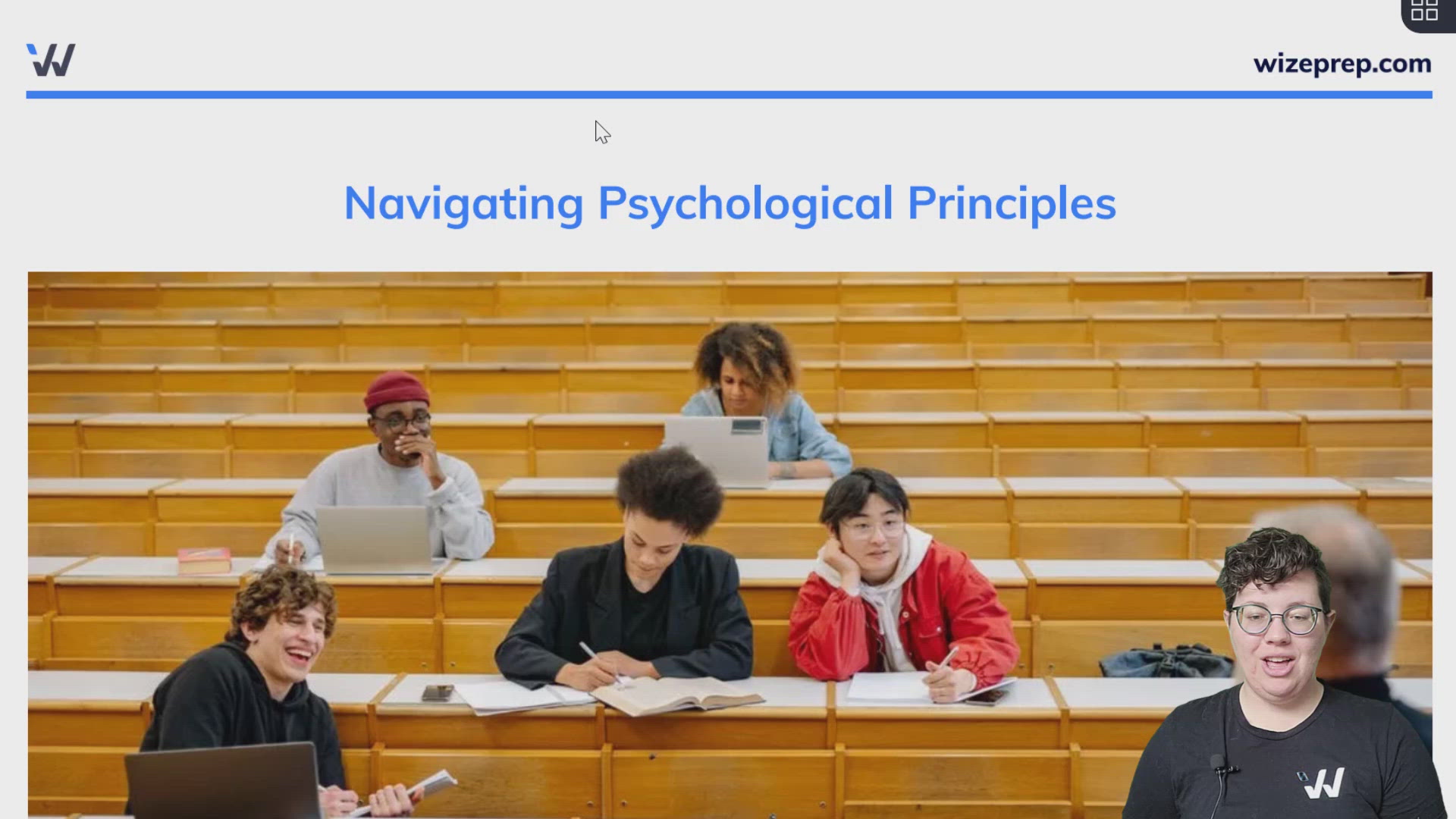
Navigating Psychological Principles

Academic Adjustment
Academic adjustment is a person's ability to cope with the educational demands of post-secondary. It includes class performance as well as motivation to learn, a sense of purpose, satisfaction with life, and non-academic factors like your social and emotional adaptation to university life.
Academic adjustment predicts academic achievement and degree completion.
Challenges to academic adjustment:
- financial stress
- class format
- freedom & flexibility
- loneliness
- social opportunities
- personal and emotional problems
Challenges in Introductory Psychology
Many students struggle with introductory psychology because of a misconception that it will be an easy course.
Academic challenges
Psychology is a science. A strong understanding of research methods is required in order to understand psychology content.
Psychology is interdisciplinary. In introductory psychology, some of the content overlaps with neuroscience, chemistry, biology, sociology, statistics, and other courses. It can be difficult to apply psychological thinking to topics you are already familiar with.
Psychology is broad. There are so many different topics to study within psychology, and as you will learn in the memory chapter, it is not easy to bounce between different types of content.
Multiple methods of learning. You will encounter textbook reading, online quizzes, lectures, and practice assignments. This blend of methods can lead to better learning, but it can also be frustrating.
Emotional Challenges
Psychology is about human processes. Course content is highly relatable and makes reference to many experiences we have had. Occasionally, this can bring up negative events from the past or our current lives.
University mental health. More than 1/3rd of first year undergraduates report at least one diagnosable mental illness. The most common are Major Depressive Disorder and Generalized Anxiety Disorder.
More than 1/5th of students report substance use disorders.
Most students report that they are not receiving adequate treatment.
Nearly 1/3rd of students report having seriously thought of killing themselves intentionally and more than 1/6th report having made a plan to do so.
Mental health problems are common, and can affect how you view and respond to course content.
Strategies for Navigating the Course

Studying:
- Schedule your time
- Keep focused
- Find a place to work
- Set goals
Emotional Challenges:
- Look ahead in your syllabus and table of contents
- Talk to instructors and teaching assistants
- Manage stress levels through coping strategies
- Mental hygiene - maintaining mental health
Self-care and coping strategies:
- Deep breathing
- Progressive muscle relaxation
- Visualization
- Mental grounding
- Physical grounding
- Planned exercise
- Cultural, diversity, and faith-based resources
- Healthy eating
Practice: Navigating Psychological Principles
Approximately what percentage of people will experience diagnosable mental health issues in university?