Wize University Psychology Textbook > Development
Emerging Adulthood
Popular Courses
MCAT
General Course
Psychology
University Study Guides
Psychology
University Study Guides
PSYC*1000
University of Guelph
PSYCH 1XX3
McMaster University
PSY100H1
University of Toronto
PSYCHOL 1003A/B
Western University
HH/PSYC 1010 6.00
York University
PSYC 102
University of British Columbia
PSYC 201
University of Calgary
PSYC 200
Concordia University
PSYC 1004
Virginia Tech
PSYCH 100
Pennsylvania State University
PSC 001
University of California - Davis
PSY 2012
University of Florida
PSY 101
Michigan State University
PSYCH10
University of California - Los Angeles
PSY 101
San Diego State University
PSC 001Y
University of California - Davis
PSY 101
University of Arizona
0:00 / 0:00
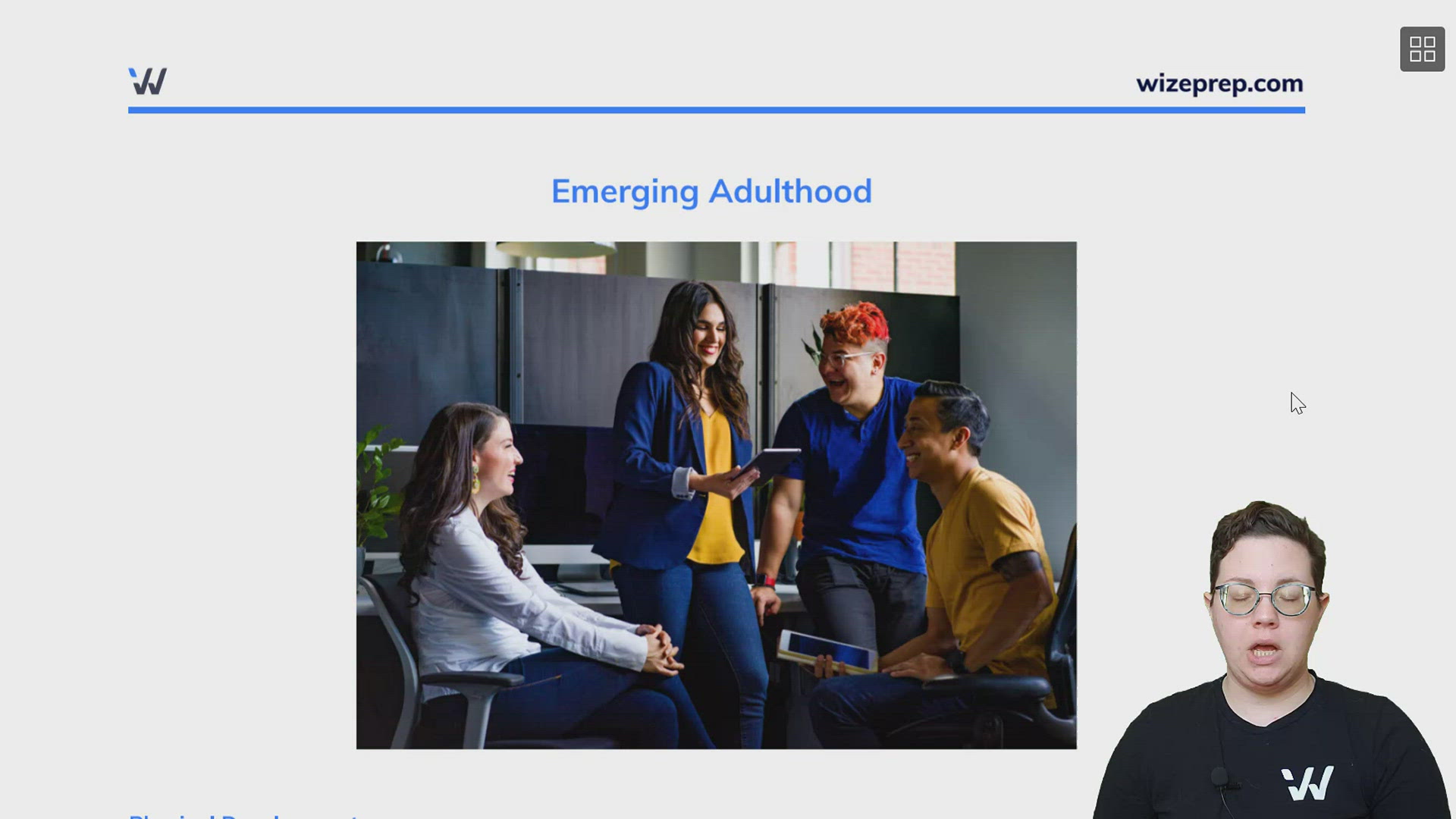
Emerging Adulthood

Physical Development
Muscle strength, vision, hearing, reaction time, and coordination at peak levels in mid-20s
Cognitive Development
Peak performance on a number of cognitive tasks in early adulthood, including working memory and short-term memory tasks
Post-formal thought - a stage added onto Piaget's stages by later theorists. People can reason in a logical way about opposing points of view and see both sides of arguments
Social, Emotional, and Personality Development
Early adulthood is a period of transition involving more separation from parents
Marital satisfaction declines in first few years, then stabilizes. Marital satisfaction also declines for a year or two after the birth of a first baby
Establishing a career involves stages:
- Growth stage (childhood to mid-20s) - form initial impressions about careers we do or don't like
- Exploration stage (childhood to mid-20s, but after growth) - pursue training or education related to careers we are interested in
- Establishment stage (mid-20s to mid-40s) - begin to establish career. May begin with a period of job instability
- Maintenance stage (mid-40s to late adulthood) - stable career
- Decline stage (late adulthood) - interest in work declines, eventually retire
Practice: Emerging Adulthood
Which of the following was not one of Piaget's original stages of development?