
Wize University Psychology Textbook > Stress & Health
Recognizing Illness
Popular Courses
Psychology
University Study Guides
Psychology
University Study Guides
PSYC 100
McGill University
PSY100H1
University of Toronto
PSYCHOL 1003A/B
Western University
PSYC 201
University of Calgary
PSYC 200
Concordia University
PSYC 1004
Virginia Tech
PSYCH 100
Pennsylvania State University
PSC 001
University of California - Davis
PSY 2012
University of Florida
PSY 101
Michigan State University
PSYCH10
University of California - Los Angeles
PSY 101
San Diego State University
PSC 001Y
University of California - Davis
PSY 101
University of Arizona
PSYC 1001
University of Cincinnati
PSY 200
North Carolina State University
PSY 101
Arizona State University - Tempe
PSY-P 101
Indiana University - Bloomington
0:00 / 0:00
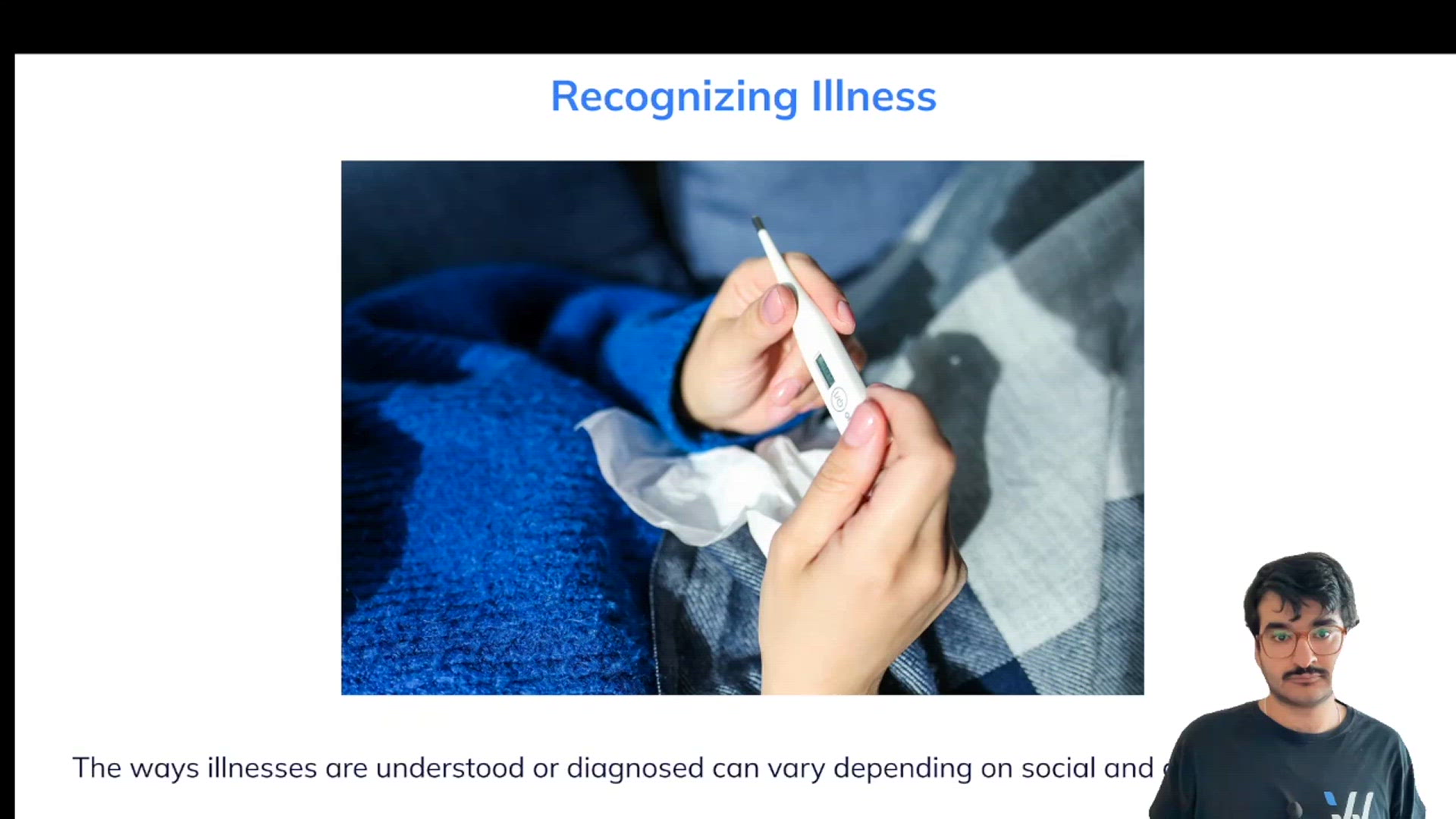
Recognizing Illness
The ways illnesses are understood or diagnosed can vary depending on social and cultural factors
Many illnesses have overlapping symptoms, and many share a high degree of comorbidity — when illnesses often occur together (i.e. depression and anxiety)
Cultural norms or stigma can also prevent individuals from recognizing signs of an illness or from seeking care
Cognitive factors can also play a role in recognizing illness:
- How much pain is perceived?
- How much impairment of daily functioning is felt?
- How long have the symptoms been noticeable?
- How likely are you to seek support vs. feeling self-reliant?
- Does your social support system encourage or discourage help-seeking?
Public health campaigns, such as those encouraging screening and testing, can also increase the early detection of illnesses