Wize University Psychology Textbook > Stress & Health
Stress Management
Popular Courses
Psychology
University Study Guides
Psychology
University Study Guides
PSYC 100
McGill University
PSY100H1
University of Toronto
PSYCHOL 1003A/B
Western University
HH/PSYC 1010 6.00
York University
PSYC 102
University of British Columbia
PSYC 201
University of Calgary
PSYC 200
Concordia University
PSYC 1004
Virginia Tech
PSYCH 100
Pennsylvania State University
PSC 001
University of California - Davis
PSY 2012
University of Florida
PSY 101
Michigan State University
PSYCH10
University of California - Los Angeles
PSY 101
San Diego State University
PSC 001Y
University of California - Davis
PSY 101
University of Arizona
PSYC 1001
University of Cincinnati
PSY-P 101
Indiana University - Bloomington
0:00 / 0:00
Stress Management

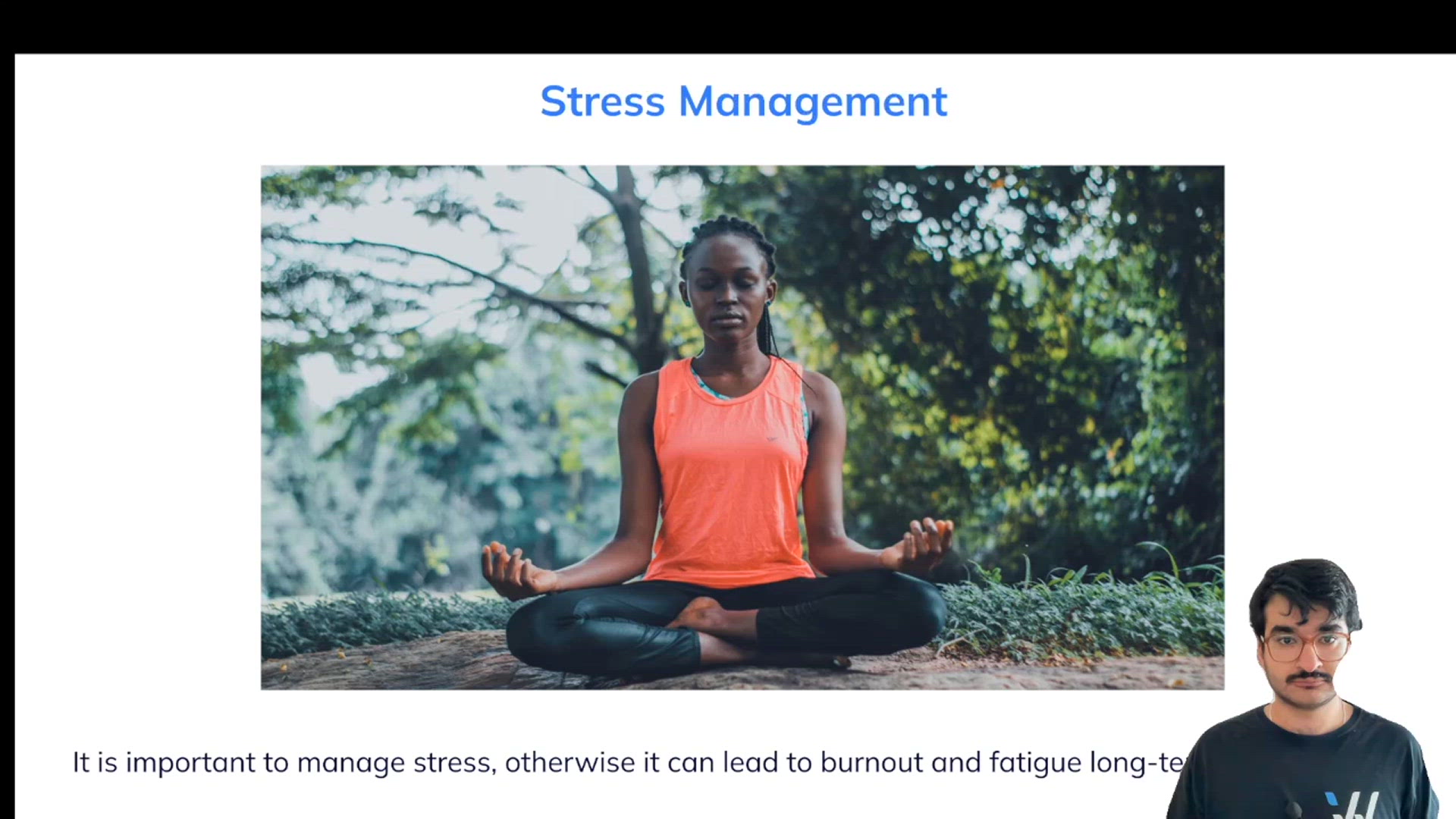
It is important to manage stress, otherwise it can lead to burnout and fatigue long-term!
Protective factors are things that can help you cope with and manage your stress. They can include:
1. Social support - having a trustworthy, reliable group of close family or friends can reduce stress levels and even boost your immune system. Social support can be:
- Emotional - providing empathy and comfort
- Esteem - providing words of encouragement and boosting self-worth
- Informational - providing useful information about resources or solutions to an issue
- Tangible - providing financial aid or help with tasks
2. Hardiness & optimism - feeling a sense of control over your life, viewing stressors as challenges rather than threats, and having a positive view of the future
3. Personality factors - having a Type B personality (less competitive, more laid-back, and does not desire control) may protect against stress more than a Type A personality (more competitive, impatient, and seeks control)
Coping strategies are techniques and approaches to deal with stress, regardless of prior protective factors
Emotion-focused coping - managing your emotional responses to stress
- Cognitive reframing
- Acceptance or denial
- Controlling feelings and relaxing
Problem-focused coping - addressing the root source of the stress (generally more effective than emotion-focused coping)
- Planning and problem-solving
- Active management of the issue
- Confrontation of the problem or people involved in the stress
Example: a person experiencing stress due to relationship issues could: reframe the issues in their mind to minimize their impact (emotion-focused coping) or have a discussion with their partner to address the issues they perceive (problem-focused coping)