Wize University Psychology Textbook > Stress & Health
Stress Reactions
Popular Courses
Psychology
University Study Guides
Psychology
University Study Guides
PSYC 100
McGill University
PSY100H1
University of Toronto
PSYCHOL 1003A/B
Western University
HH/PSYC 1010 6.00
York University
PSYC 102
University of British Columbia
PSYC 201
University of Calgary
PSYC 200
Concordia University
PSYC 1004
Virginia Tech
PSYCH 100
Pennsylvania State University
PSC 001
University of California - Davis
PSY 2012
University of Florida
PSY 101
Michigan State University
PSYCH10
University of California - Los Angeles
PSY 101
San Diego State University
PSY 101
University of Arizona
PSC 001Y
University of California - Davis
PSYC 1001
University of Cincinnati
PSY-P 101
Indiana University - Bloomington
0:00 / 0:00
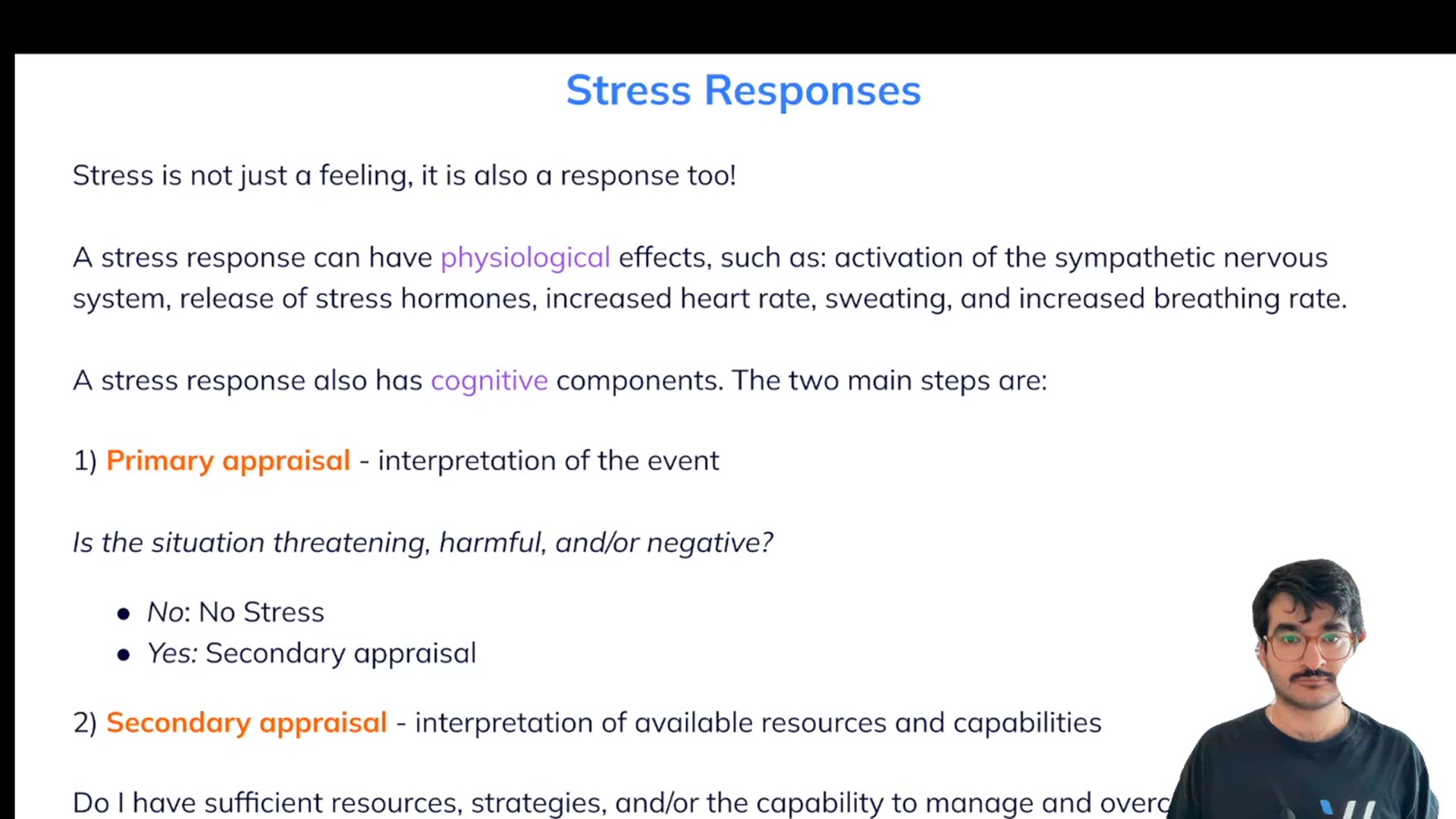
Stress Responses
Stress is not just a feeling, it is also a response too!
A stress response can have physiological effects, such as: activation of the sympathetic nervous system, release of stress hormones, increased heart rate, sweating, and increased breathing rate.
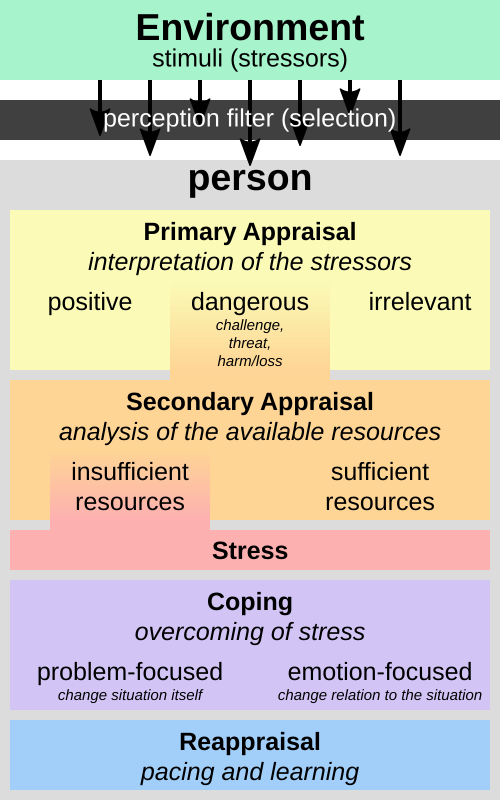
A stress response also has cognitive components. The two main steps are:
1) Primary appraisal - interpretation of the event
Is the situation threatening, harmful, and/or negative?
- No: No Stress
- Yes: Secondary appraisal
2) Secondary appraisal - interpretation of available resources and capabilities
Do I have sufficient resources, strategies, and/or the capability to manage and overcome this event?
- Yes: No Stress
- No: Stress
General Adaptation Syndrome - model for chronic stress response proposed by Hans Selye; comprised of 3 stages
1) Alarm Stage - initial fight-or-flight stress response; activation of sympathetic nervous system, increased arousal, and release of stress hormones (primarily cortisol)
2) Resistance Stage - adaptation to prolonged stress; body maintains a balance between sympathetic and parasympathetic nervous system to keep functioning without draining all its resources
3) Exhaustion Stage - after prolonged stress, the body's resources and energy are depleted. This can lead to health issues or the feeling of burnout