Popular Courses
Psychology
University Study Guides
Psychology
University Study Guides
PSYC 100
McGill University
PSY100H1
University of Toronto
PSYCHOL 1003A/B
Western University
HH/PSYC 1010 6.00
York University
PSYC 102
University of British Columbia
PSYC 201
University of Calgary
PSYC 200
Concordia University
PSYC 1004
Virginia Tech
PSYCH 100
Pennsylvania State University
PSC 001
University of California - Davis
PSY 2012
University of Florida
PSY 101
Michigan State University
PSYCH10
University of California - Los Angeles
PSC 001Y
University of California - Davis
PSY 101
San Diego State University
PSY 101
University of Arizona
PSYC 1001
University of Cincinnati
PSY-P 101
Indiana University - Bloomington
0:00 / 0:00
Addiction

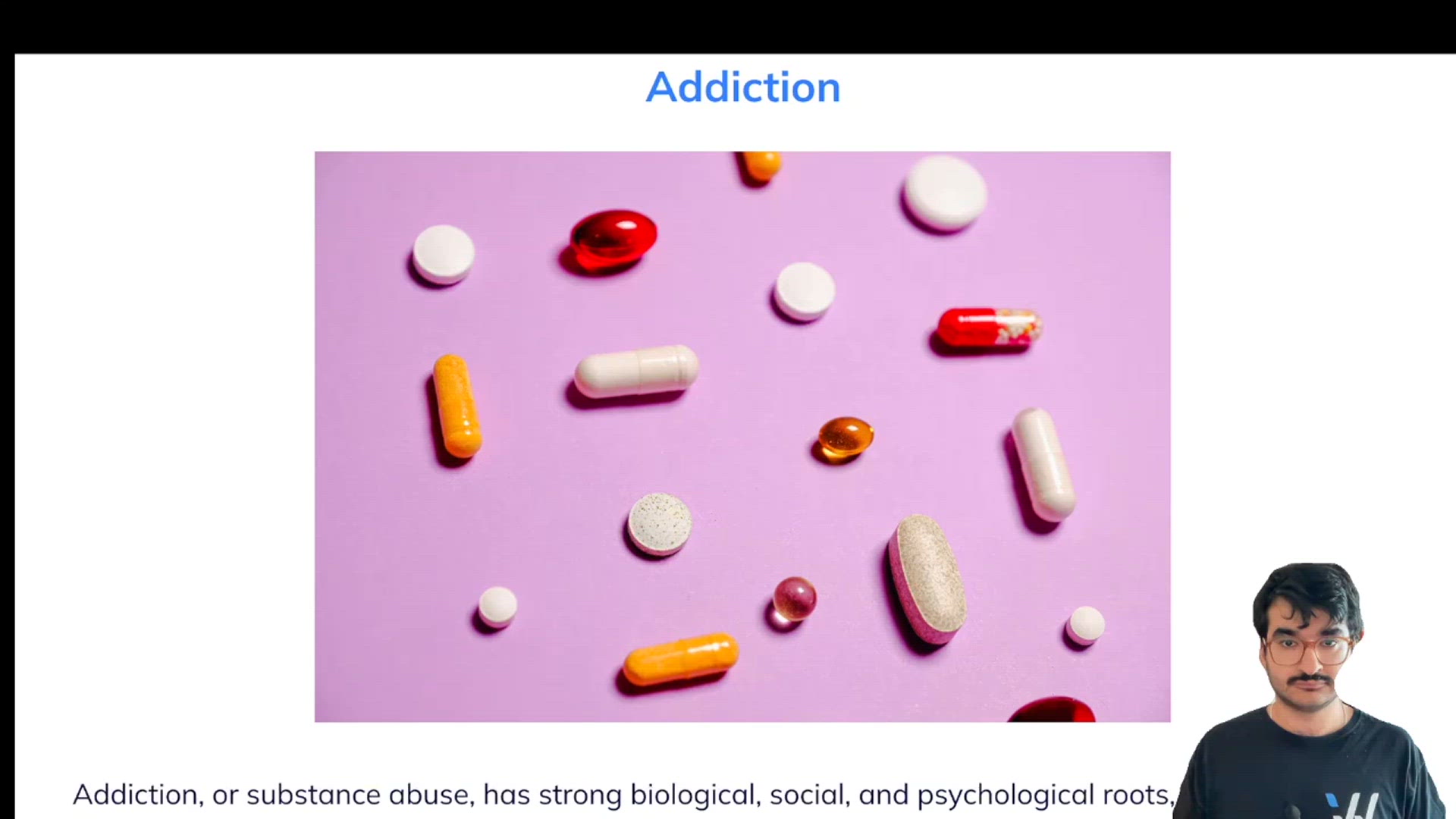
Addiction, or substance abuse, has strong biological, social, and psychological roots, and can lead to severe harm and injury.
In the DSM-5, addiction is classified as substance use disorder (SUD), and has 11 criteria, including being unable to stop using the substance, intense cravings, tolerance, withdrawal, and continued use despite personal, work, or health problems
Tolerance - after continued use, needing more of the substance to achieve the same effect
Withdrawal - negative physical response after you stop using the substance (trembling, pain, sweating, fatigue, nausea, etc.)
Addiction has:
1. Social roots
- Peer pressure & observational learning (using substances if those around you do)
- Social norms (i.e. heavy drinking is seen as the "typical" college experience in many places)
2. Psychological roots
- Coping with stress (some substances can have a stress-relieving effect or reduce negative emotions)
- Reinforcement (you associate the substance with either positive effects or the reduction of negative feelings)
3. Biological roots
- Genetic predisposition (those with a family history of addiction may be more vulnerable)
- Short-term increase in dopamine (though this does not last indefinitely)
Treatment:
1. Rehabilitation and relapse prevention - rehab programs can provide guidance and structure for those struggling with substance use, as well as preventing relapses (resumption of substance use) by pairing individuals with mentors
2. Motivational interviewing (MI) and CBT - MI aims to help substance users understand why they use substances, how problematic it is, and whether they desire treatment. Cognitive behavioural therapy can also be used to help individuals reframe the way they perceive their substance use.
3. Biological interventions - for some substances, biological interventions such as nicotine patches, safer opioid alternatives, and medications that reduce the pleasurable effects of alcohol can also be used to help those struggling with substance use