Wize University Psychology Textbook > Psychological Disorders
Eating Disorders
Popular Courses
Psychology
University Study Guides
Psychology
University Study Guides
PSYCH 1XX3
McMaster University
PSYC 100
McGill University
PSY100H1
University of Toronto
PSYCHOL 1003A/B
Western University
HH/PSYC 1010 6.00
York University
PSYC 201
University of Calgary
PSYC 200
Concordia University
PSYCH 100
Pennsylvania State University
PSC 001
University of California - Davis
PSY 2012
University of Florida
PSY 101
Michigan State University
PSYCH10
University of California - Los Angeles
PSC 001Y
University of California - Davis
PSY 101
San Diego State University
PSY 101
University of Arizona
PSYC 1001
University of Cincinnati
PSY 200
North Carolina State University
PSY 101
Arizona State University - Tempe
0:00 / 0:00
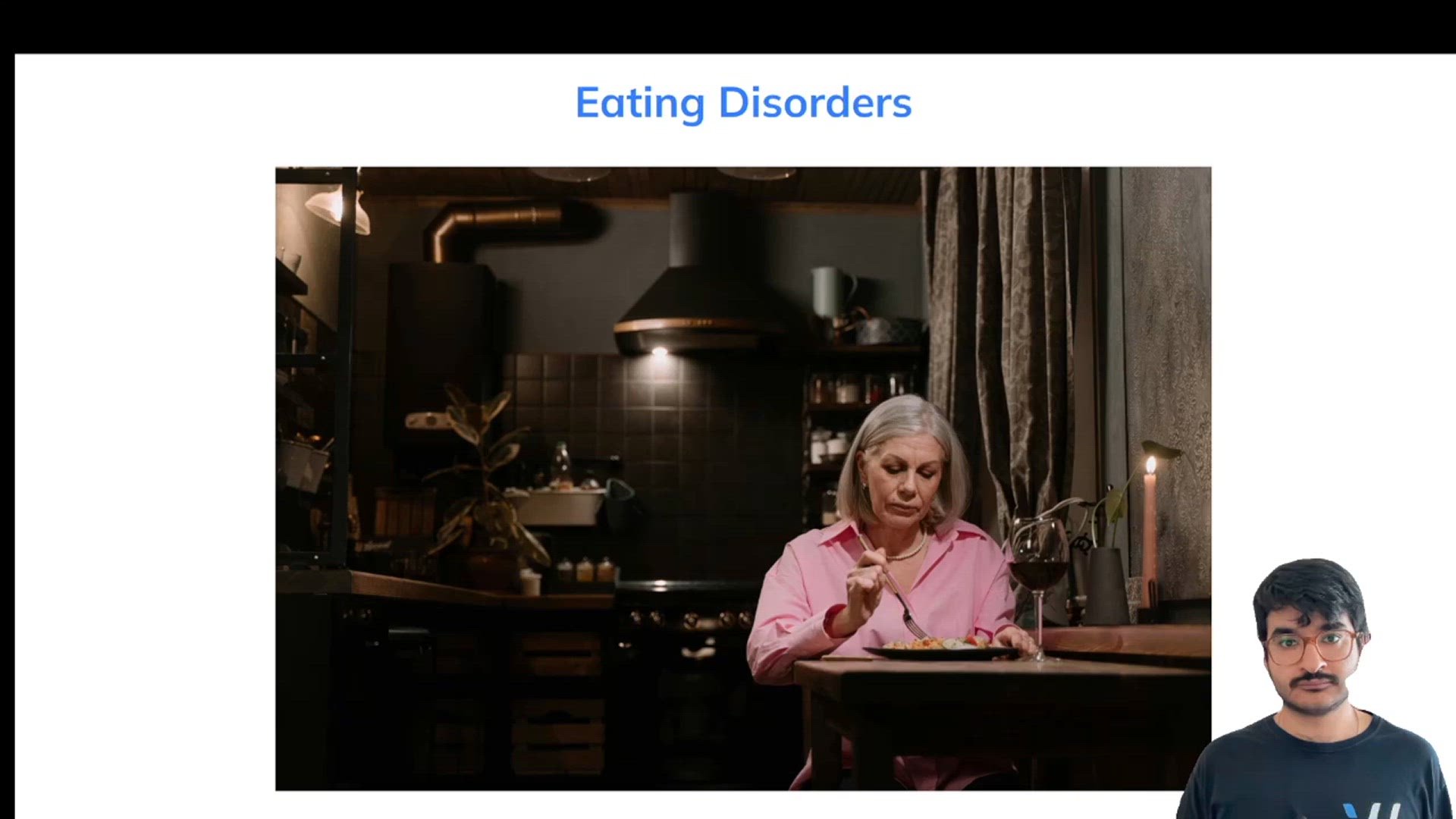
Eating Disorders

Eating disorders are characterized by severe abnormalities in eating and body image concerns that lead to intense distress
Anorexia nervosa:
- Characterized by intense fears of weight gain and distorted body image, which lead to severe food intake restrictions
- Much more common in women than men
- Can cause malnutrition, organ failure, and even death
Bulimia nervosa:
- Characterized by cycles of "binging" (overconsumption of food) and "purging" (vomiting, laxatives, etc.)
- Can cause gastrointestinal problems and dental erosion
Binge-eating disorder:
- Characterized by periods of binging food (rapid eating of large quantities of food, often beyond the point one wants to eat)
- Binges are associated with feelings of shame and guilt, which can lead to further psychological distress
Causes of eating disorders:
- Cultural beauty standards - eating disorders are more common in societies than value being thin and associate it with beauty
- Personality factors - anorexia is associated with perfectionism & desire to maintain control, bulimia is associated with anxiety, depression, and impulsivity