Wize University Psychology Textbook > Self & Identity
Perspectives on Self
Popular Courses
Psychology
University Study Guides
Psychology
University Study Guides
PSY100H1
University of Toronto
PSYC 200
Concordia University
PSYCH 100
Pennsylvania State University
PSC 001
University of California - Davis
PSY 2012
University of Florida
PSY 101
Michigan State University
PSYCH10
University of California - Los Angeles
PSY 101
San Diego State University
PSC 001Y
University of California - Davis
PSY 101
University of Arizona
PSYC 1001
University of Cincinnati
PSY 200
North Carolina State University
PSY 101
Arizona State University - Tempe
PSY-P 101
Indiana University - Bloomington
PSYC 1315
University of Texas at Arlington
PY 101
The University of Alabama
PSYC 1001
University of Colorado Boulder
01:830:101
Rutgers University - New Brunswick (Busch)
0:00 / 0:00
Perspectives on Self

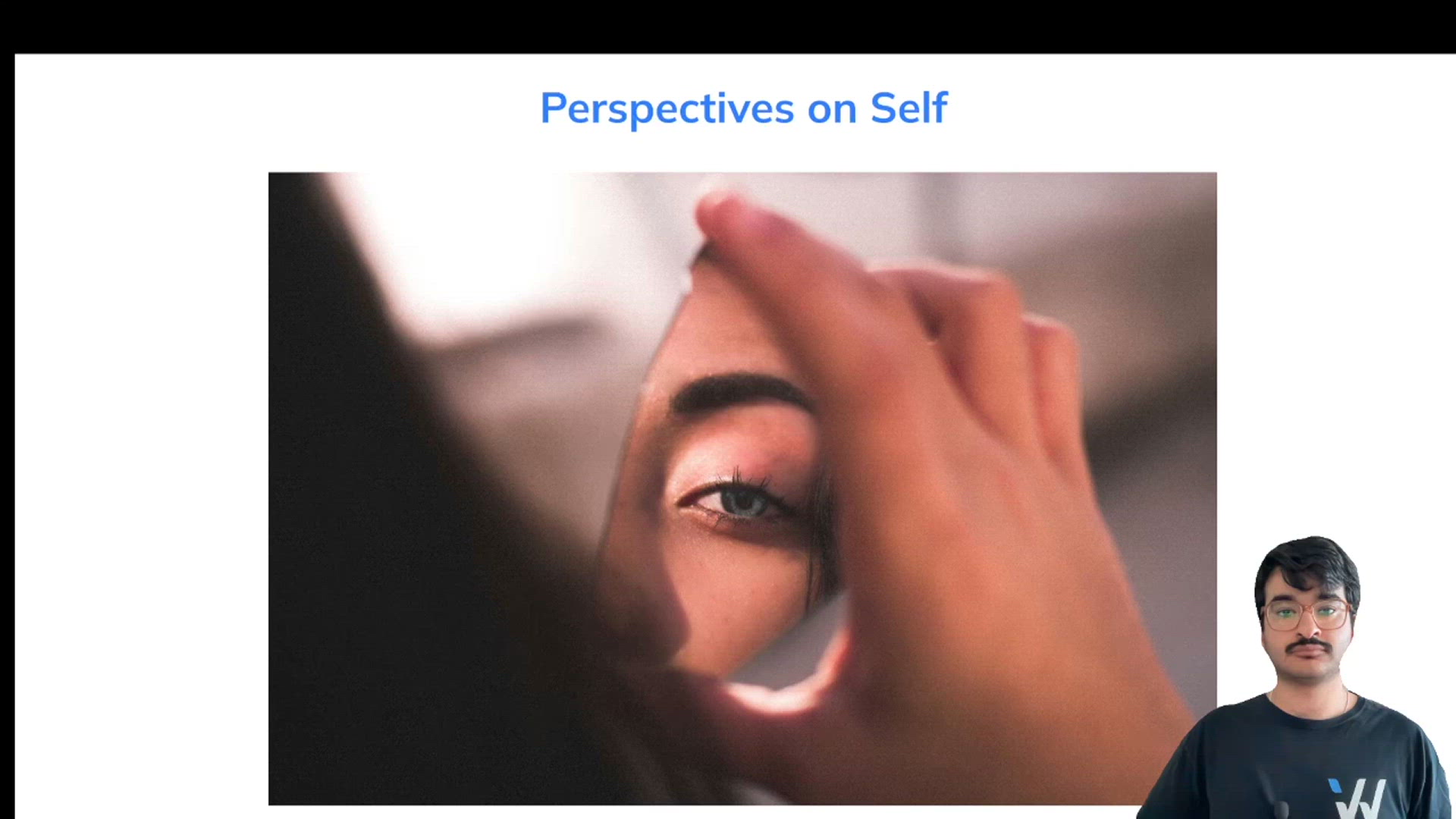
For someone we spend our entire lives with, how well do we actually know the Self? How does our perception of the Self change based on the context, environment, and people around us?
Humanistic Perspective:
- Carl Rogers' Self Theory is one of the most influential views of the Self in modern psychology
- As we get older, we begin to distinguish between the world and our Self (or self-concept)
- We desire to maintain consistency between self-perceptions
- Self-esteem is how positive or negative our self-concept is (i.e. low self-esteem is negative self-concept)
Psychodynamic (Freudian) Perspective:
- Our Id (primary drives & desires) and Superego (moral compass & conscience) are mediated by the Ego, which includes our sense of self, judgement, decision-making, etc.
- In the Freudian sense, the Ego is the part of our mind that deals with reality — it should not be mixed up with the everyday use of the word ego (i.e. someone who has a big ego)
Actor, Agent, Author Perspective:
- Social Actor: During early childhood, our concept of Self is driven largely by certain traits that are expected in our roles
- Social Agent: during later childhood and adolescence, our self-concept is shaped by emerging goals, values, and beliefs that we have developed. Our self-esteem and identity begin to develop as well.
- Social Author: during late adolescence and adulthood, our self-concept is influenced by the broader narratives we have already experienced or wish to fulfill in life. Our sense of who we are is shaped by the autobiographical story we want to tell, and the various social and economic forces that affect our lives