Popular Courses
Psychology
University Study Guides
Psychology
University Study Guides
PSYC 200
Concordia University
PSYCH 100
Pennsylvania State University
PSC 001
University of California - Davis
PSY 2012
University of Florida
PSY 101
Michigan State University
PSYCH10
University of California - Los Angeles
PSY 101
San Diego State University
PSC 001Y
University of California - Davis
PSY 101
University of Arizona
PSYC 1001
University of Cincinnati
PSY 101
Arizona State University - Tempe
PSY 200
North Carolina State University
PSY-P 101
Indiana University - Bloomington
PY 101
The University of Alabama
PSYC 1315
University of Texas at Arlington
01:830:101
Rutgers University - New Brunswick (Busch)
PSYC 1001
University of Colorado Boulder
PSY 1001
University of Minnesota - Twin Cities
0:00 / 0:00
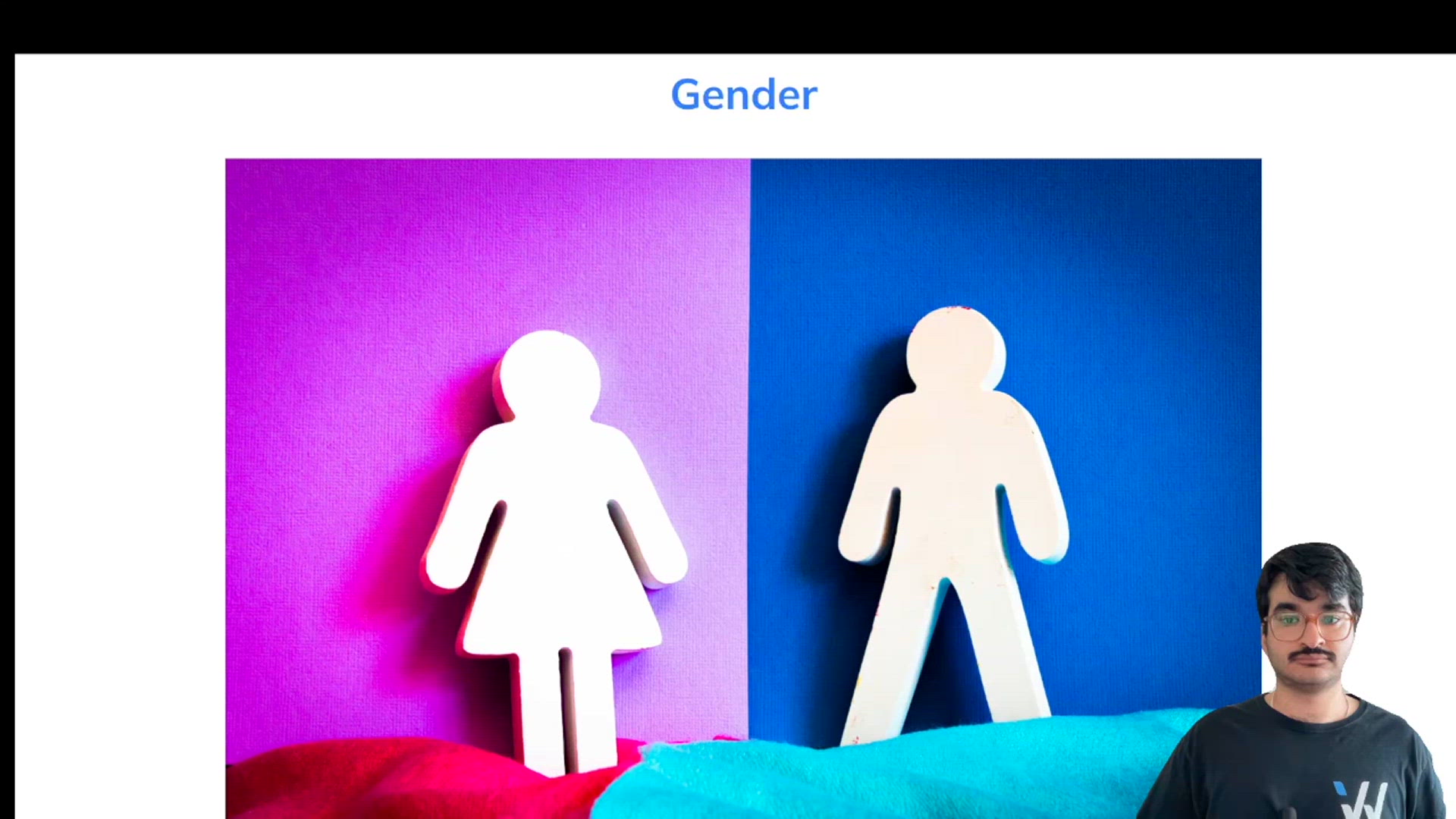
Gender

While the terms have often been used interchangeably, sex refers to a biological construct defined by chromosomes and anatomy (i.e. male, female) whereas gender refers to a social construct defined by cultural norms and social roles (i.e. man, woman)
A person's gender identity is their self-concept in regards to gender roles and expression. It can change throughout one's lifetime and exists on a spectrum
People who identify as non-binary often do not conform to the man/woman binary, whereas people who are transgender identify with a gender that does not match their biological sex
Gender Roles:
- Gender roles are the norms and stereotypes expected of each gender within a culture at a certain time
- Example: up until the mid-20th century in most Western countries, men were expected to work and provide for their families, while women were expected to stay home and raise their children
- Children begin to internalize gender roles at a young age
- Gender schema theory: children construct schemas (mental concept maps) of gender roles and expectations, and information that aligns with these schemas is remembered more strongly (i.e. nurses have typically been women; a nurse that is a man might not be incorporated into a child's schema as easily)
- Social learning theory: children construct gender roles by observing and learning from those around them. Behaviours that are consistent with gender roles are reinforced, whereas behaviours that are not are punished through reinforcement