Popular Courses
MCAT
General Course
Psychology
University Study Guides
PSYC 100
Queen's University
PSYCH 1000
Western University
PSYCH 104
University of Alberta
PSYCHOL 1002A/B
Western University
Psychology
University Study Guides
PSYC*1000
University of Guelph
PSYCH 1XX3
McMaster University
PSYC 100
McGill University
PSY100H1
University of Toronto
PSYC 101
University of British Columbia
HH/PSYC 1010 6.00
York University
PSYC 200
University of Calgary
PSYC 100B
Queen's University
PSYC 100A
University of Victoria
PSYC 200
Concordia University
PSYC 1004
Virginia Tech
PSYCH 100
Pennsylvania State University
PSC 001
University of California - Davis
0:00 / 0:00
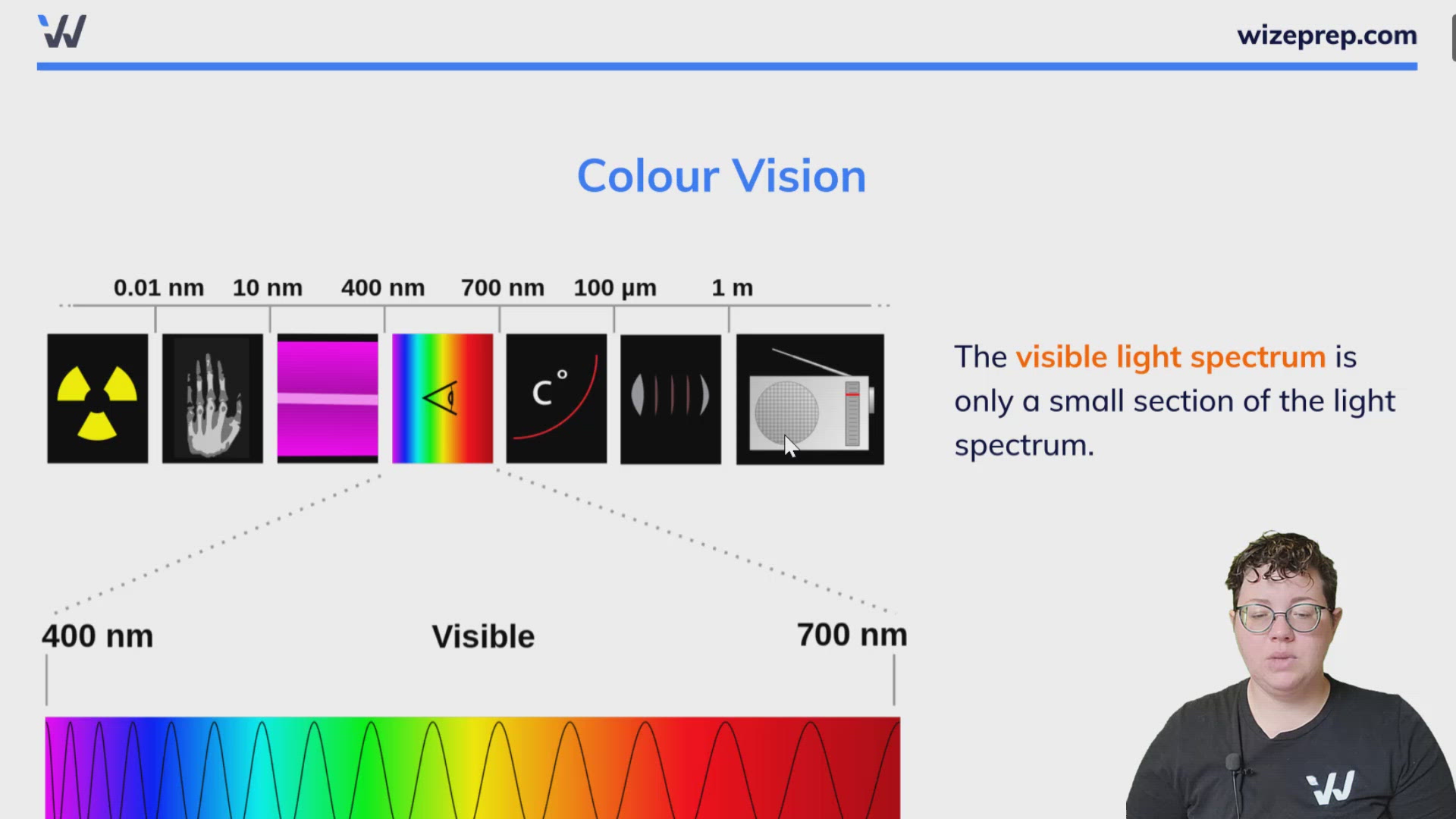
Colour Vision

The visible light spectrum is only a small section of the light spectrum.
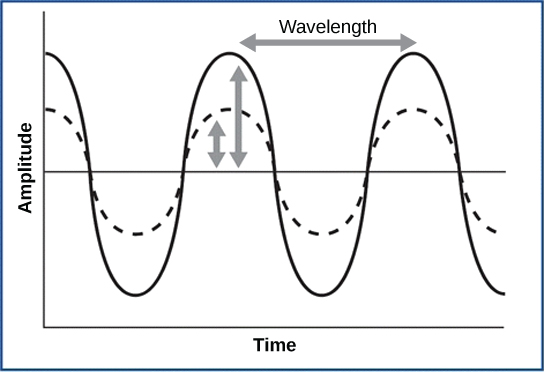
The properties of light waves determine what we see:
Wavelength - determines hue (colour)
Amplitude - determines brightness
Purity - determines saturation.
Trichromatic Theory
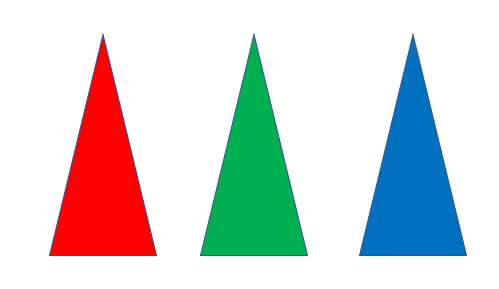
According to trichromatic theory, we have 3 types of cones that are sensitive to red, green, and blue light. Combining nearby cones allows us to see the full range of colours.
This fits well with evidence from colorblindness - people tend to lose sensitivity to one of these colours.
Opponent Process Theory
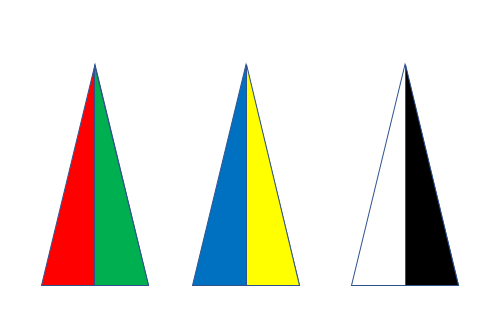
According to opponent process theory, we have 3 types of cones.
Each type makes an antagonistic response to a pair of colours - a red/green cone can only be red or green at a particular moment.
This fits well with evidence from afterimages - when you stare at something red for a long time and then look at a white page, you see an afterimage in green.
It turns out that a combination of trichromatic and opponent process theories explains colour vision best.
We do have cones that are most sensitive to red, to green, and to blue (but really they respond to a range of colours).
Once the signal makes it past the retina, there are other cells that respond in an opponent process way.
Practice: Colour Vision
Which theory explains the way you see colour due to three colour receptors in the eye?