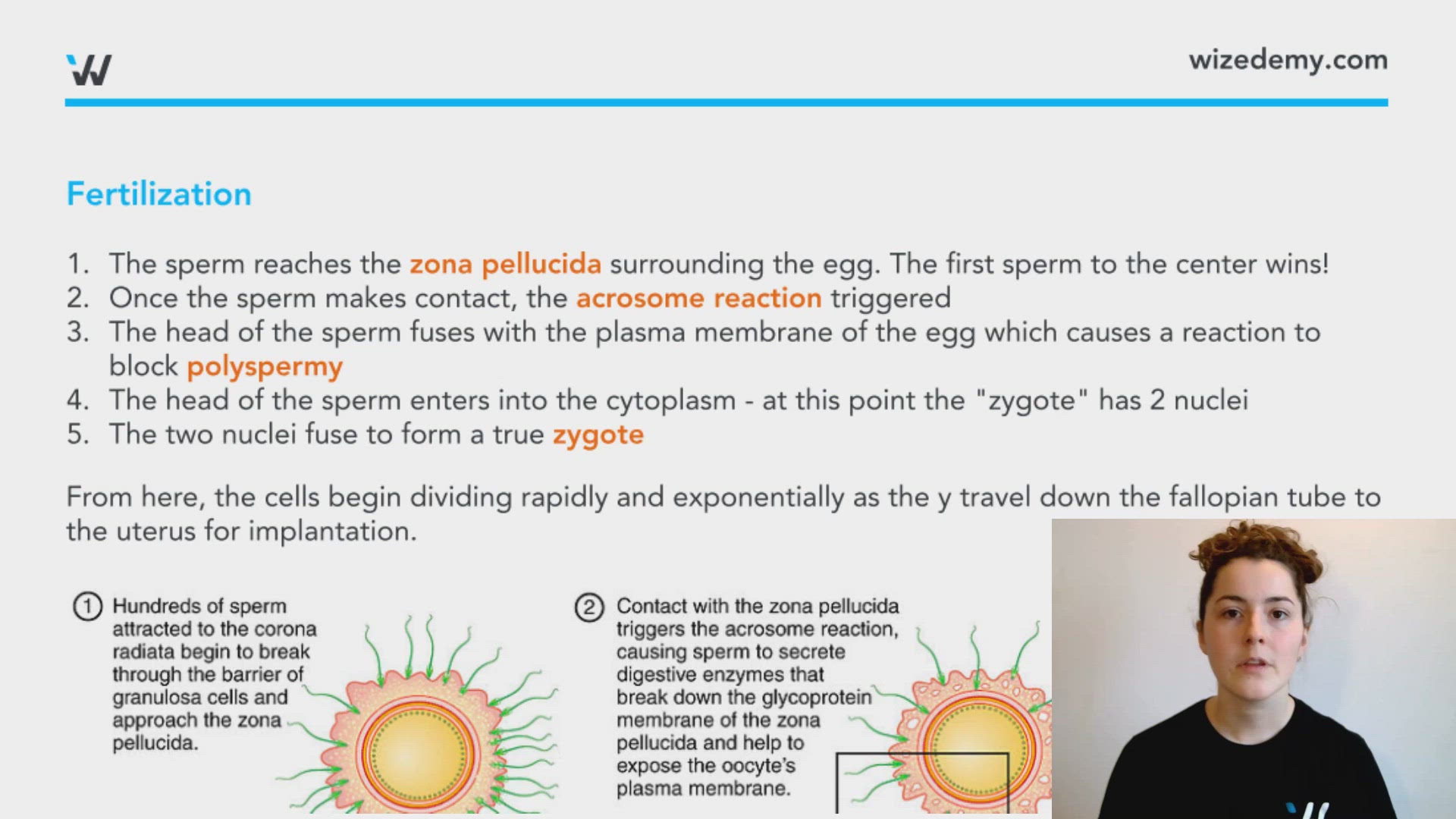
Fertilization
- The sperm reaches the zona pellucida surrounding the egg. The first sperm to the center wins!
- Once the sperm makes contact, the acrosome reaction triggered
- The head of the sperm fuses with the plasma membrane of the egg which causes a reaction to block polyspermy
- The head of the sperm enters into the cytoplasm - at this point the "zygote" has 2 nuclei
- The two nuclei fuse to form a true zygote
From here, the cells begin dividing rapidly and exponentially as the y travel down the fallopian tube to the uterus for implantation.
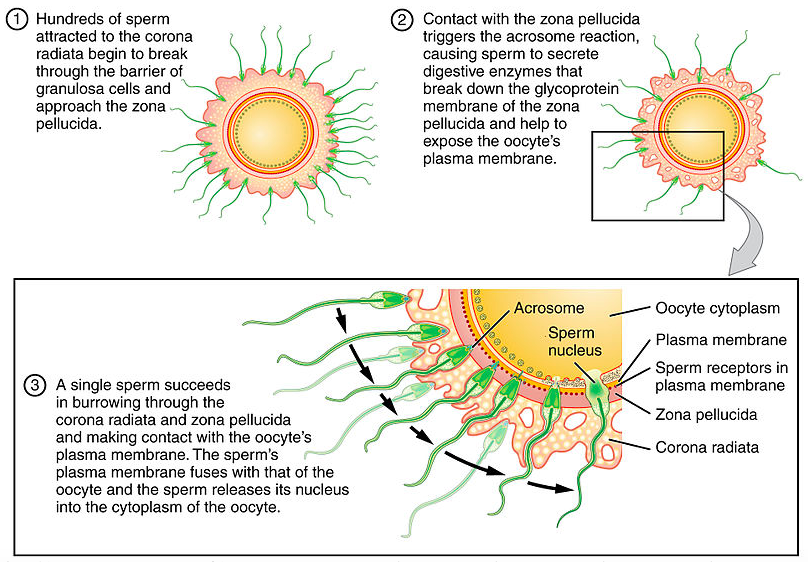
commons.wikimedia.org
From here, the cells begin dividing rapidly and exponentially as the y travel down the fallopian tube to the uterus for implantation.
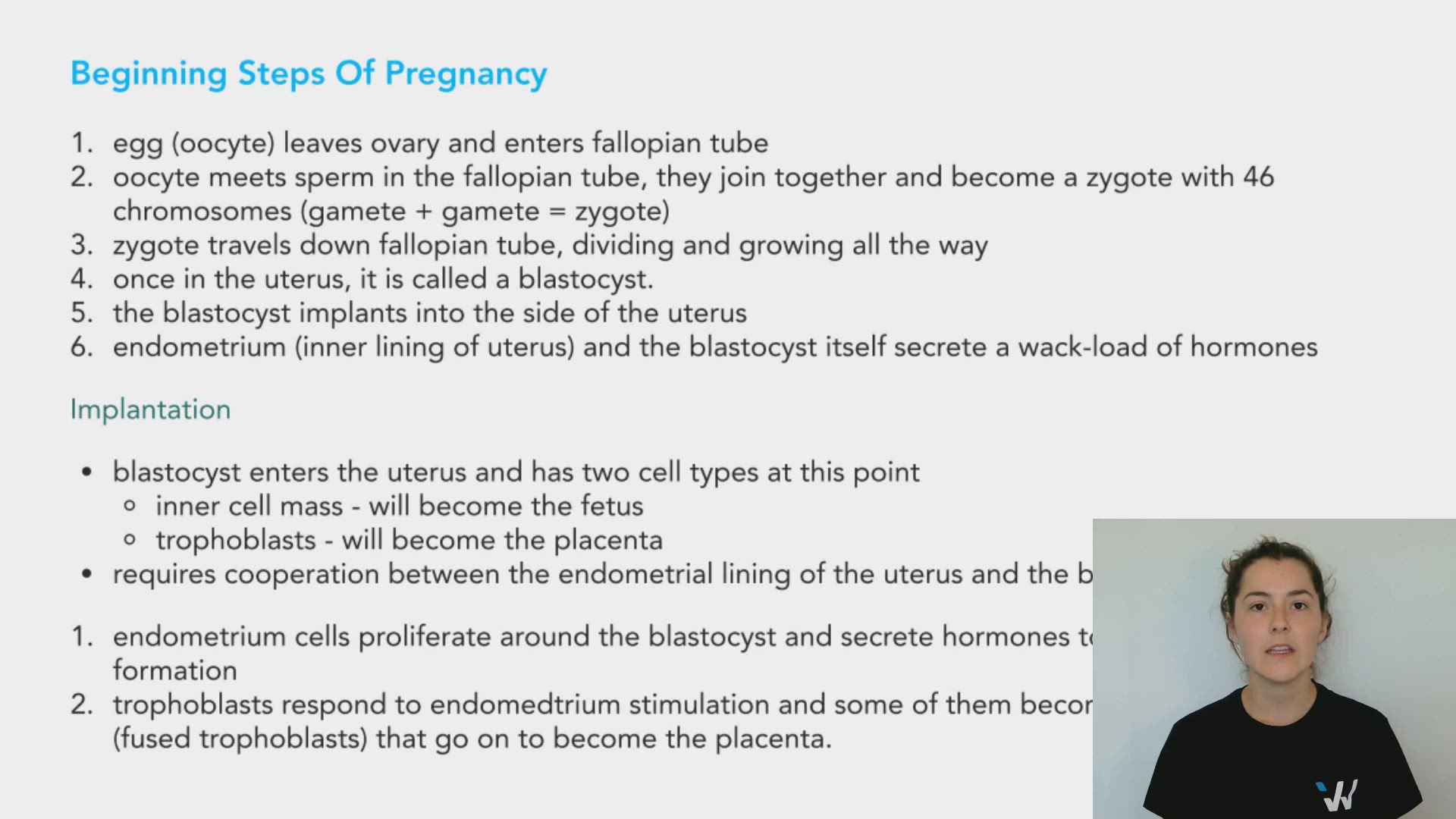
Beginning Steps Of Pregnancy
- egg (oocyte) leaves ovary and enters fallopian tube
- oocyte meets sperm in the fallopian tube, they join together and become a zygote with 46 chromosomes (gamete + gamete = zygote)
- zygote travels down fallopian tube, dividing and growing all the way
- once in the uterus, it is called a blastocyst.
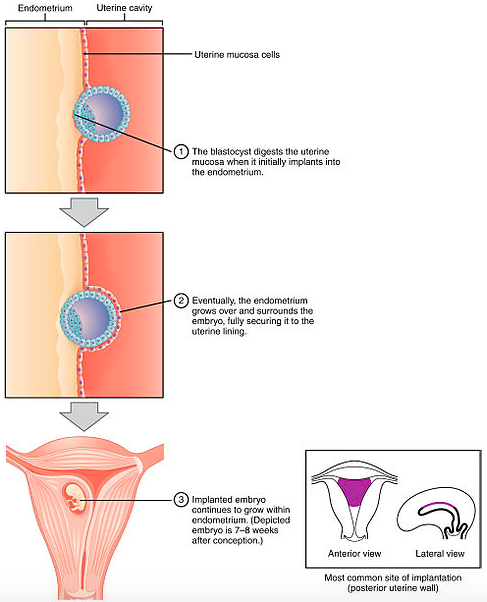
- the blastocyst implants into the side of the uterus
- endometrium (inner lining of uterus) and the blastocyst itself secrete a wack-load of hormones
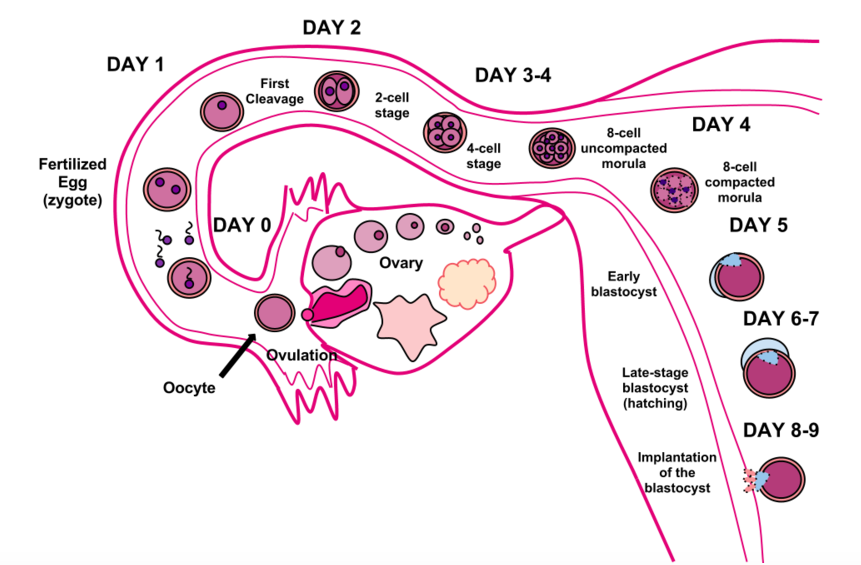
cs.m.wikipedia.org
Implantation
- blastocyst enters the uterus and has two cell types at this point
- inner cell mass - will become the fetus
- trophoblasts - will become the placenta
- requires cooperation between the endometrial lining of the uterus and the blastocyst
- endometrium cells proliferate around the blastocyst and secrete hormones to stimulate placenta formation
- trophoblasts respond to endomedtrium stimulation and some of them become syncitiotrophobasts (fused trophoblasts) that go on to become the placenta.
commons.wikimedia.org
Important Hormones
- Estrogen
- Progesterone
- human chorionic gonadotropin (hCG)
- human placental lactogen
Hormone functions
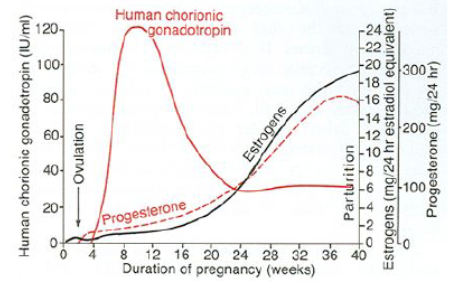
- hCG is made by the placenta and is released for the first 3 months of pregnancy. Its main role is to maintain the corpus luteum
- through maintaining corpus luteum, it indirectly increases estrogen and progesterone levels
- through maintaining corpus luteum, it indirectly maintains uterine wall thickness
- Estrogen has higher and higher levels as pregnancy goes on
- Progesterone has higher and higher levels as pregnancy goes on
- human placental lactogen is made by the placenta
- decreases a mothers glucose intake into her cells so there is more available for fetal development.
End Of Pregnancy
- regulated by a positive feedback system
- stretching of the cervix starts the process
- progesterone levels go down ––> induce contractions
- estrogen and oxytocin (from posterior pituitary) also induce contractions
Hormones needed to make breast milk
- oxytocin
- prolactin
- INHIBITORS
- estrogen
- progesterone