Ecdysozoa
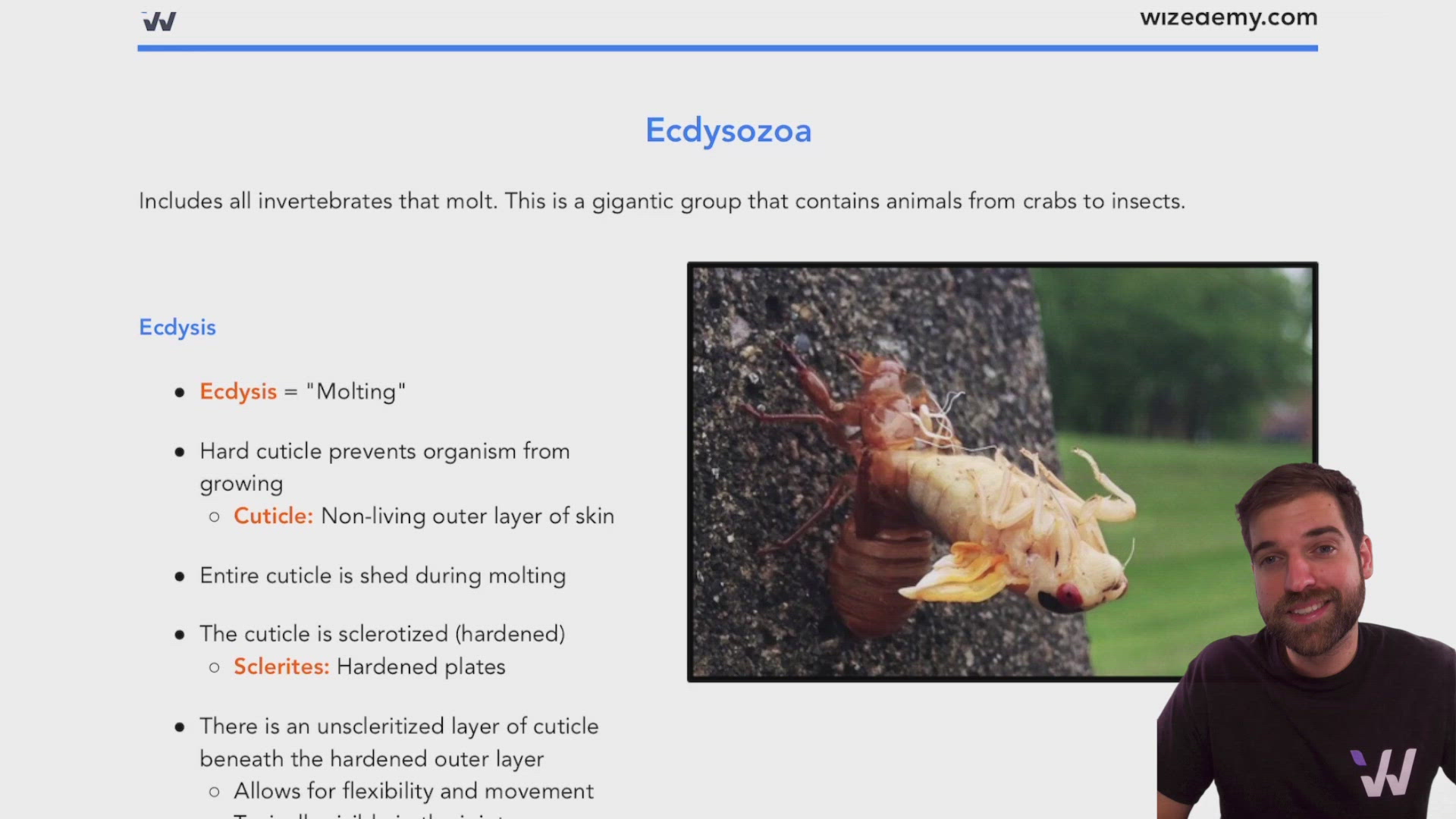
Includes all invertebrates that molt. This is a gigantic group that contains animals from crabs to insects.

Ecdysis
- Ecdysis = "Molting"
- Hard cuticle prevents organism from growing
- Cuticle: Non-living outer layer of skin
- Entire cuticle is shed during molting
- The cuticle is sclerotized (hardened)
- Sclerites: Hardened plates
- There is an unscleritized layer of cuticle beneath the hardened outer layer
- Allows for flexibility and movement
- Typically visible in the joints
The Cuticle
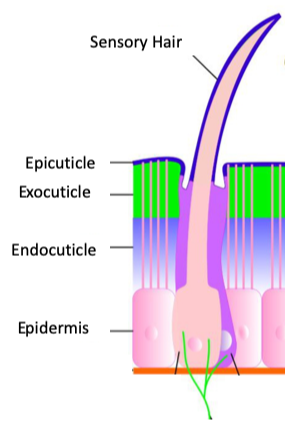
- There are three layers of cuticle
- Epicuticle (outer)
- Exocuticle (middle)
- Endocuticle (inner)
- Beneath all three layer is the epidermis
- Epidermis: Living cells that secrete substances to the cuticle via small ducts

The Molting Process
- Begins before there is external evidence of molting
- Apolysis: epidermis separates from endocuticle
- Inactive molting fluid is secreted over the epidermis
- Thin protective layer forms over epidermis
- Enzymes digest endocuticle
- Sclerotized exocuticle is not digested
- New undifferentiated cuticle deposited beneath protective layer
- Absorb molting fluid
- Epicuticle is created
- Shed old exocuticle and epicuticle
- This step is technically "ecdysis"
- New cuticle expands and sclerotizes
- Will differentiate to exocuticle and endocuticle
- New cuticle is larger when stretched out (allows for growth)
Molting GIF
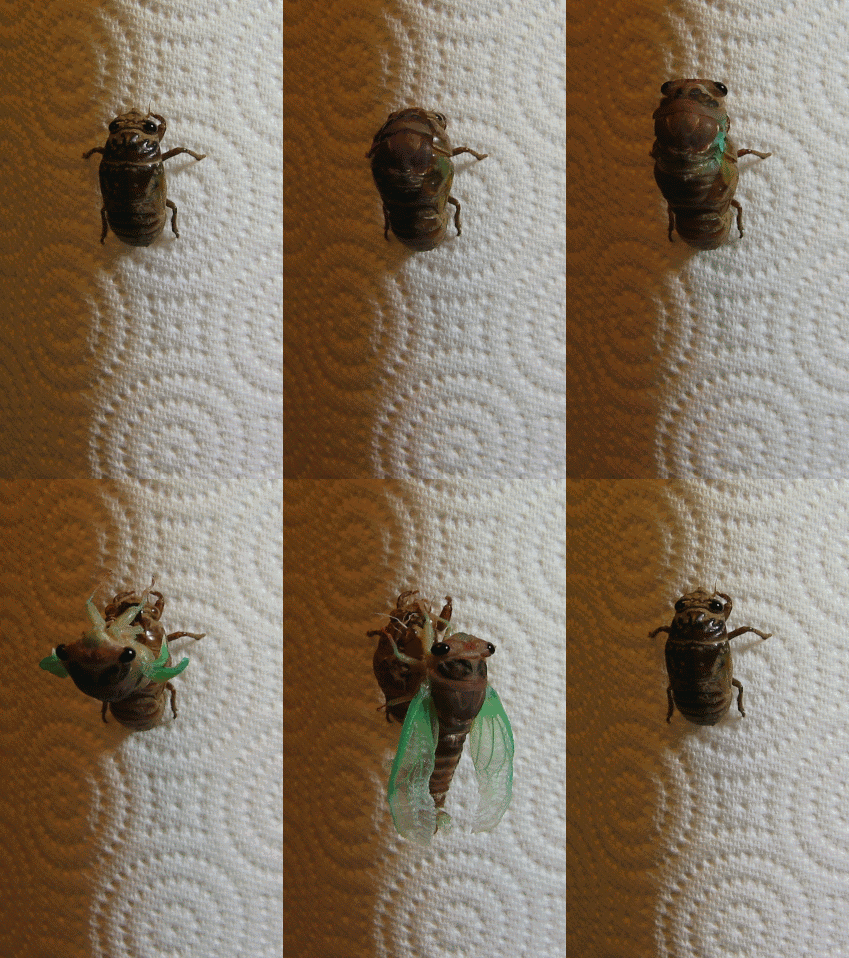
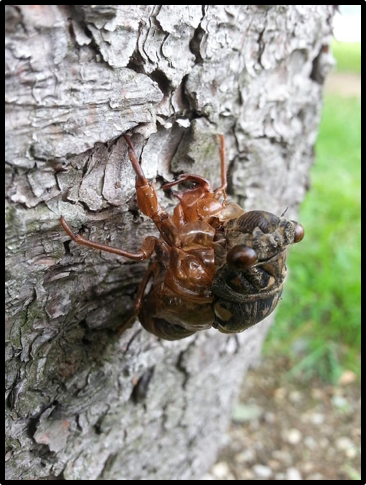
Photo by T. Nathan Mundhenk | CC BY
