
Gas Exchange
- Partial pressure is a measurement of the amount of force exerted by one particular substance in a mixture.
- Blood contains a mixture of gases, each of which exert pressure on the sides of the blood vessels
- Measured in mmHg
- The partial pressures of Oxygen and CO2 are important for understanding gas exchange in the circulatory system
2. Diffusion and partial pressure
- The higher the concentration of a gas, the higher the pressure it will exert.
- When there is a difference in partial pressure (or gas concentration) across a membrane, the gas will naturally diffuse from the area of high pressure (or high concentration) to an area of low pressure (or low concentration)
3. Pulmonary and systemic circulation
- Pulmonary circulation is the movement of blood between the heart and the lungs to become oxygenated
- Systemic circulation is the movement of blood between the heart and the rest of the body
- Gas exchange occurs in both of these pathways
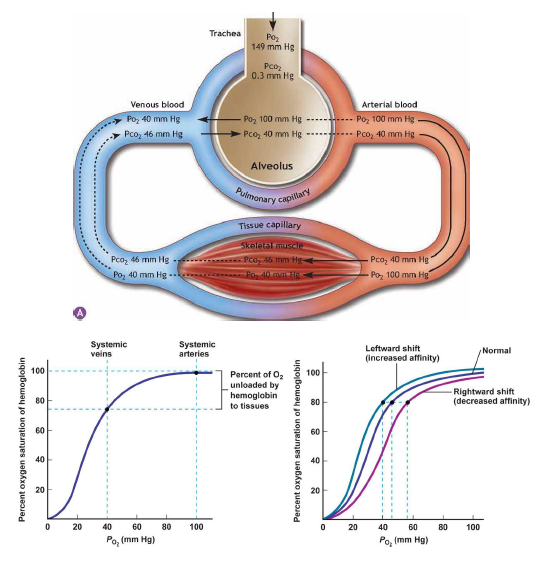
- When blood reaches the tissues, it delivers oxygen and picks up CO2
- When blood reaches the lungs, it gets rid of the CO2 and picks up oxygen. In the lungs, the partial pressure of oxygen in the blood is very low (~40 mmHg). This allows oxygen in the alveoli to diffuse into the capillaries. Once the blood leaves the lungs, the partial pressure of oxygen is ~100 mmHg.
4. Oxygen saturation
- The partial pressure of oxygen is a measure of the blood’s oxygen saturation.
- A constant level of saturation above 90% is ideal (arterial partial pressure of 100 mmHg)
Carbon Dioxide Gas Exchange
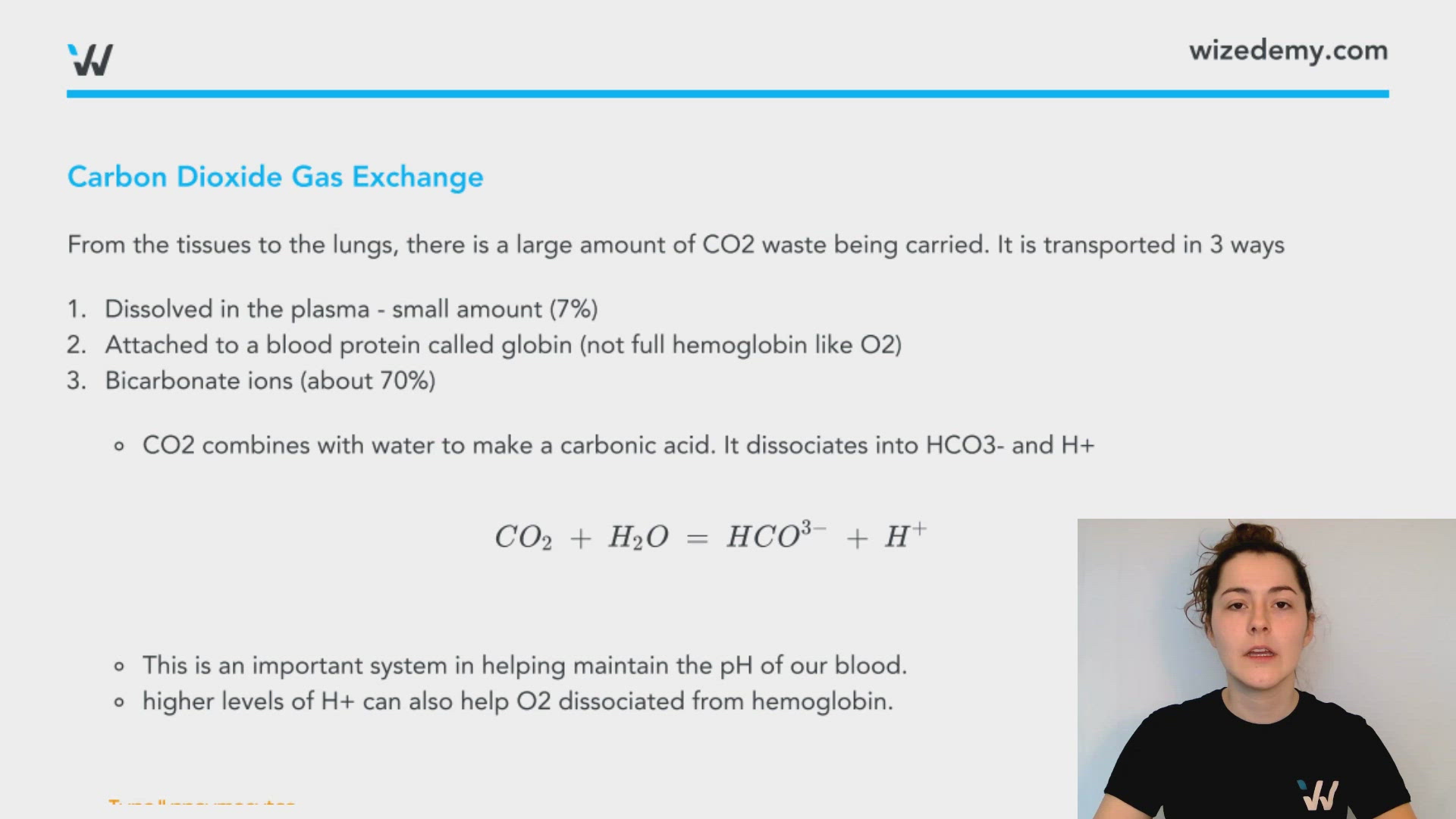
From the tissues to the lungs, there is a large amount of CO2 waste being carried. It is transported in 3 ways
- Dissolved in the plasma - small amount (7%)
- Attached to a blood protein called globin (not full hemoglobin like O2)
- Bicarbonate ions (about 70%)
- CO2 combines with water to make a carbonic acid. It dissociates into HCO3- and H+
- This is an important system in helping maintain the pH of our blood.
- higher levels of H+ can also help O2 dissociated from hemoglobin.
