Popular Courses
MCAT
General Course
DAT
General Course
Intro to Physiology
University Study Guides
PHYSIOL 1021
Western University
PHYSIOL 2130
Western University
Intro to Physiology
University Study Guides
PSL300H1
University of Toronto
PHYSL 210
University of Alberta
PHGY 210
McGill University
PHGY 215
Queen's University
KNES 259
University of Calgary
PHGY 216
Queen's University
BIOL 273
University of Waterloo
BIOL 260
University of British Columbia
PHYSIOL 3120
Western University
KNES 260
University of Calgary
BIOL 116
Case Western Reserve University
PPT 301
University of North Dakota
ANAT 212
McGill University
HTHSCI 2FF3
McMaster University
0:00 / 0:00
Respiration
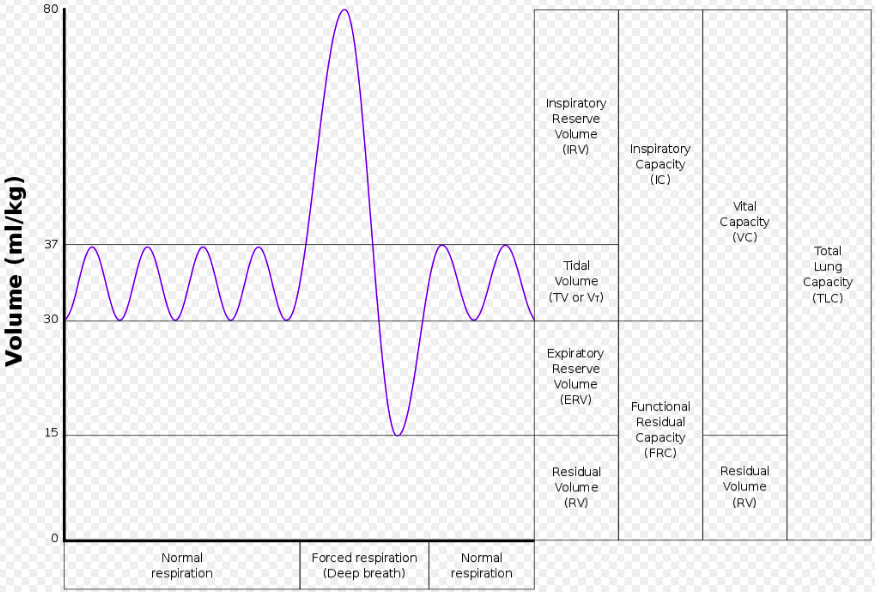
The amount of air a person can breath is measured using a machine called a spirometer. The graph we get from this machine looks something like this.
Important Terms
- Tidal Volumethe volume of a normal breath (around 500mL)
- Inspiratory Reserve Volumehow much more you can breathe in after the normal tidal volume
- Expiratory Reserve Volumehow much more you can breath out after the normal tidal volume
- Residual volumethe volume of air that is always left in the lungs
- Total Lung Capacitythe whole shebang - includes all of vital capacity and residual volume
- Vital Capacityvolume of air from max inspiration to max expiration
- Forced Vital Capacityhow much air you can get out in 1 second. This must be equal to or more than what you can take in in 1 second
Lung obstructions can alter the values of ones normal respiration volumes
Obstructive Diseases of the Lungs
These diseases alter the movement of air through the respiratory system. Usually they decrease the amount of air one can breath in/out in a certain period of time.
Neonatal Respiratory Distress Syndrome (nRDS)
- premature infants get this when their respiratory system is not well developed.
- They lack surfactant and the system that produces it --> poor O2 intake and possible collapsing of the lungs.
- can be treated by giving the infant surfactant until the system is developed on its own.
Asthma
- smooth muscles in airways are in spasm
- this obstructs the lungs function
Chronic Bronchitis
- the respiratory system is filled with mucus
- inflammation and mucus obstruct the air flow into and out of the lung
- this inhibits the air intake of the lungs
Emphysema
- destruction of the alveolar walls
- decreased lung compliance = obstruction of gas exchange and decreased tidal volume of the lungs
Watch Out!
SMOKING can cause obstructed breathing. Poor elasticity and break down of alveoli leads to poor gas exchange and decreased lung compliance.
Restrictive Diseases of the Lungs
These diseases decrease the vital capacity of an individual.
Pulmonary Fibrosis
- scar tissue caused by inhalation of pollution
- decreases the compliance of the lungs (scar tissue is not stretchy --> poor elasticity)
If a disease decreases the inspiratory capacity and increases the respiration rate, which of the following will be true?
0:00 / 0:00
Respiration Regulation
- Review: Our body has a set pressure of O2 and CO2 that it wants in the blood. These gas levels are regulated by homeostasis.
- If the O2 levels drop, the body will cause an action to increase the O2 levels back to normal
- If CO2 levels are too low, the body will increase them.
A Closer Look at Regulation
- PO2 = 100mmHg
- PCO2 = 40mmHg
- If either pressure deviates from this norm, chemoreceptors are activated and they send a signal to the medulla
- the medulla causes a change in contraction of the respiratory muscles --> altered breathing patterns
- We have two different type of chemoreceptors that can sense changes in gas pressures
- peripheral chemoreceptors: found in the aorta and carotid body and are sensitive to...
- decreased O2
- increased CO2
- decreased pH
- central chemoreceptors: found in the medulla and are sensitive to...
- H+ concentrations (CO2 levels)
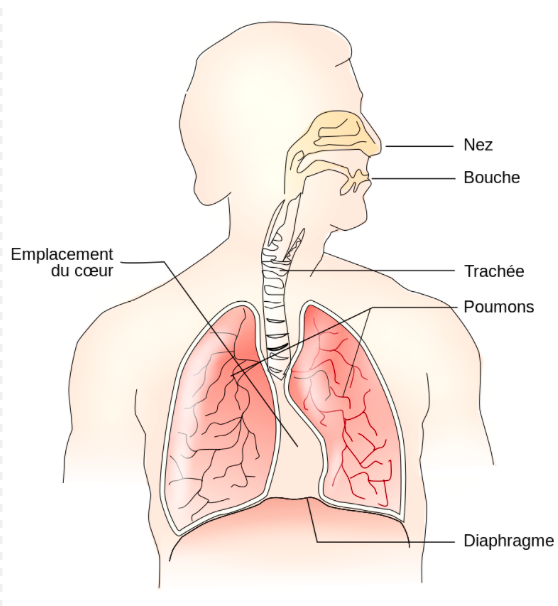
Big Picture - Respiration Changes
- low O2 --> increased respiration rate
- high CO2 --> increased respiration rate
- high H+ --> increased respiration rate
Select all the true statements. After robbing a bank and being chased by Batman...