Wize University Physiology Textbook > Respiratory Physiology
Lung Structure and Stability
Popular Courses
MCAT
General Course
DAT
General Course
Intro to Physiology
University Study Guides
PHYSIOL 1021
Western University
PHYSIOL 2130
Western University
Intro to Physiology
University Study Guides
PSL300H1
University of Toronto
PHYSL 210
University of Alberta
PHGY 210
McGill University
PHGY 215
Queen's University
KNES 259
University of Calgary
PHGY 216
Queen's University
BIOL 273
University of Waterloo
BIOL 260
University of British Columbia
PHYSIOL 3120
Western University
KNES 260
University of Calgary
BIOL 116
Case Western Reserve University
PPT 301
University of North Dakota
ANAT 212
McGill University
HTHSCI 2FF3
McMaster University
Muscles Associated With Breathing
- Diaphragm = contracts during inhalation
- External intercostals = contracts during inhalation
- Internal intercostals = only contract during forced exhalation
- Oblique muscles = only contract during forced exhalation
- rectus abdominus = only contract during forced exhalation

Intercostals - https://fr.wikipedia.org/wiki/Fichier:1114_Thorax.jpg
To see each of these muscles in more detail, please visit zygote body and search the name of the muscle in the top right corner of the page.
0:00 / 0:00
Pressure Changes in the Lungs
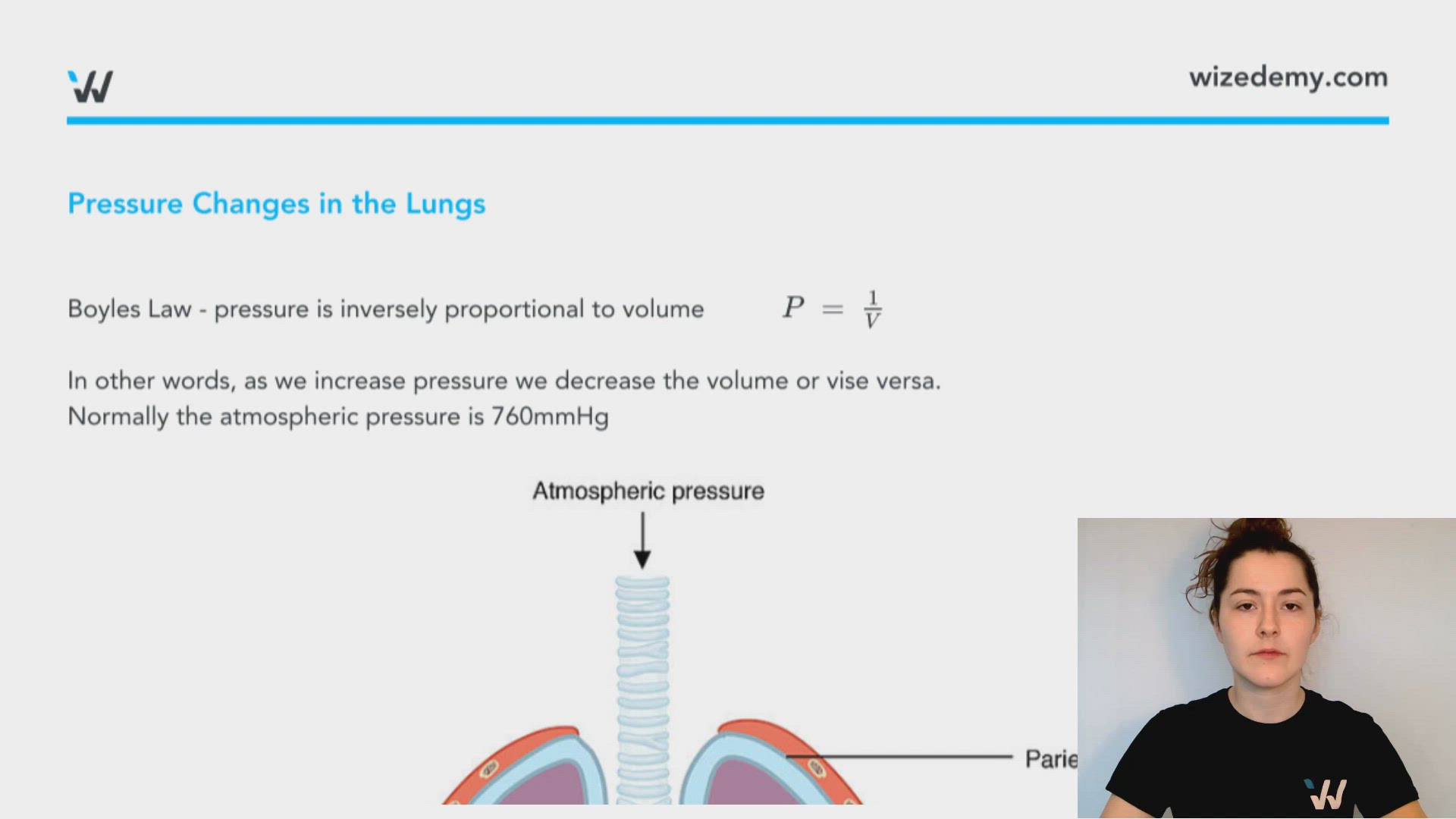
Boyles Law - pressure is inversely proportional to volume
In other words, as we increase pressure we decrease the volume or vise versa.
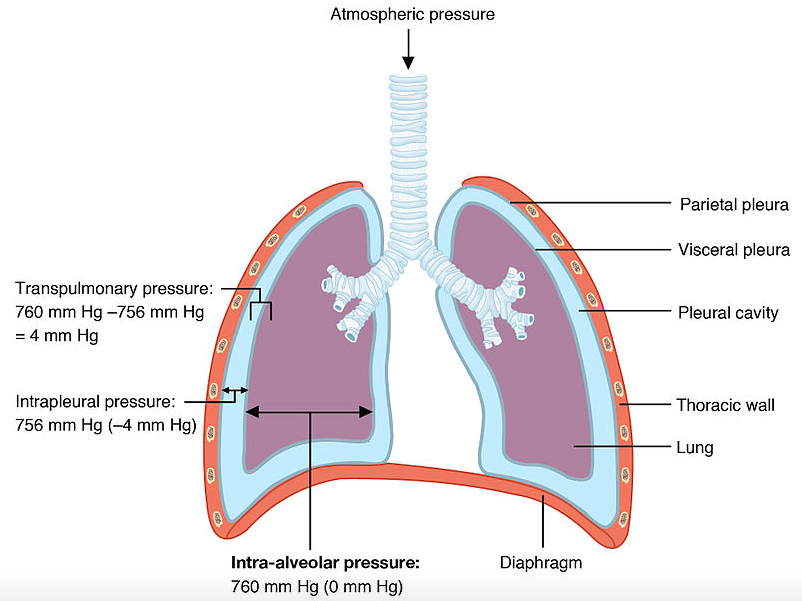
Normally the atmospheric pressure is 760mmHg
Breathing In
- Get air in by increasing volume of the lungs (therefore decreasing pressure)
- normally inside the lungs we have the same pressure as the atmosphere. As we use our muscles to expand the thoracic cavity, the lungs increase in volume and decrease in pressure. Air flows into the lungs from outside.
Breathing Out
- relaxation of the diaphragm helps initiate exhalation
- pressure in the lungs increases as volume decreases from diaphragm relaxation --> gas naturally moves out from high pressure to lower pressure.
Intrapleural Pressure
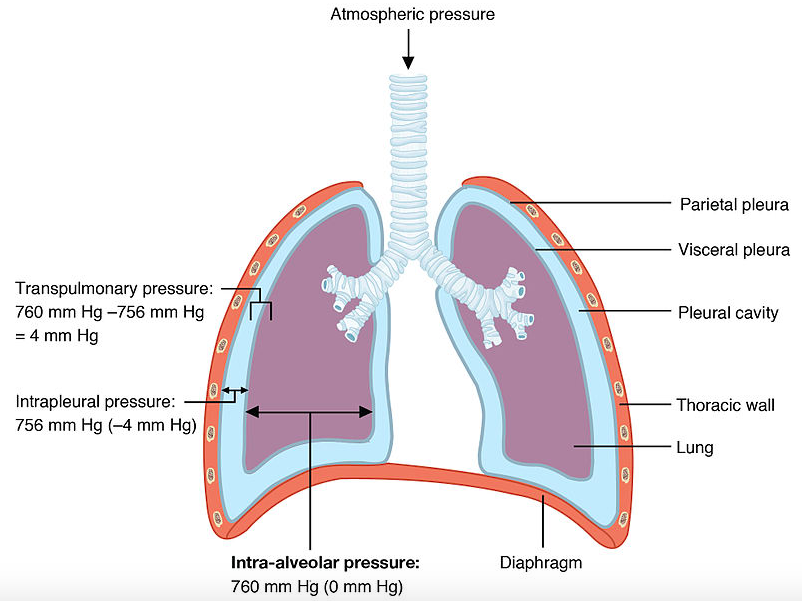
Transpulmonary pressure = A pressure difference between the lung and the pleural cavity that prevents the lungs from collapsing
- intrapulmonary pressure must be higher than intrapleural pressure to prevent collapsing
- If lung pressure is 760mmHg and pleural pressure is 757mmHg, we can calculate the pressure difference between them (the transpulmonary pressure)
- Transpulmonary pressure (TPP) = about +3mmHg
- When the pressures are the same, the lung will collapse
- If the pleural pressure was greater than the intrapulmonary pressure, the lung would collapse.
0:00 / 0:00
Lung Compliance
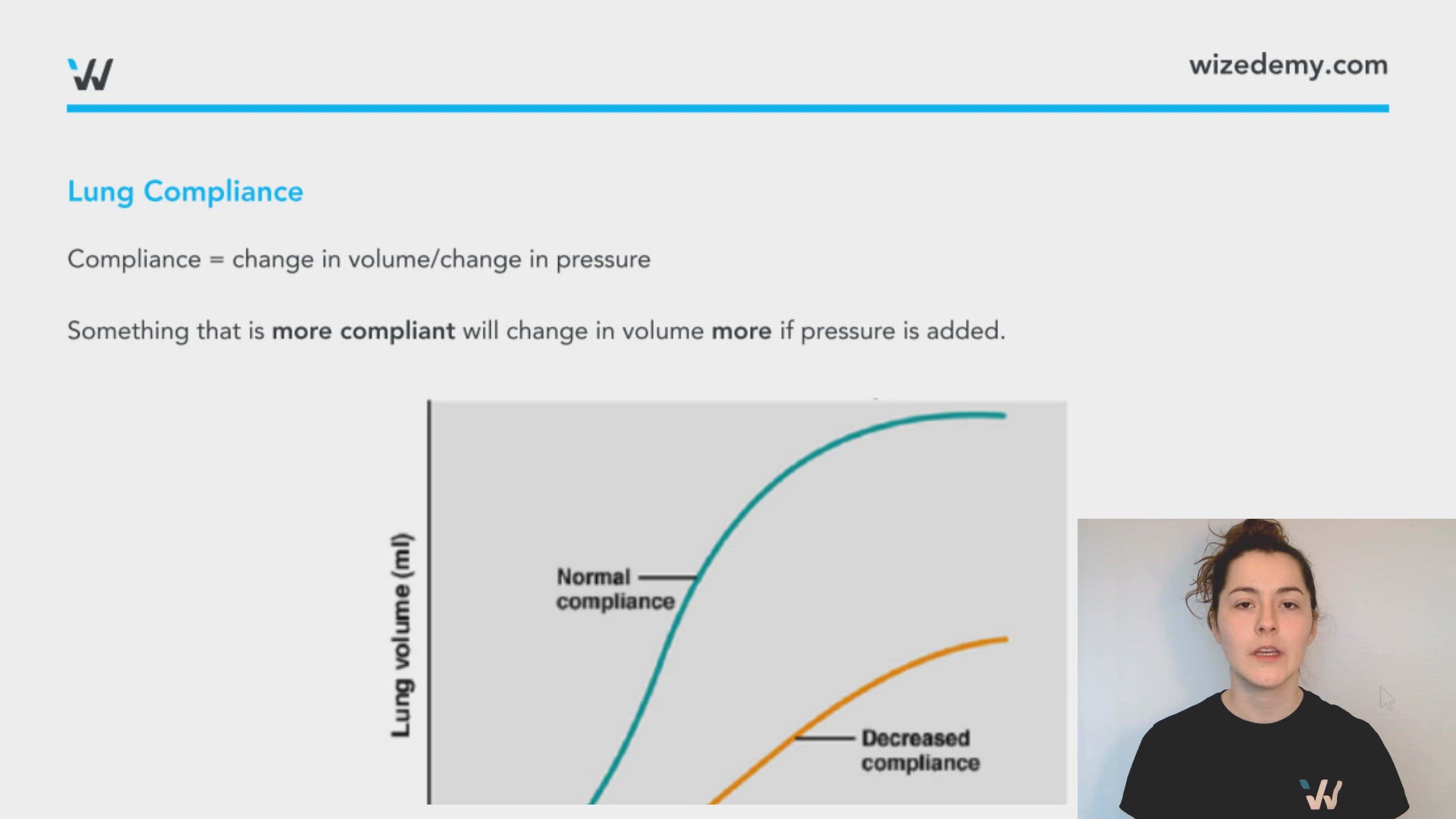
Compliance = change in volume/change in pressure
Something that is more compliant will change in volume more if pressure is added.
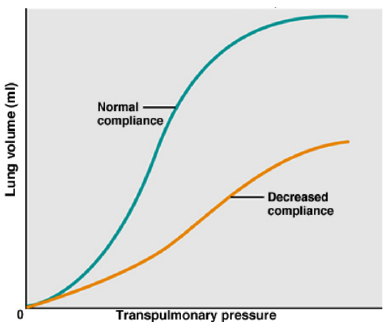
Compliance of lungs influenced by:
- Elastic tissue (1/3 contribution)
- Surface tension in alveoli (2/3 contribution)
- Reduced by surfactant. Low in premature infants (nRDS)
Surface Tension
- Surface tension is created by liquid molecules as they interact with each other.
- this is why water forms droplets as well!
- Within the respiratory tract, surface tension plays a large role in proper alveoli function.
- Alveoli are circular and lined with liquid. This liquid has a surface tension.
Laplace's Law
- This law states that, for a spherical object, the surface tension is in a balancing act with the pressure it takes to counter the surface tension. In other words, the pressure and the surface tension reach some equilibrium.
- This is what happens in the alveoli. The radius of the alveoli is extremely small. Using the above equation, this means the pressure pushing out on the alveoli must be similar the surface tension falling in in order for the alveoli to maintain their proper shape. As the radius of the alveoli increase, less pressure is needed to maintain the alveoli shape.
- Naturally, the surface tension is very strong in the alveoli. The pressure from air is not strong enough to keep the alveoli from collapsing. So why don't our alveoli collapse?
- Surfactant secreted by type ll cells helps reduce surface tension. This prevents collapse.
If surface tension is decreased, lung compliance will increase
0:00 / 0:00
You enter a steam room at a spa and remember your physiology lesson from the day before. You worry that with the increased water vapor entering your lungs, your alveoli will soon collapse and you won't be able to breathe at all. As you wait in horror for your impending doom, you realize after a while that you're just fine... what might your body be doing combat this change in environment?
What has an affect on alveolar structure?
- pressure
- radius
- surface tension
- surfactant
More water means more surface tension --> if the body combats this with a higher surfactant secretion, it shouldn't effect your breathing too much.