Wize University Physiology Textbook > Respiratory Physiology
Lung Anatomy and Physiology
Popular Courses
MCAT
General Course
DAT
General Course
Grade 11 Biology
Ontario High School
Grade 11 Biology
Canada High School
Intro to Physiology
University Study Guides
PHYSIOL 1021
Western University
Biology 20
Alberta High School
PHYSIOL 2130
Western University
Intro to Physiology
University Study Guides
PSL300H1
University of Toronto
PHYSL 210
University of Alberta
Life Sciences 11
British Columbia High School
PHGY 210
McGill University
PHGY 215
Queen's University
KNES 259
University of Calgary
PHGY 216
Queen's University
BIOL 273
University of Waterloo
BIOL 260
University of British Columbia
PHYSIOL 3120
Western University
KNES 260
University of Calgary
0:00 / 0:00
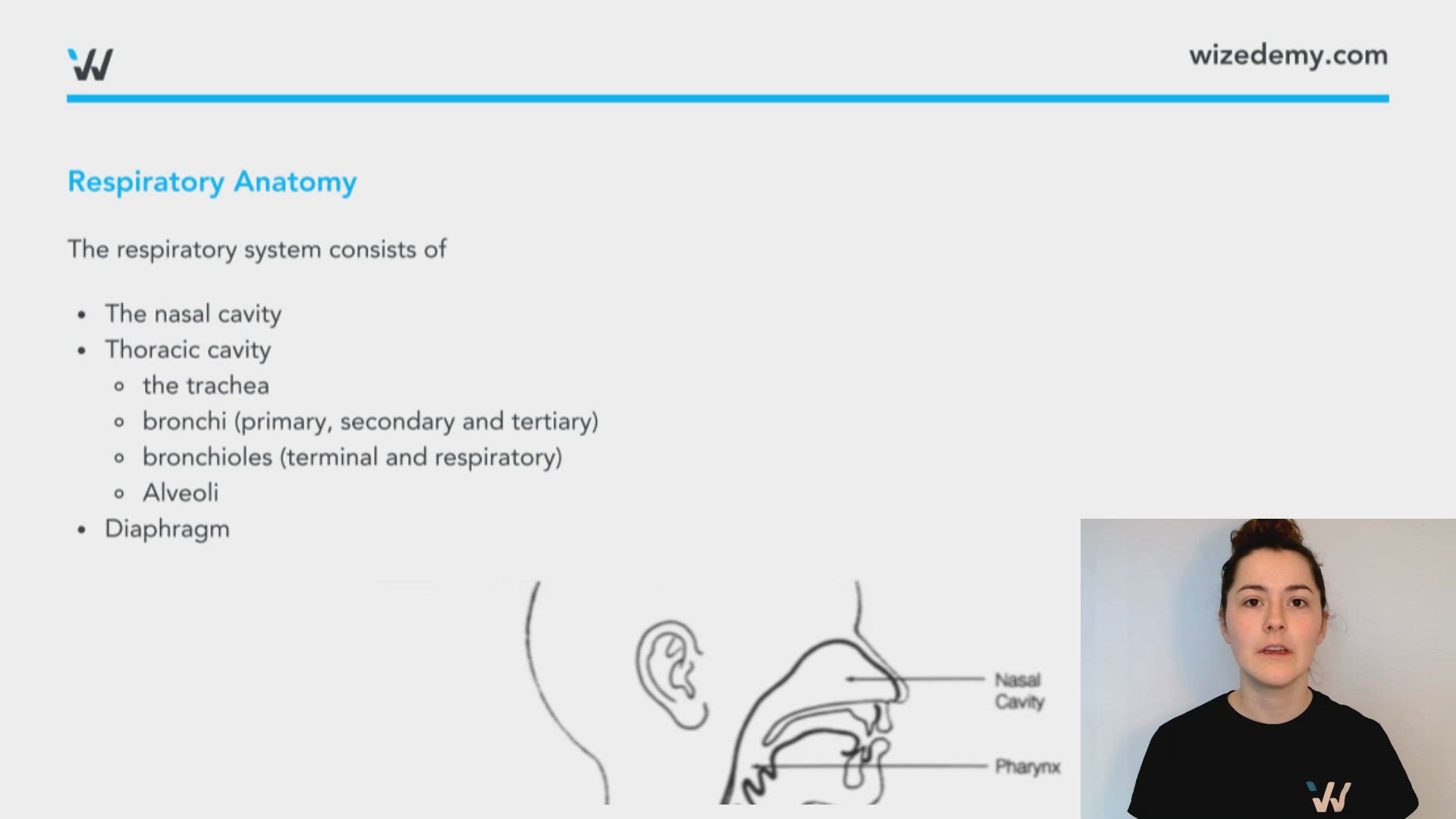
Respiratory Anatomy
The respiratory system consists of
- The nasal cavity
- Thoracic cavity
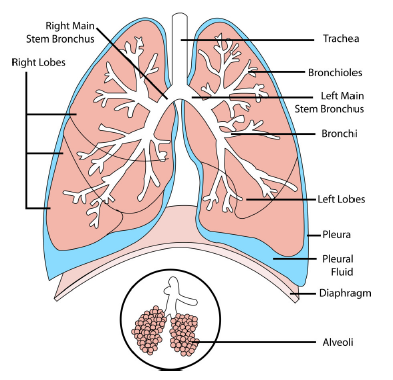
- the trachea
- bronchi (primary, secondary and tertiary)
- bronchioles (terminal and respiratory)
- Alveoli
- Diaphragm

Respiratory Physiology
The main functions of the respiratory system include
- providing gas exchange for the body (O2 in and CO2 out)
- Regulation of blood pH
- Speech
- immune system - defense against microbes (cilia in conduction zone)
- chemical messenger concentrations
- trapping and dissolving blood clots
The respiratory system has two main anatomical components
- The conducting zone – brings air into lungs, “conducts” the air.
- from the trachea to the tertiary bronchi
- The respiratory zone – site of gas exchange
- from the bronchioles to the alveoli
Lung anatomy
0:00 / 0:00
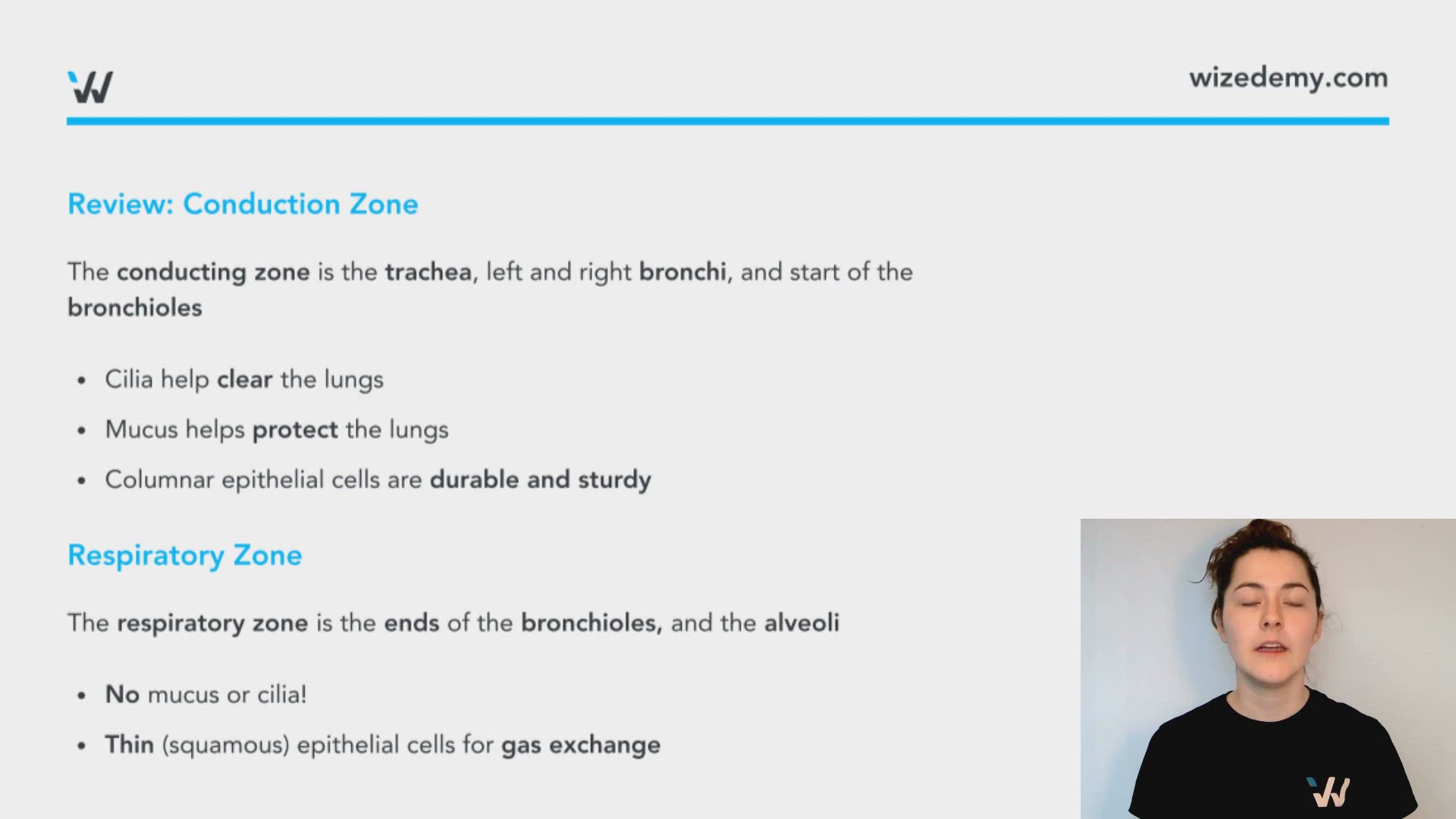
Review: Conduction Zone
The conducting zone is the trachea, left and right bronchi, and start of the
bronchioles
- Cilia help clear the lungs
- Mucus helps protect the lungs
- Columnar epithelial cells are durable and sturdy
Respiratory Zone
The respiratory zone is the ends of the bronchioles, and the alveoli
- No mucus or cilia!
- Thin (squamous) epithelial cells for gas exchange

Alveolar Anatomy and Function
Alveoli are made up of
- Macrophage cells
- Type ll cells
- Type l cells
- Capillaries
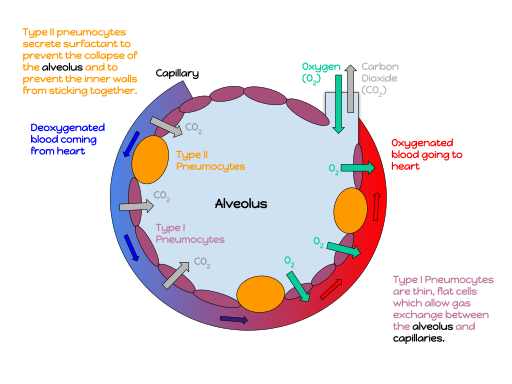
- Alveoli are good at exchanging gases because
- they have a thin membrane
- they have a super high surface area
- they have a high pressure gradient for gas exchange
How much air is actually conducted by the alveoli in one breath?
- To answer this question we need to understand a few terms
- Tidal volume - how much air you take in in a single breath
- Respiration rate - how many times you breath per minute
- pulmonary ventilation = tidal volume x respiration rate
- non-alveolar air refers to the air found within the conduction zone in one breath. This air just fills up space but there is no gas exchange happening with it.
- The short form for this formula is

Mark Yourself Question
- Grab a piece of paper and try this problem yourself.
- When you're done, check the "I have answered this question" box below.
- View the solution and report whether you got it right or wrong.
You are a veterinarian and you got a call to come check out a horse with a potential breathing condition. When you get to the barn, you run some tests on the horse. You fin the horse has a tidal volume of 1.5L/breath and its respiration rate is 15x/min. The average amount of air actually reaching the alveoli with each breath is about 1.25L.
The average alveolar ventilation for a horse is 19 +/- 1
Is this horse healthy?