Biomes and Abiotic Factors
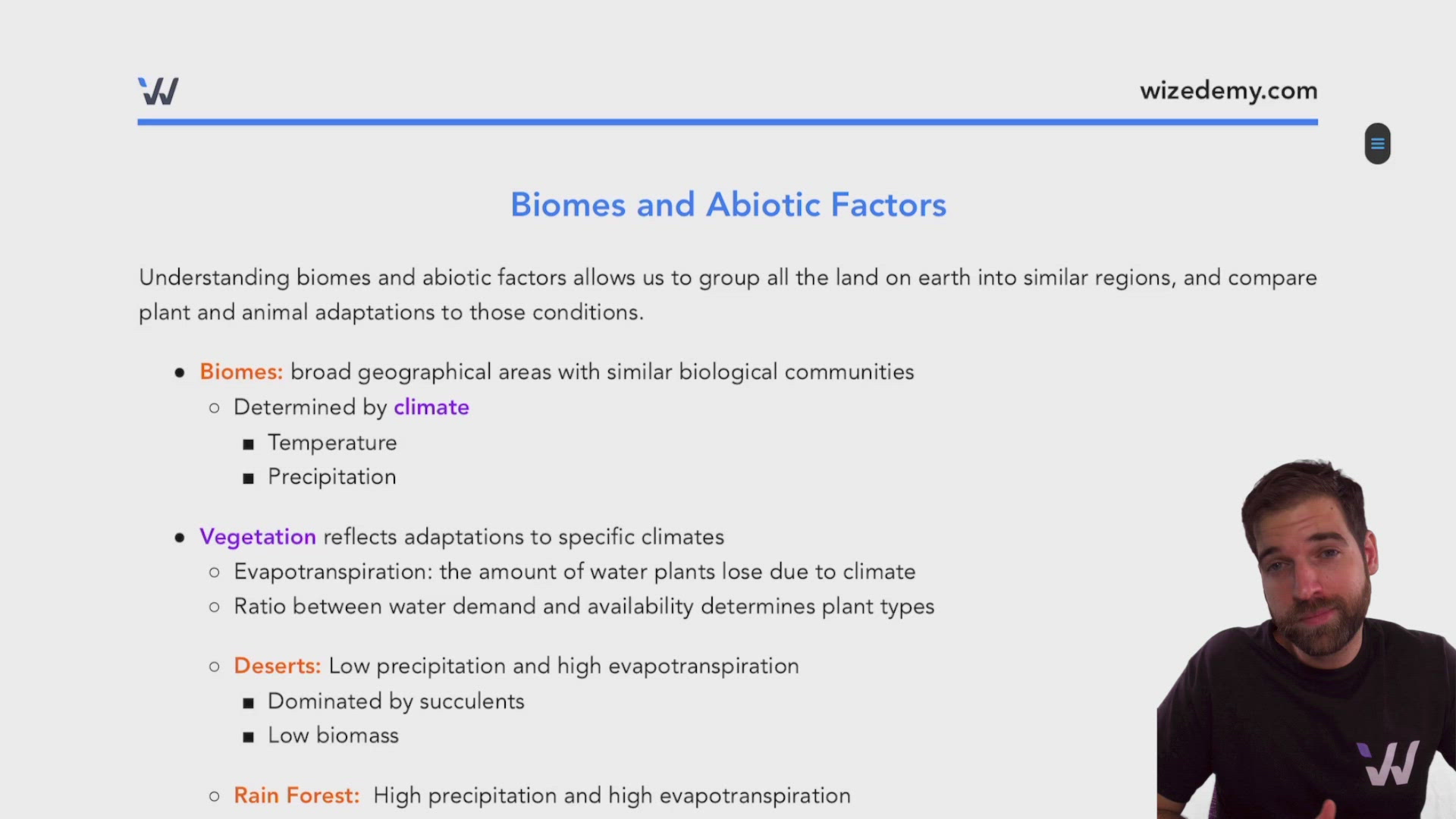
Understanding biomes and abiotic factors allows us to group all the land on earth into similar regions, and compare plant and animal adaptations to those conditions.
- Biomes: broad geographical areas with similar biological communities
- Determined by climate
- Temperature
- Precipitation
- Vegetation reflects adaptations to specific climates
- Evapotranspiration: the amount of water plants lose due to climate
- Ratio between water demand and availability determines plant types
- Deserts: Low precipitation and high evapotranspiration
- Dominated by succulents
- Low biomass
- Rain Forest: High precipitation and high evapotranspiration
- Very moist and dense vegetation
- High biomass
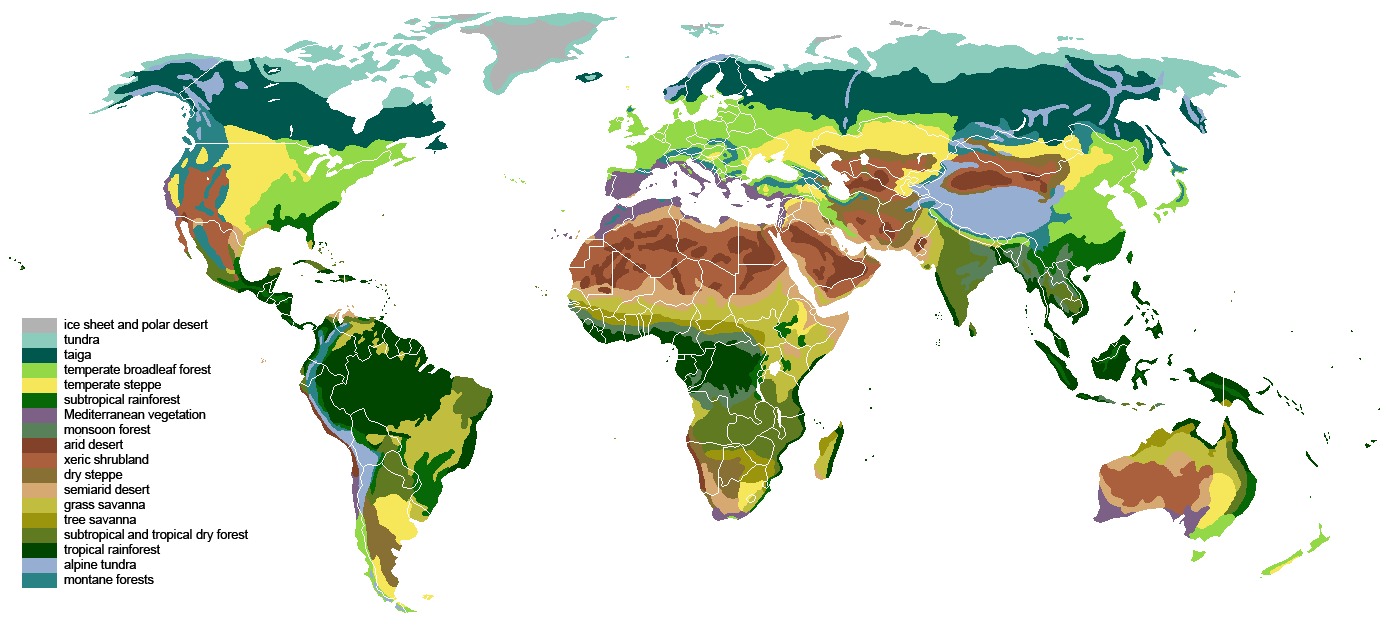
Photo by Ville Koistinen | CC BY

Convergent Evolution
Organisms in similar biomes evolve similar adaptations.
- Plants may look similar, but have different evolutionary history and mechanisms
- Plants converge in appearance and function since they are adapting to similar environments Example: Cacti from North America and Euphorbes from Africa look very similar, but have extremely different evolutionary histories and mechanisms for tolerating hot and dry conditions.

Photo by Leonora Enking | CC BY
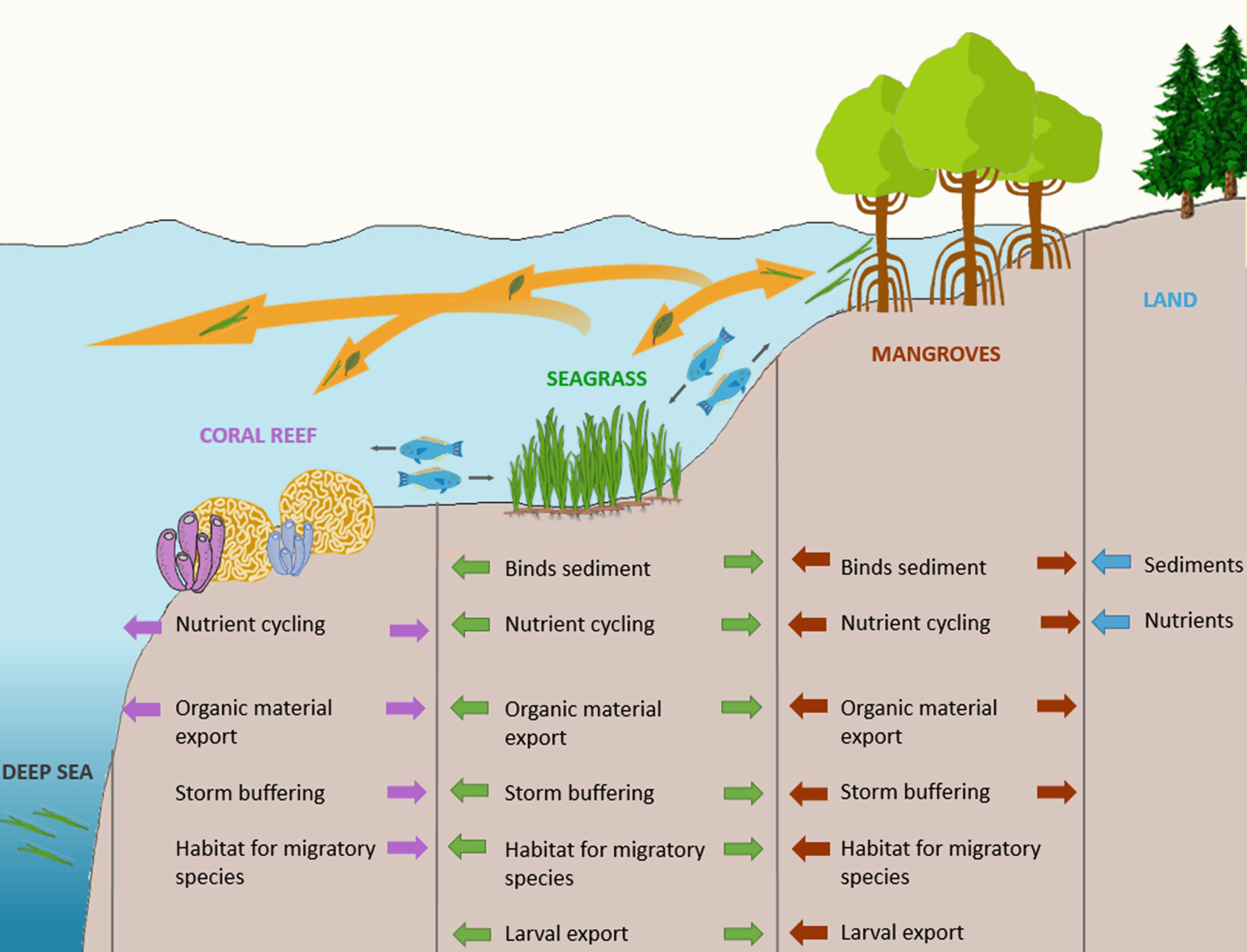
Aquatic biomes
- Shaped by
- Climate
- Nutrient availability
- Oxygen
- Sunlight
- Primary producers
- Shallow aquatic systems
- Macroscopic Algae
- Aquatic plants
- Open Ocean
- Photosynthetic microscopic organisms
- Aquatic biomes include:
- Intertidal
- Coral reefs
- Pelagic realm
- Deep sea