Circulation
- Every cell must get rid of CO2 and receive O2
- Circulatory Systems: connect the gas-exchange surfaces to the body
- Allows organisms to grow larger
Circulatory systems

Three Main Components
- Circulatory Fluid: fluid that transports O2 and CO2 Examples: Hemolymph, Blood
- Vessels: structure that allows the hemolymph to move throughout the body Example: Blood veins
- Muscular Pump: contracts to pump the hemolymph Example: Heart
Open vs Closed Circulatory systems
- Open Circulatory System: hemolymph pools in body cavity and contacts organs directly
- Hemolymph is pumped from the sinuses through the heart
- Hemolymph is not always in vessels! Examples: Arthropods, Clams
- Closed Circulatory System: blood remains in vessels, does not surround organs Examples: Cephalopods, all vertebrates
Vertebrate Circulatory Systems
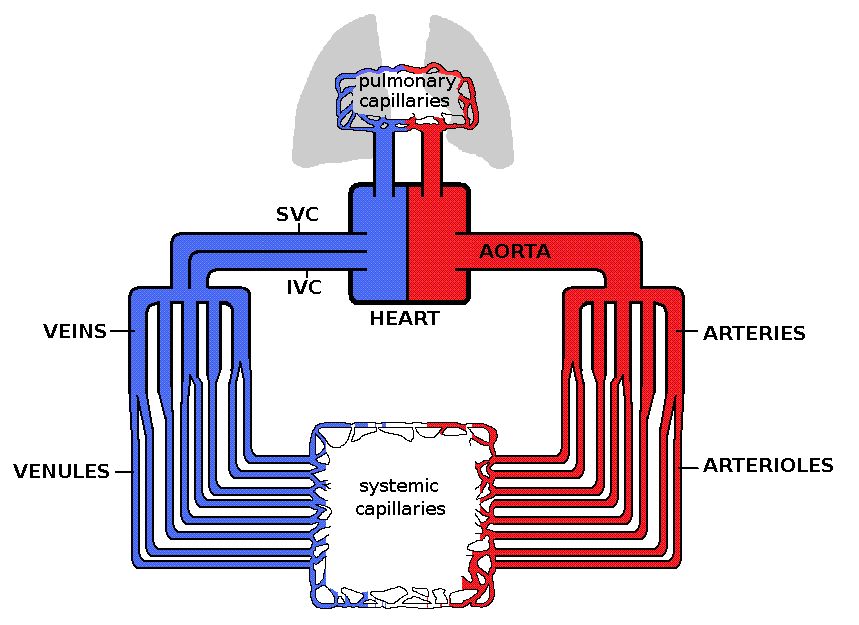
- Cardiovascular system: a name for the circulatory system in humans and vertebrates
- Three types of blood vessels
- Arteries: carry blood from heart to organs
- Capillaries: thin branching veins that allow blood to enter tissues and organs
- Veins: carry blood from organs to heart
- Hearts
- Atria: chamber the receives blood into heart
- Ventricle: larger, muscular chamber, pumps blood out of heart
Single vs Double Circulation
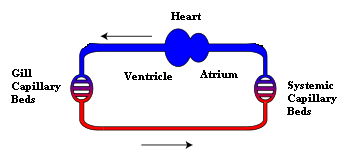
- Single Circulation:
- Heart has only 1 Atrium and 1 Ventricle
- Blood only enters heart ONCE per cycle
- Blood travels
- Heart > Gills > Body (Organs) > Heart Examples: Fish and Sharks
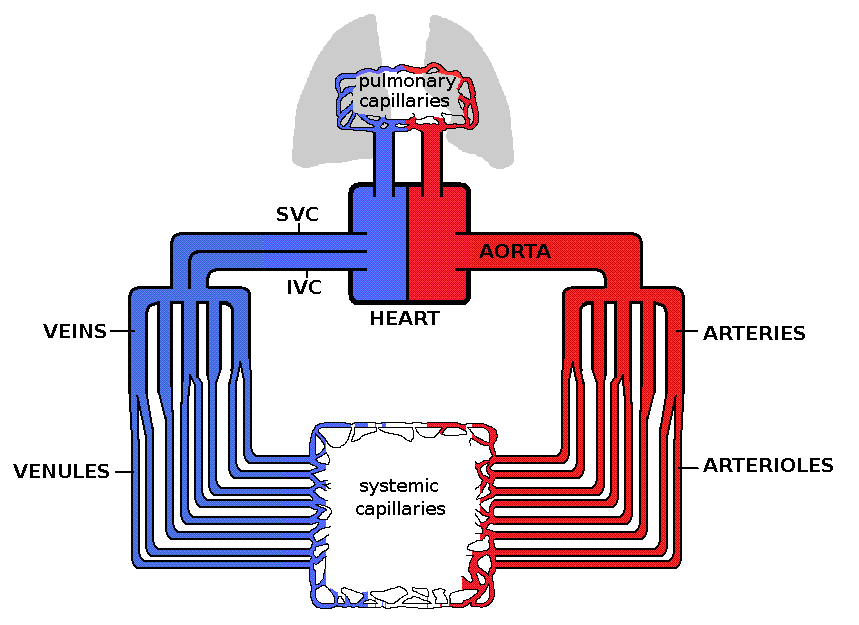
- Double Circulation:
- Heart has 2 Atria and 2 Ventricles
- Blood enters the heart TWICE per cycle
- Blood travels
- Heart > Lungs > Heart > Body > Heart Examples: Humans and Amphibians