General Terminology
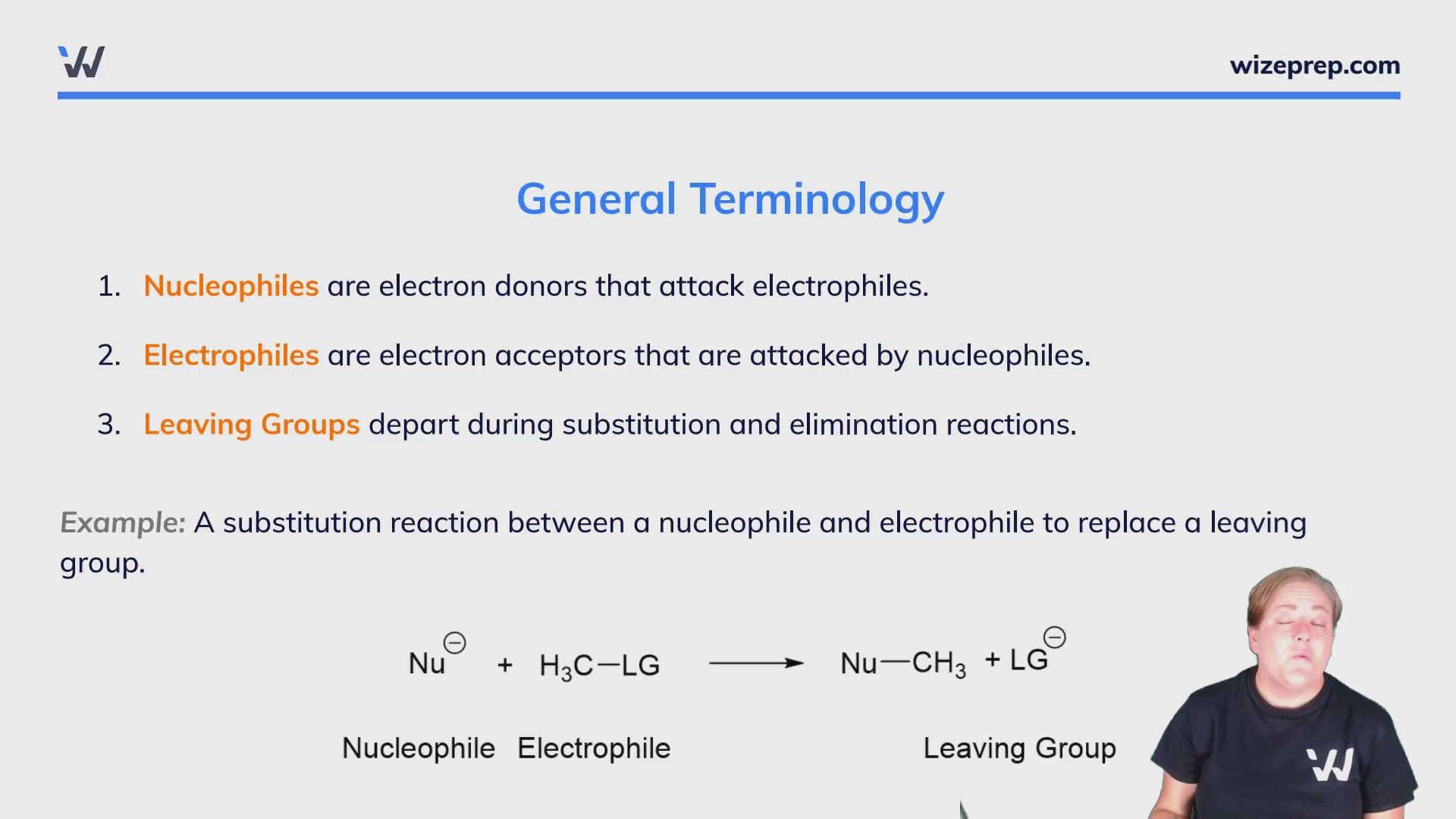
- Nucleophiles are electron donors that attack electrophiles.
- Electrophiles are electron acceptors that are attacked by nucleophiles.
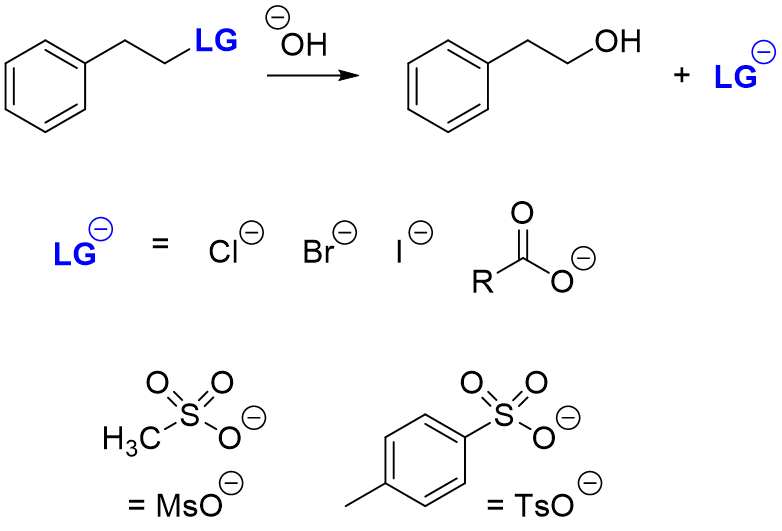
- Leaving Groups depart during substitution and elimination reactions.
Example: A substitution reaction between a nucleophile and electrophile to replace a leaving group.

Nucleophiles
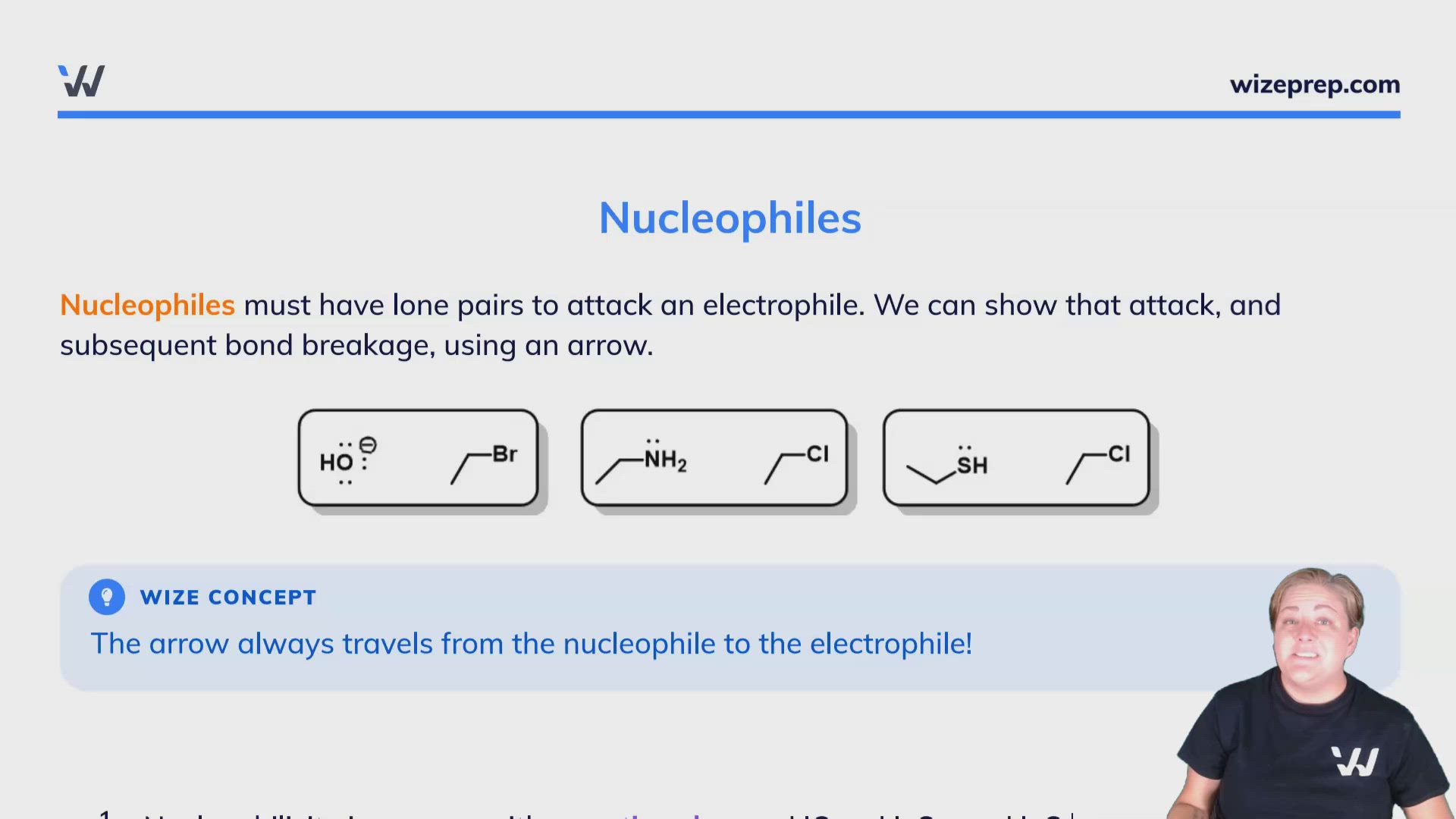
Nucleophiles must have lone pairs to attack an electrophile. We can show that attack, and subsequent bond breakage, using an arrow.

- Nucleophilicity increases with negative charge: HO– > H2O >>> H3O+
- Nucleophilicity increases with basicity in general: H3C– > H2N– >HO– > F–
- Nucleophilicity increases with more polarizable atoms (size): I– > Br– > Cl– > F–
Electrophiles
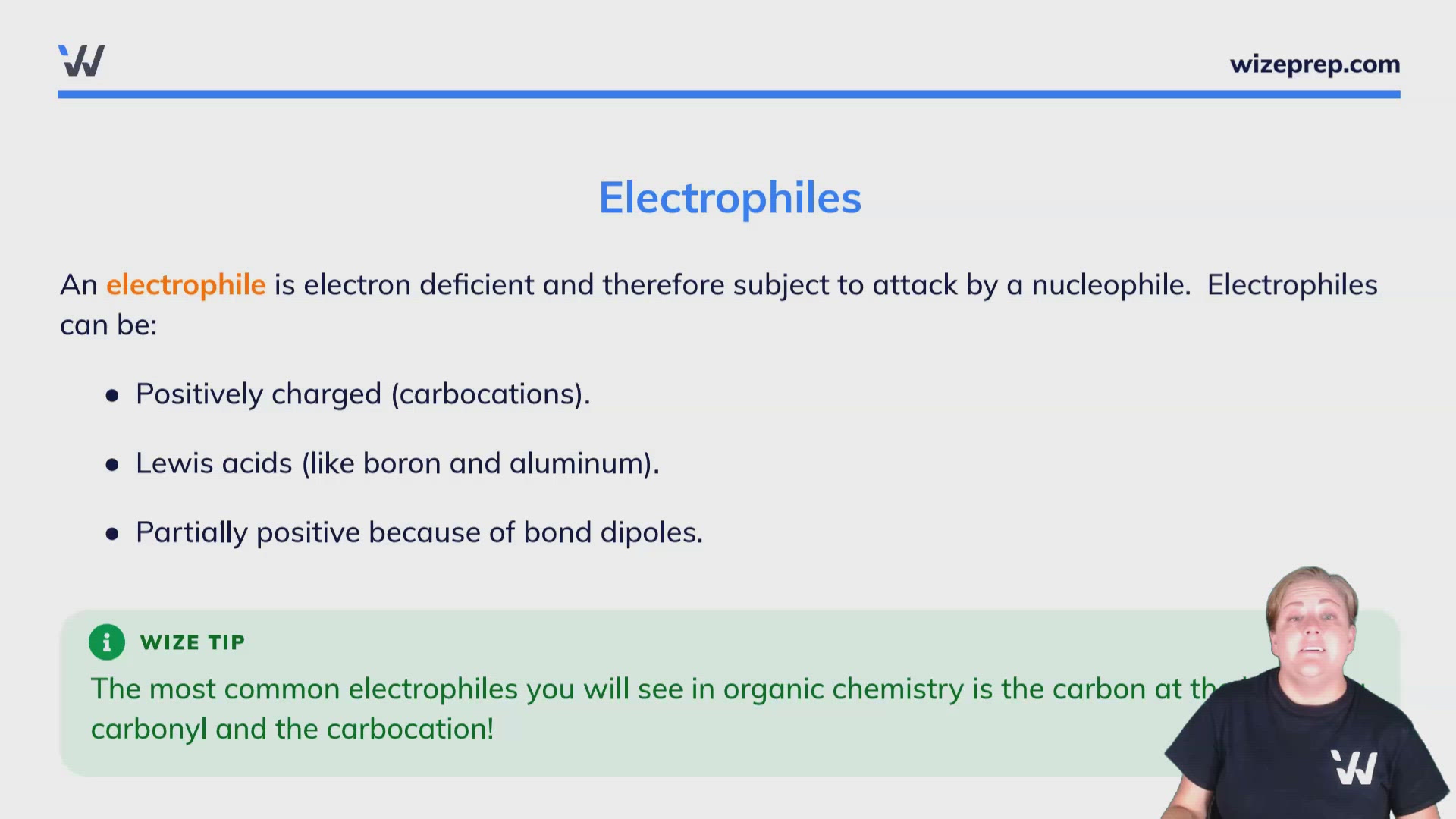
An electrophile is electron deficient and therefore subject to attack by a nucleophile. Electrophiles can be:
- Positively charged (carbocations).
- Lewis acids (like boron and aluminum).
- Partially positive because of bond dipoles.
Leaving Groups
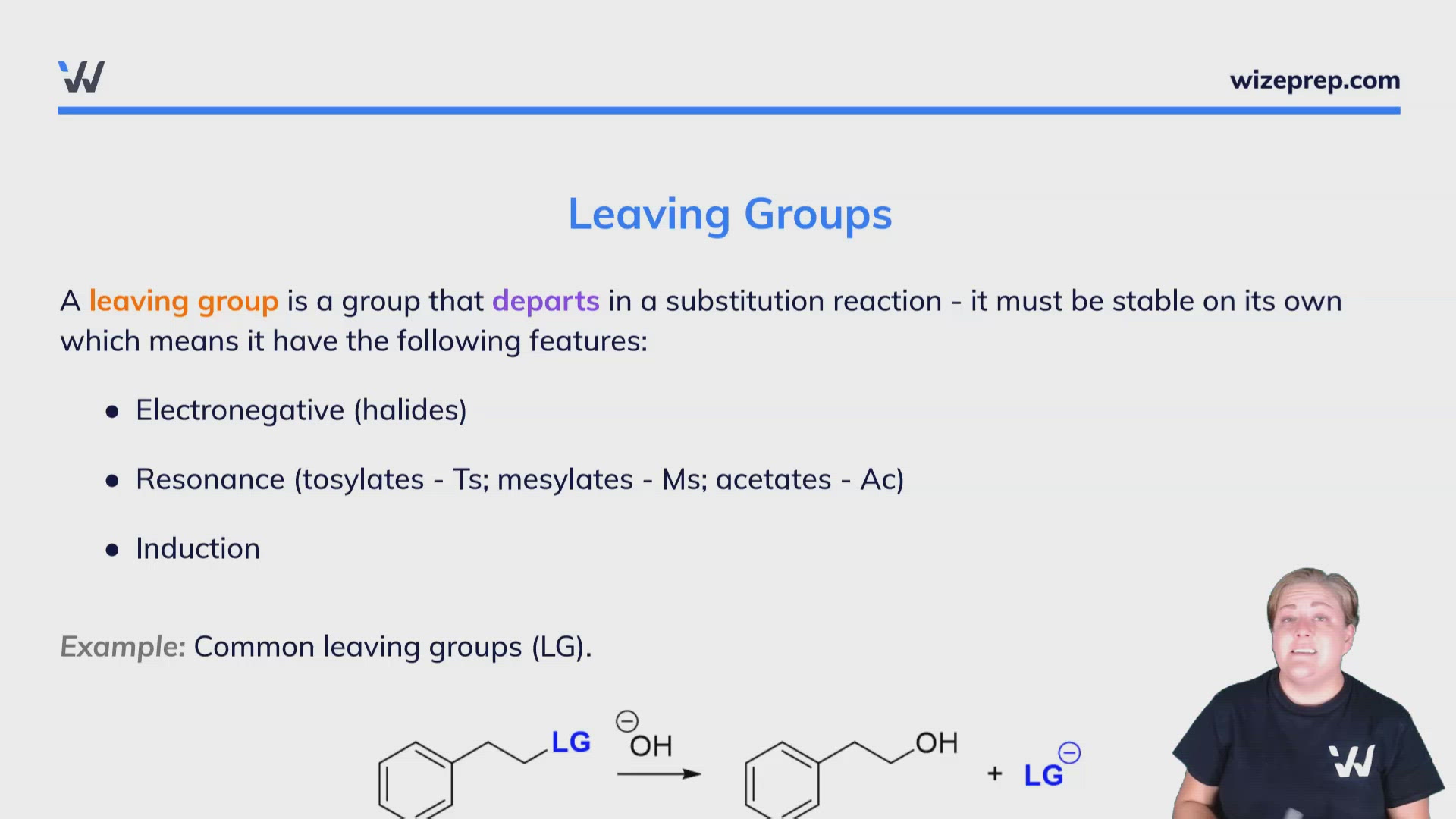
A leaving group is a group that departs in a substitution reaction - it must be stable on its own which means it have the following features:
- Electronegative (halides)
- Resonance (tosylates - Ts; mesylates - Ms; acetates - Ac)
- Induction
Example: Common leaving groups (LG).
Substitution vs. Elimination
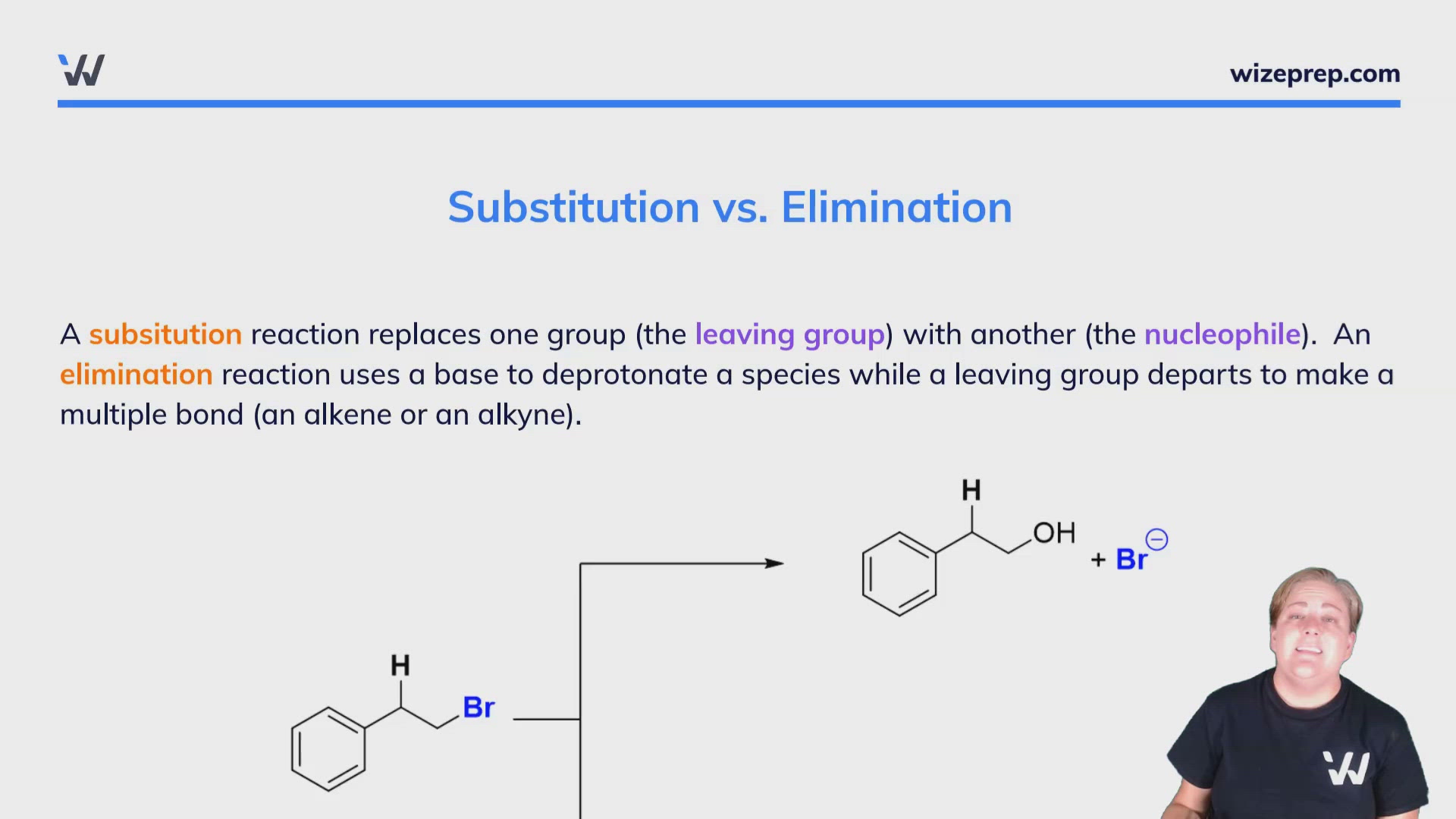
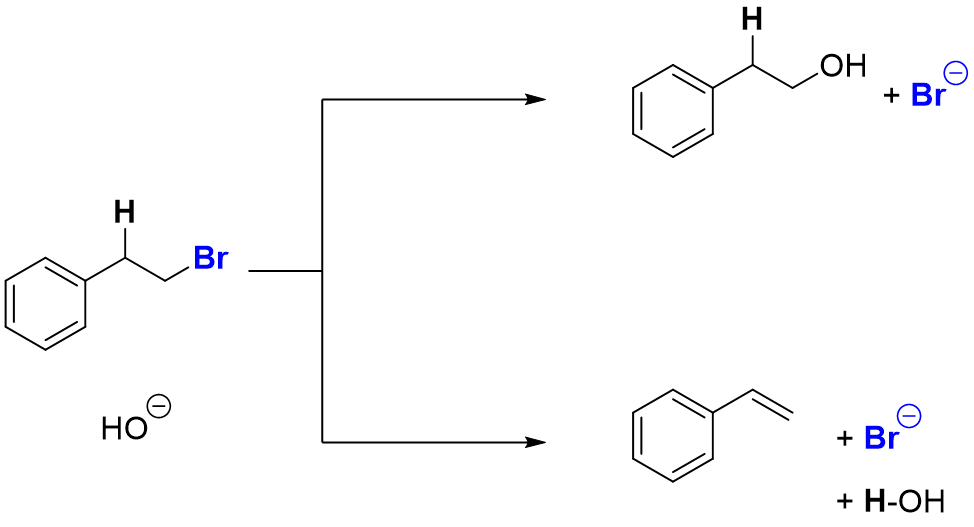
A subsitution reaction replaces one group (the leaving group) with another (the nucleophile). An elimination reaction uses a base to deprotonate a species while a leaving group departs to make a multiple bond (an alkene or an alkyne).
Example: Substitution vs. Elimination
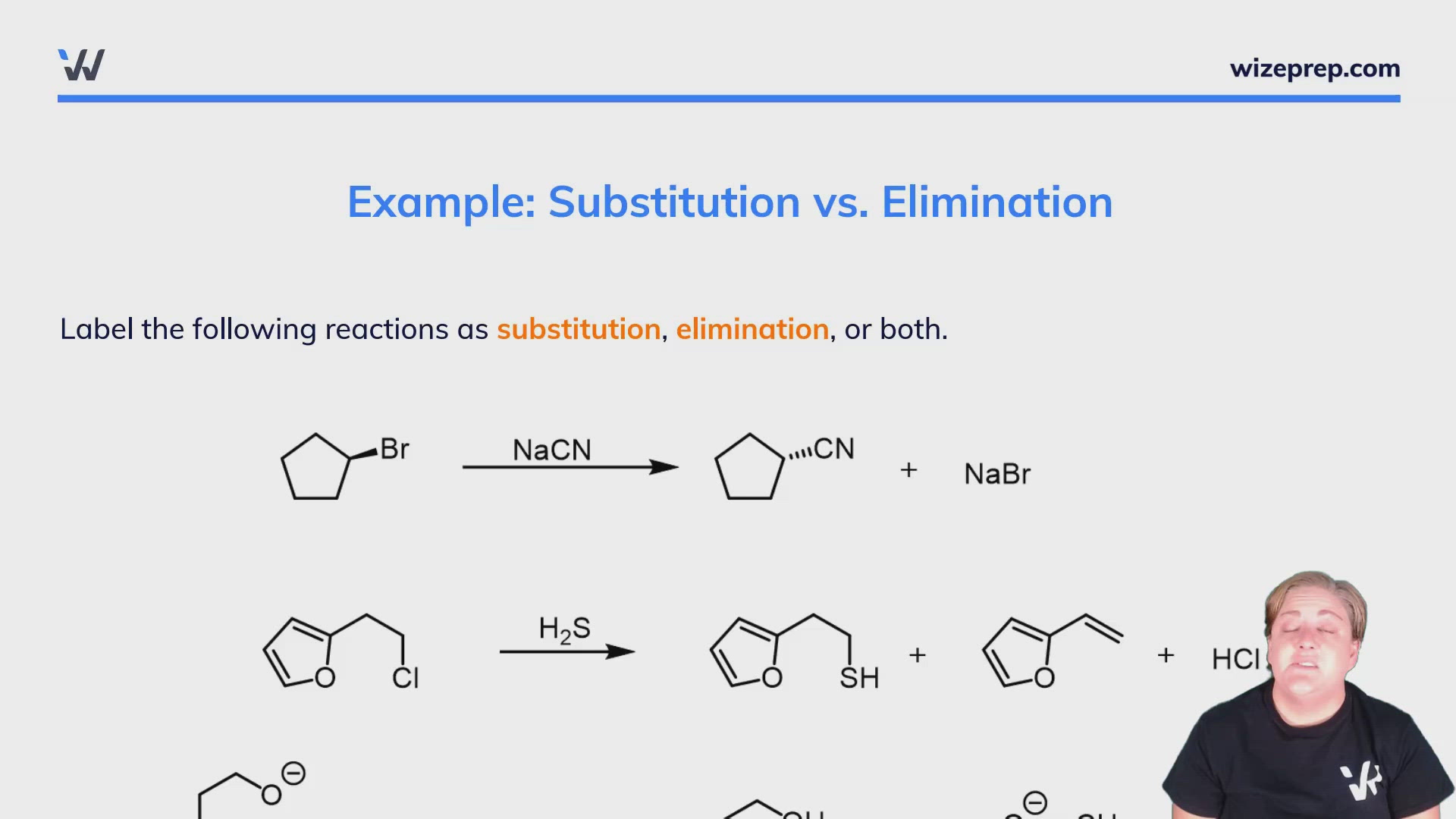
Label the following reactions as substitution, elimination, or both.
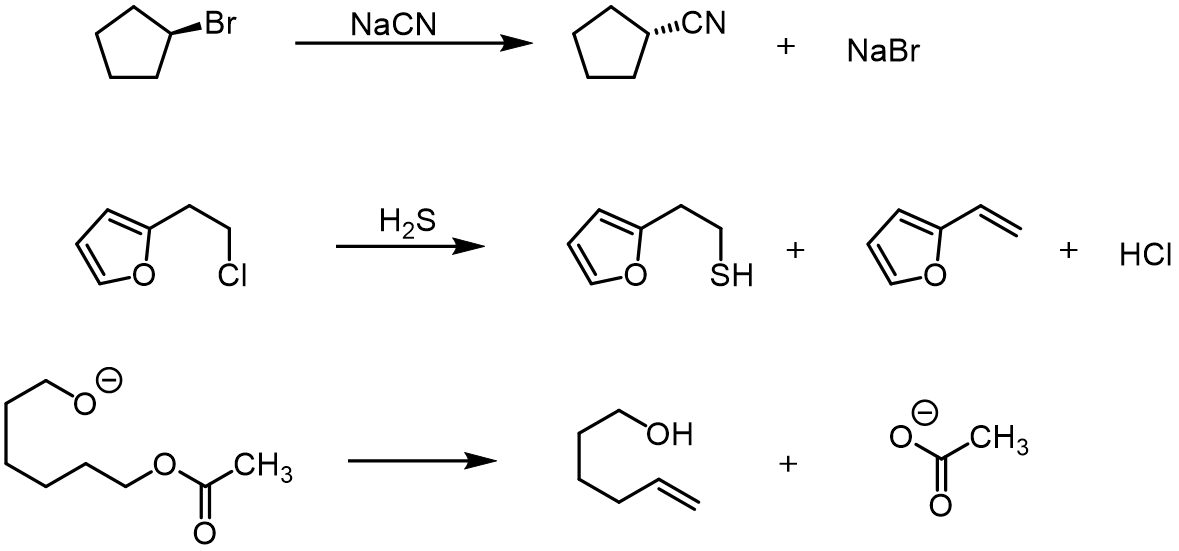
- Substitution
- Both
- Elimination