Hydrogen (1H) NMR
There are five steps to interpreting 1H NMR data:
- The number of peaks
- how many different chemical environments are present
- Chemical shift
- where a peak is located
- which functional groups are present
- Integration
- how many hydrogen atoms are in that signal
- Multiplicity
- how many neighbours a hydrogen atom has
- Coupling constant
- distance between the multiplet lines
Example: chemical equivalence labeled with letters

Chemical Shift
The important chemical shifts that you should know are shown below.

Multiplicity
The multiplicity of a signal is calculated using the 2nI + 1 rule where n = number of chemically inequivalent neighbours and I = spin quantum number. For 1H, I = 1/2.
Example: different multiplets that are seen in the 1H NMR

Coupling Constant
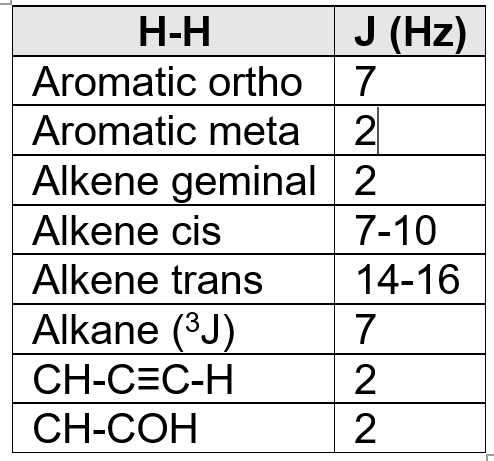
The coupling constant is the distance between lines in a signal. It is most useful with alkene functional groups. Important coupling constants are listed below.
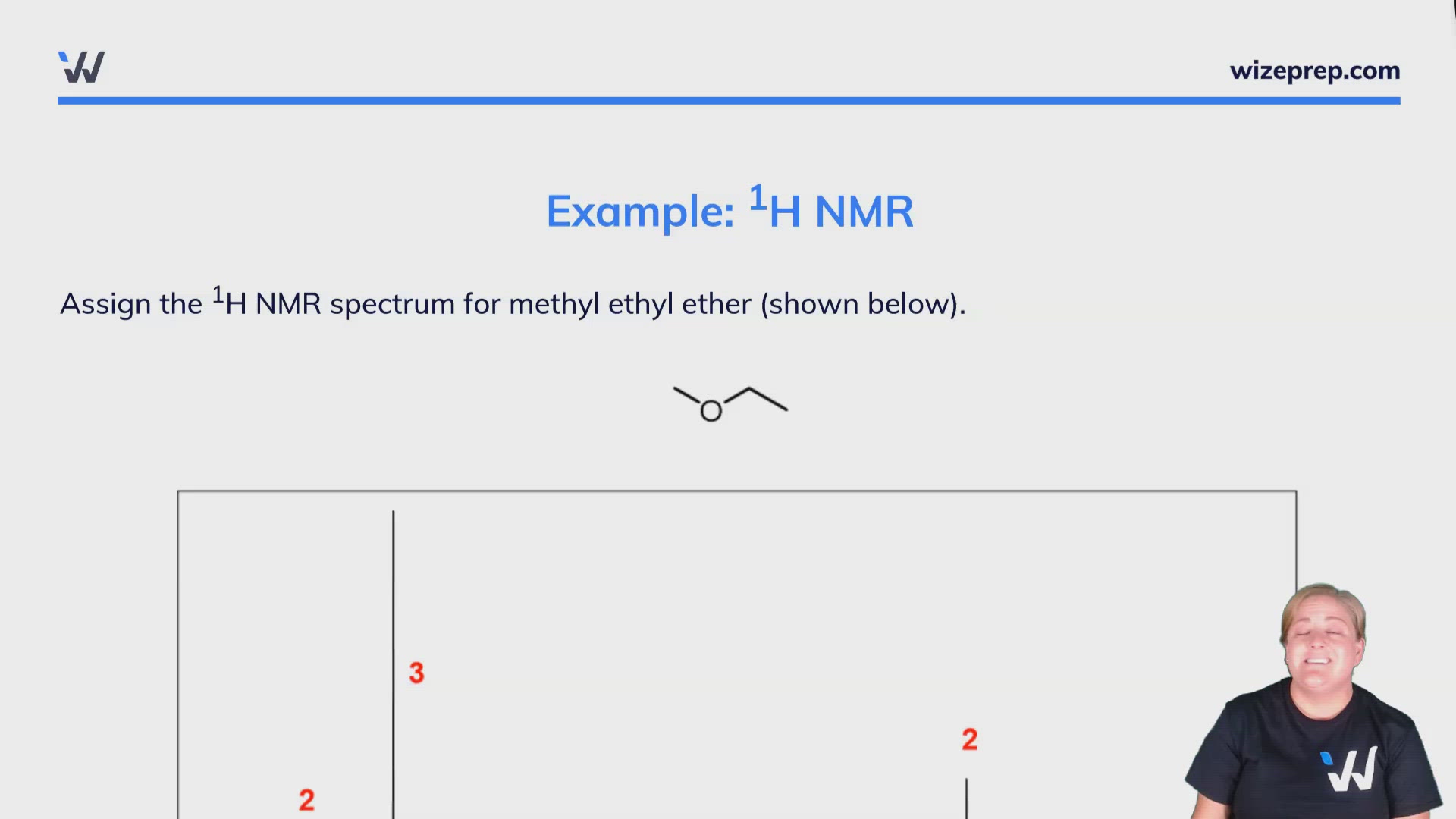
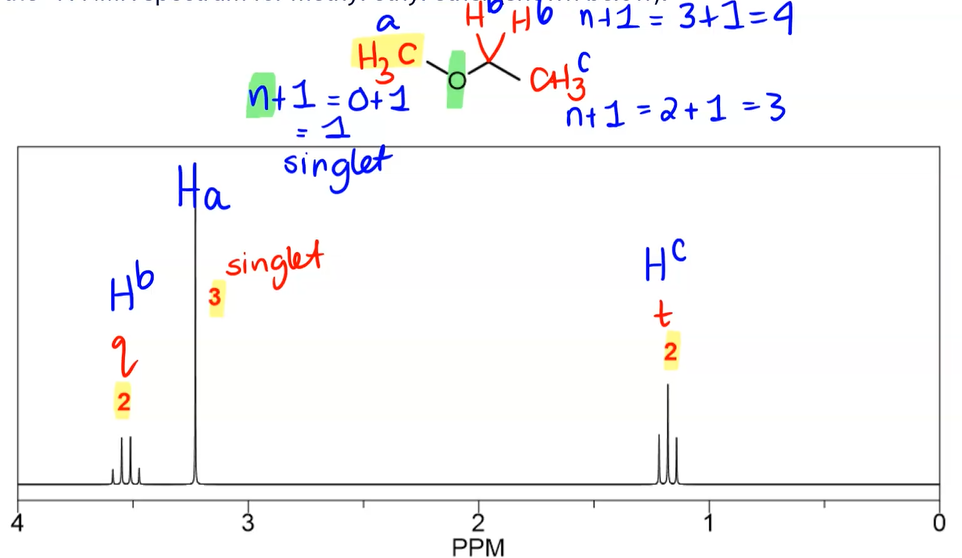
Example: 1H NMR
Assign the 1H NMR spectrum for methyl ethyl ether (shown below).

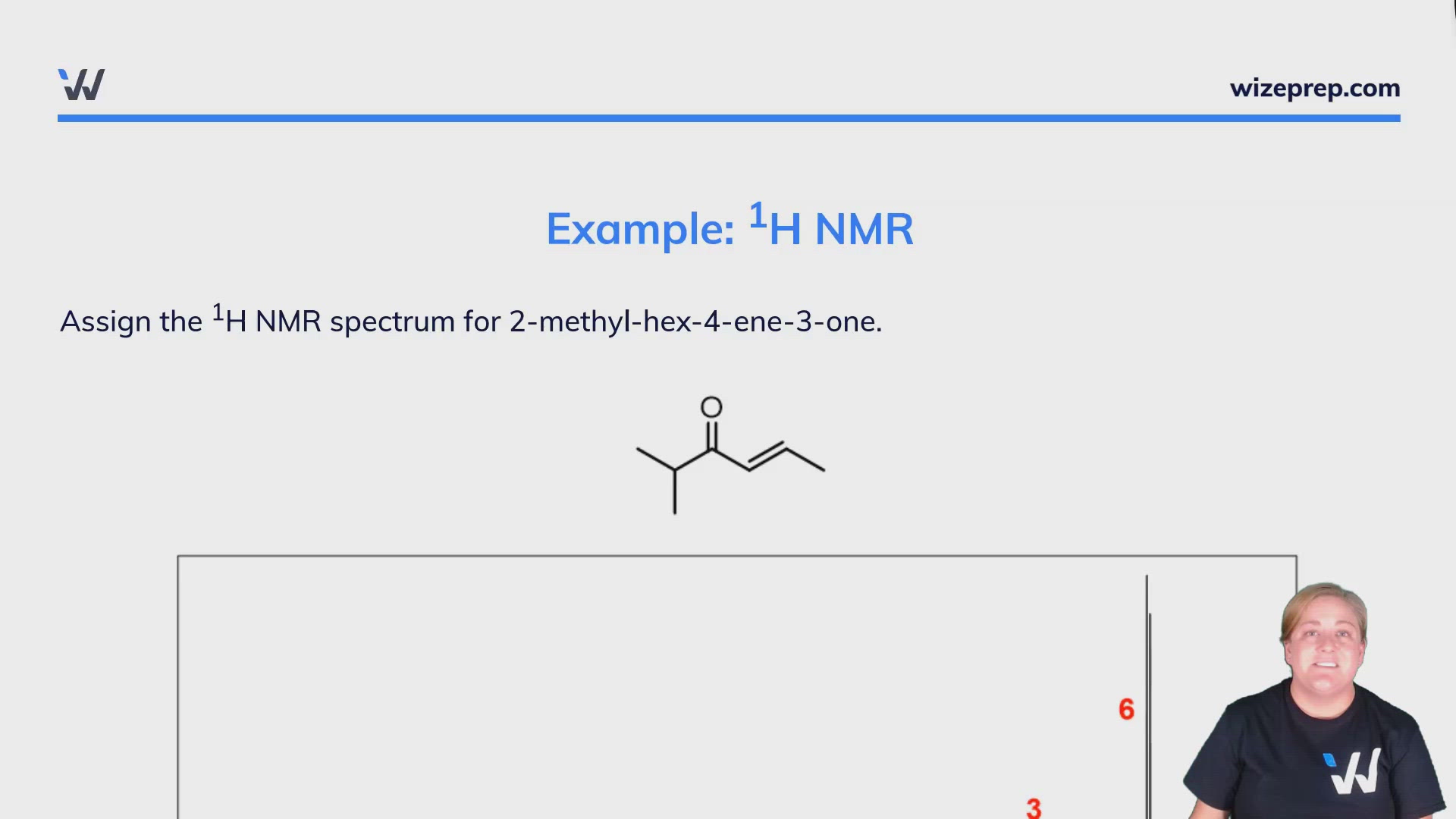
Example: 1H NMR
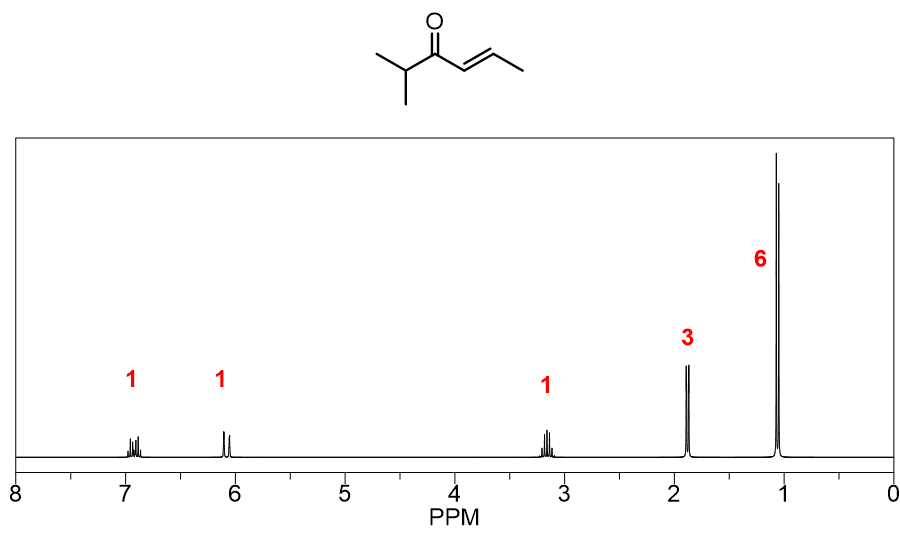
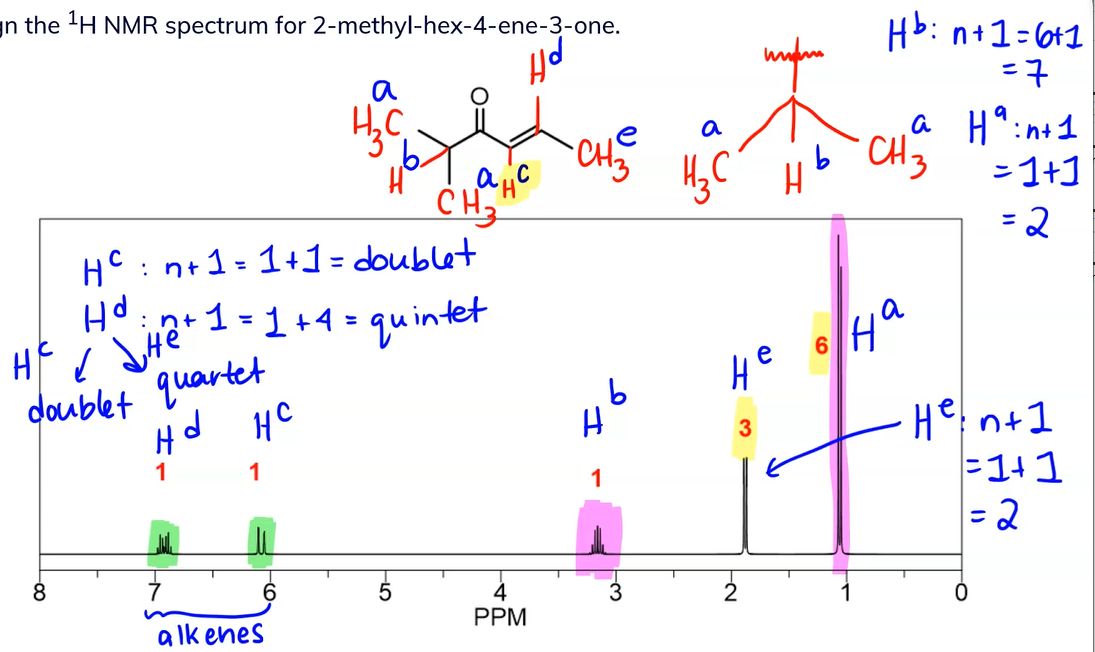
Assign the 1H NMR spectrum for 2-methyl-hex-4-ene-3-one.