Popular Courses
DAT
General Course
CHEM 2213A/B
Western University
Organic Chemistry
University Study Guides
Organic Chemistry
General Course
Organic Chemistry
University Study Guides
CHEM 351
University of Calgary
CHEM 231
University of Victoria
CHEM 2OA3
McMaster University
CHEM 2223B
Western University
CHM 2120
University of Ottawa
CHEM 263
University of Alberta
CHEM 282
Queen's University
CHY 142
Toronto Metropolitan University
CHEM 222
McGill University
CHEM 2401
Dalhousie University
CHEM 2E03
McMaster University
CHEM 281
Simon Fraser University
CHEM 266
University of Waterloo
CHEM 250
University of Saskatchewan
CHM247H1
University of Toronto

0:00 / 0:00
NMR Theory
NMR spectroscopy is the most informative spectroscopic technique. There are multiple kinds of NMR spectroscopy, but the organic chemist focuses on two types - 1H NMR and 13C NMR. NMR works by subjecting a spin active nucleus to an external magnetic field - this is how we get information!

NMR is an incredibly complex subject and it is not necessary for you to know everything! But, there are a few key ideas you should be comfortable with:
- the hydrogen nucleus is almost 100 % abundant and is therefore very sensitive
- 1H NMR spectra are run in deuterated solvent so that the solvent signal doesn't "swamp out" the sample signal
- the carbon nucleus is only 1% abundant meaning it is not sensitive at all. This means this experiment needs to be run for a long time
0:00 / 0:00
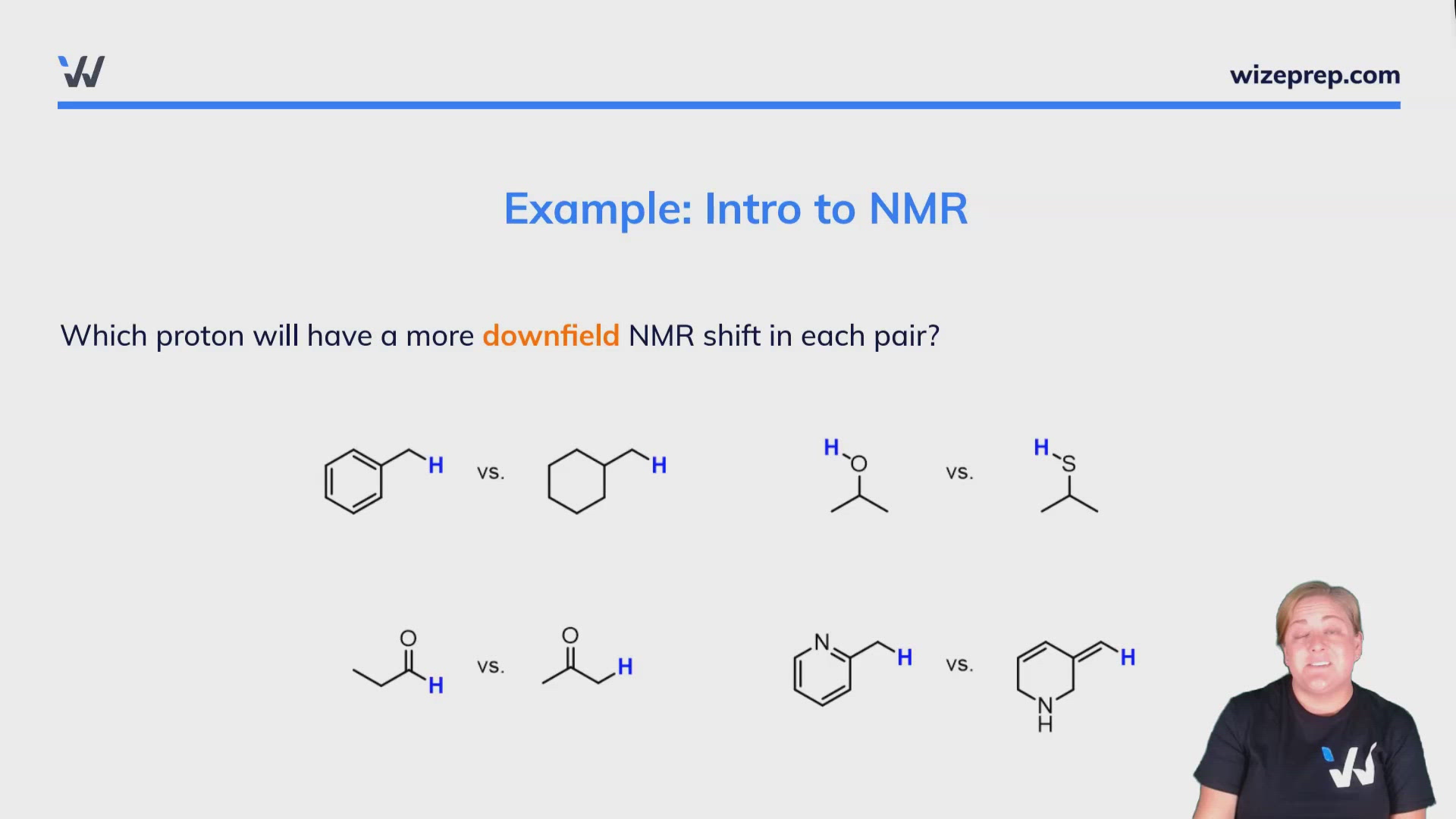
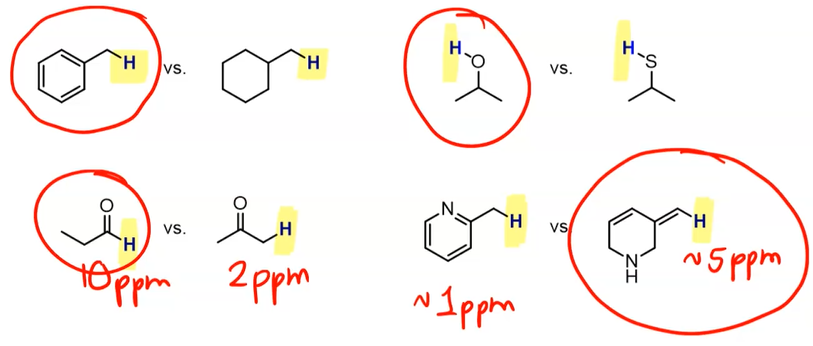
Example: Intro to NMR
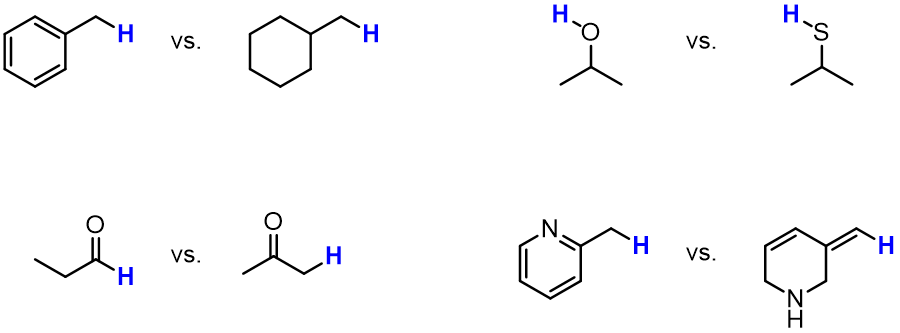
Which proton will have a more downfield NMR shift in each pair?
0:00 / 0:00
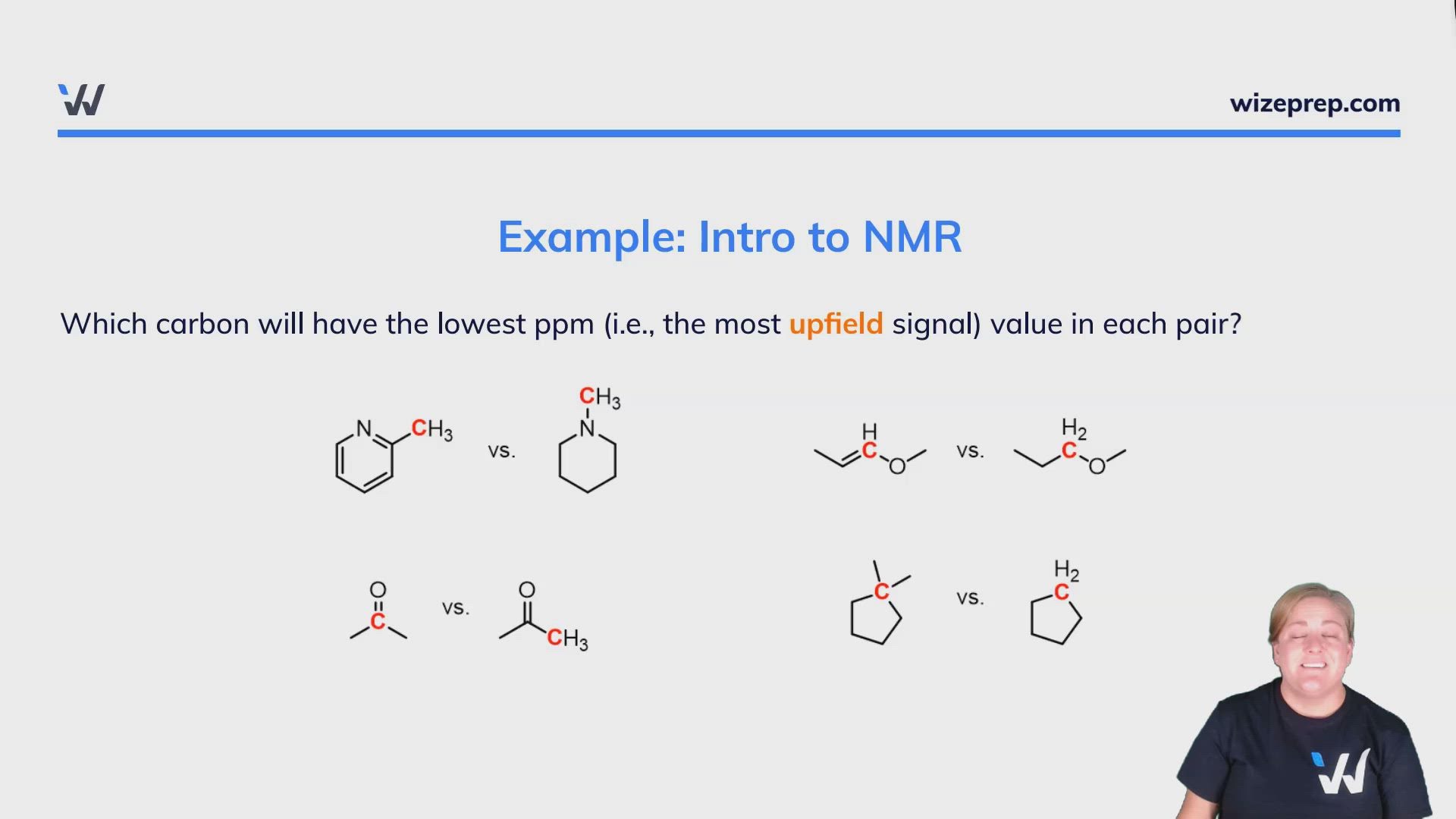
Example: Intro to NMR
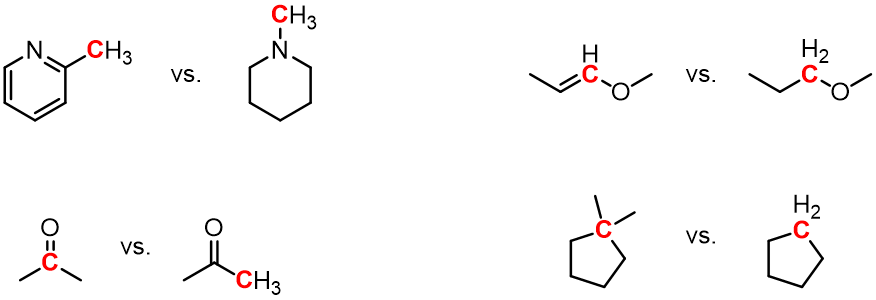
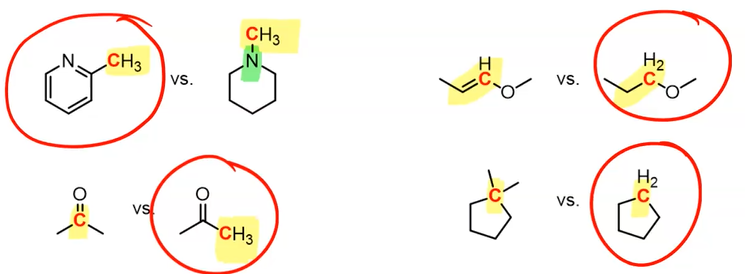
Which carbon will have the lowest ppm (i.e., the most upfield signal) value in each pair?