Popular Courses
DAT
General Course
CHEM 2213A/B
Western University
Organic Chemistry
University Study Guides
Organic Chemistry
General Course
Organic Chemistry
University Study Guides
CHEM 351
University of Calgary
CHEM 231
University of Victoria
CHEM 2OA3
McMaster University
CHEM 2223B
Western University
CHM 2120
University of Ottawa
CHEM 263
University of Alberta
CHEM 282
Queen's University
CHY 142
Toronto Metropolitan University
CHEM 222
McGill University
CHEM 2401
Dalhousie University
CHEM 2E03
McMaster University
CHEM 281
Simon Fraser University
CHEM 266
University of Waterloo
CHEM 250
University of Saskatchewan
CHM247H1
University of Toronto
0:00 / 0:00
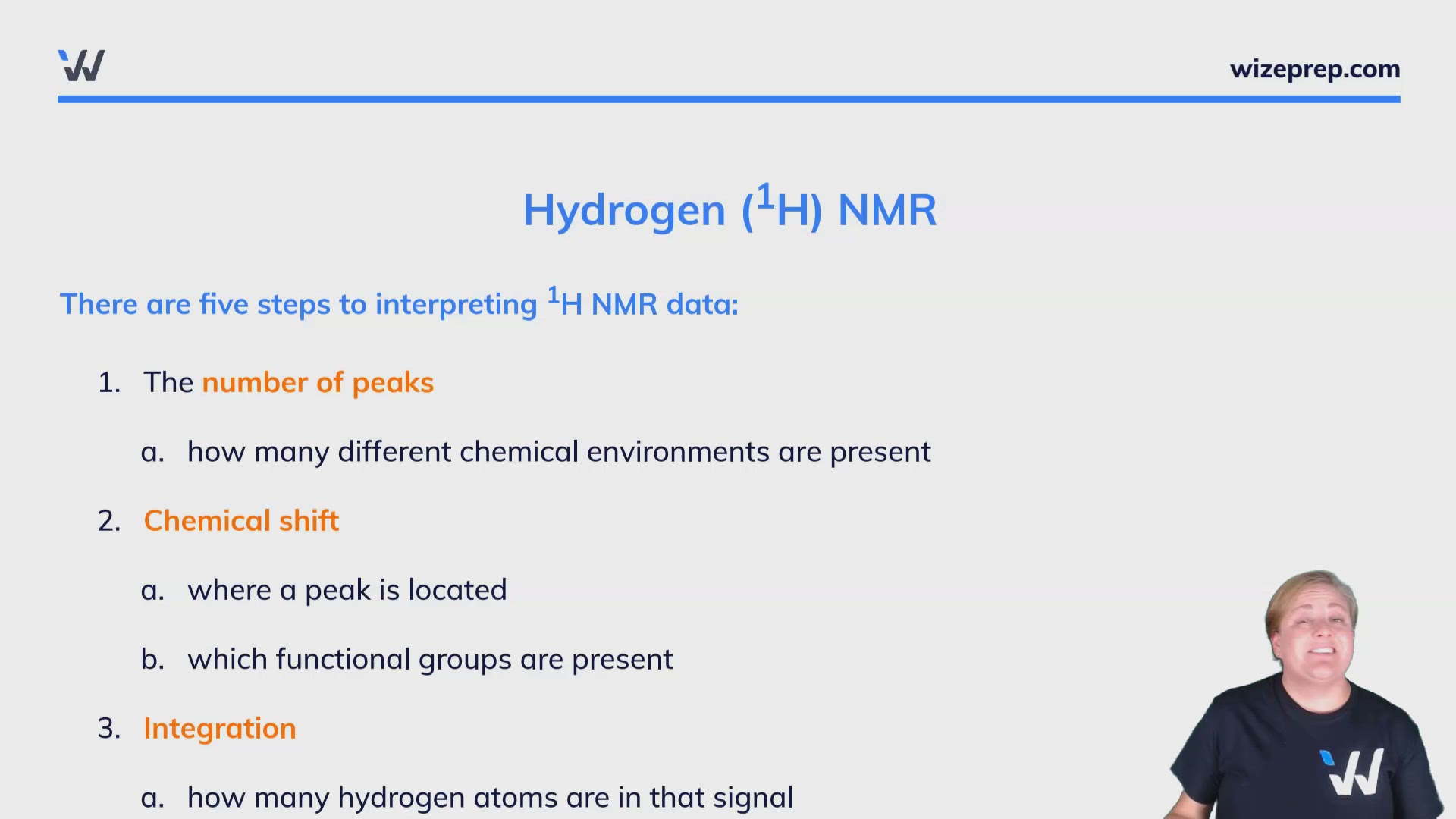
Hydrogen (1H) NMR
There are five steps to interpreting 1H NMR data:
- The number of peaks
- how many different chemical environments are present
- Chemical shift
- where a peak is located
- which functional groups are present
- Integration
- how many hydrogen atoms are in that signal
- Multiplicity
- how many neighbours a hydrogen atom has
- Coupling constant
- distance between the multiplet lines
Example: chemical equivalence labeled with letters

Chemical Shift
The important chemical shifts that you should know are shown below.

Wize Tip
Peaks found at higher numbers are downfield. Peaks found at lower numbers are upfield.
Multiplicity
The multiplicity of a signal is calculated using the 2nI + 1 rule where n = number of chemically inequivalent neighbours and I = spin quantum number. For 1H, I = 1/2.
Wize Concept
For 1H NMR, the multiplicity is equal to n + 1.
Example: different multiplets that are seen in the 1H NMR

Coupling Constant
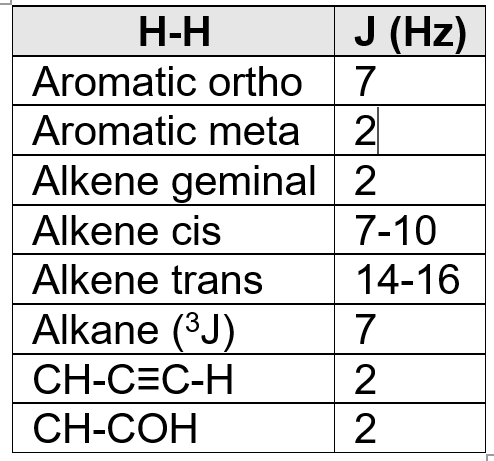
The coupling constant is the distance between lines in a signal. It is most useful with alkene functional groups. Important coupling constants are listed below.
0:00 / 0:00
Example: 1H NMR
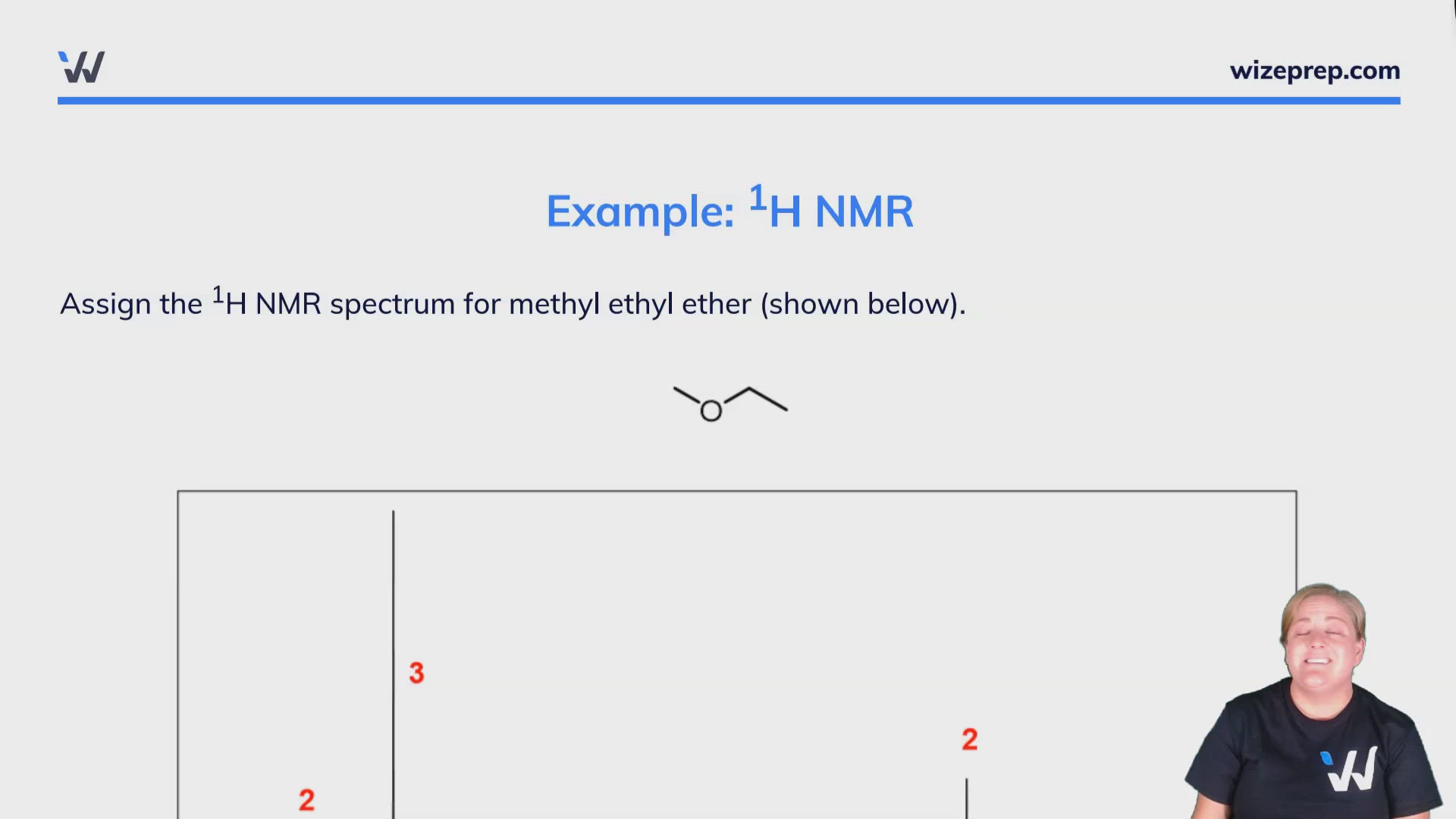
Assign the 1H NMR spectrum for methyl ethyl ether (shown below).

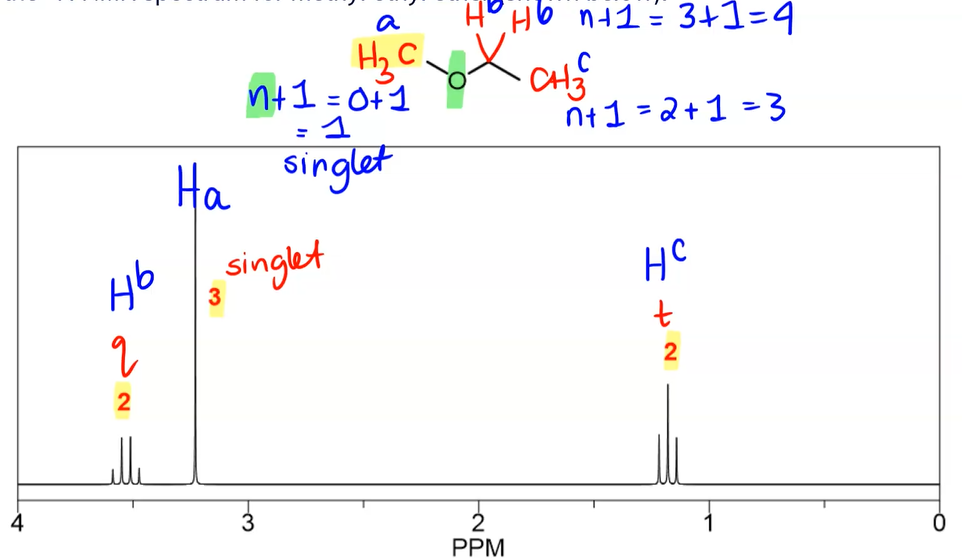
0:00 / 0:00
Example: 1H NMR
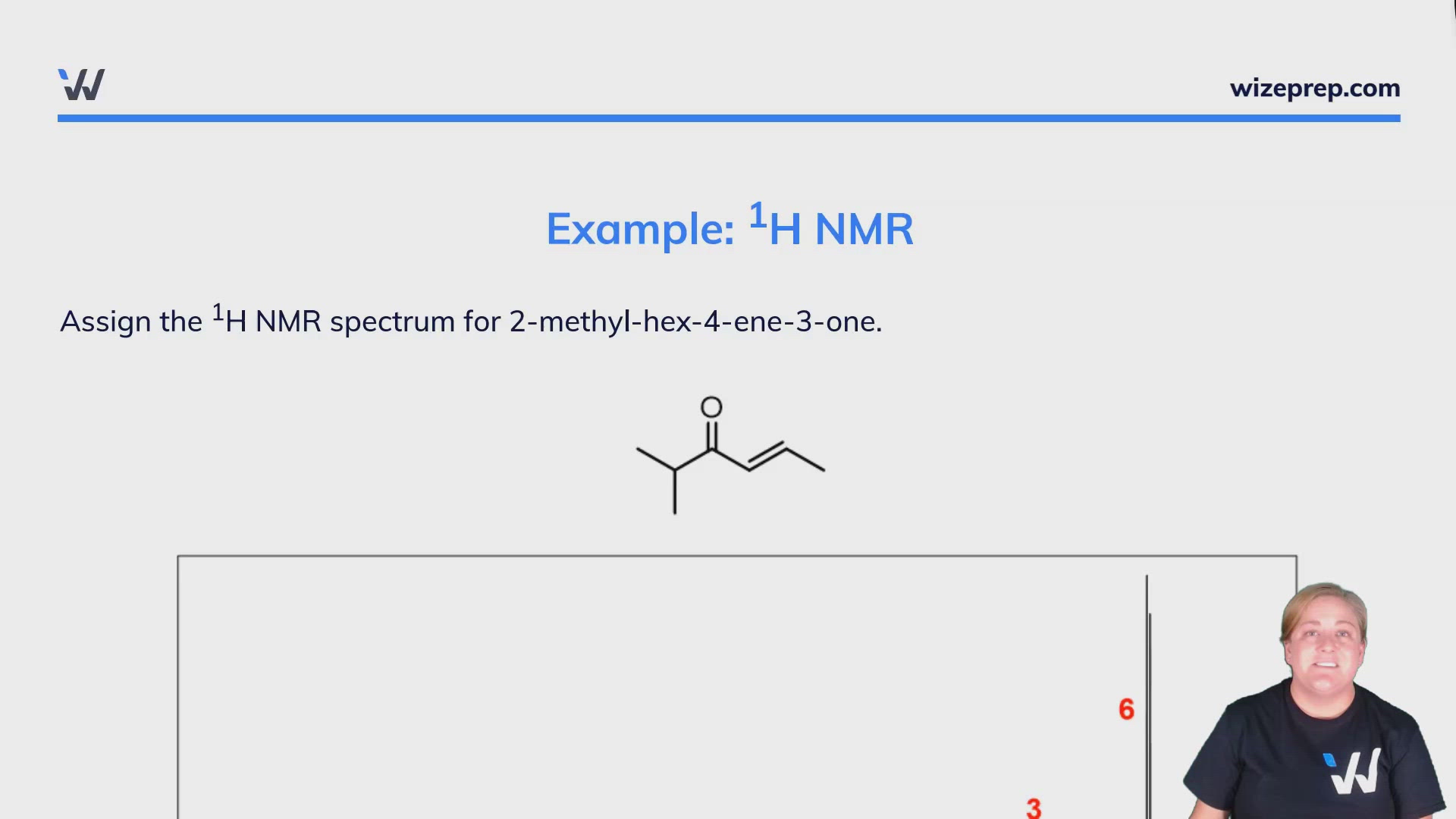
Assign the 1H NMR spectrum for 2-methyl-hex-4-ene-3-one.
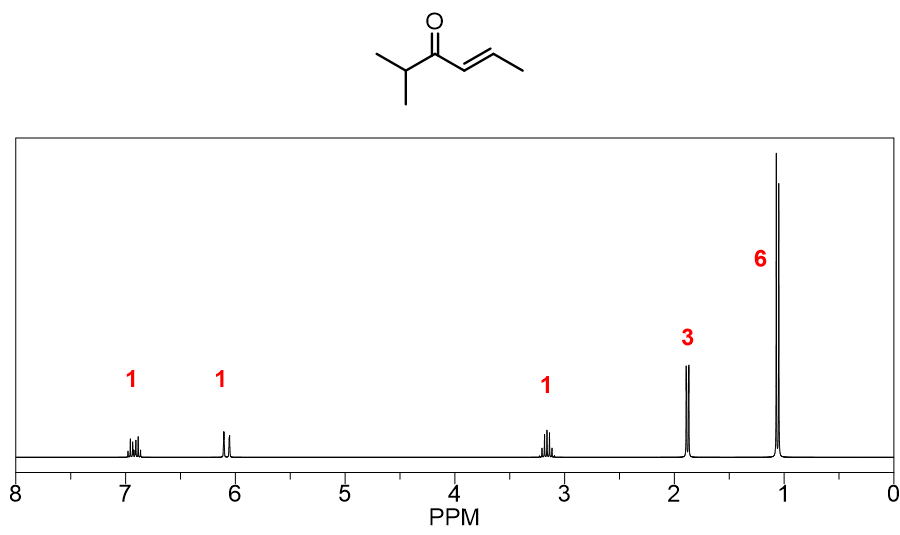
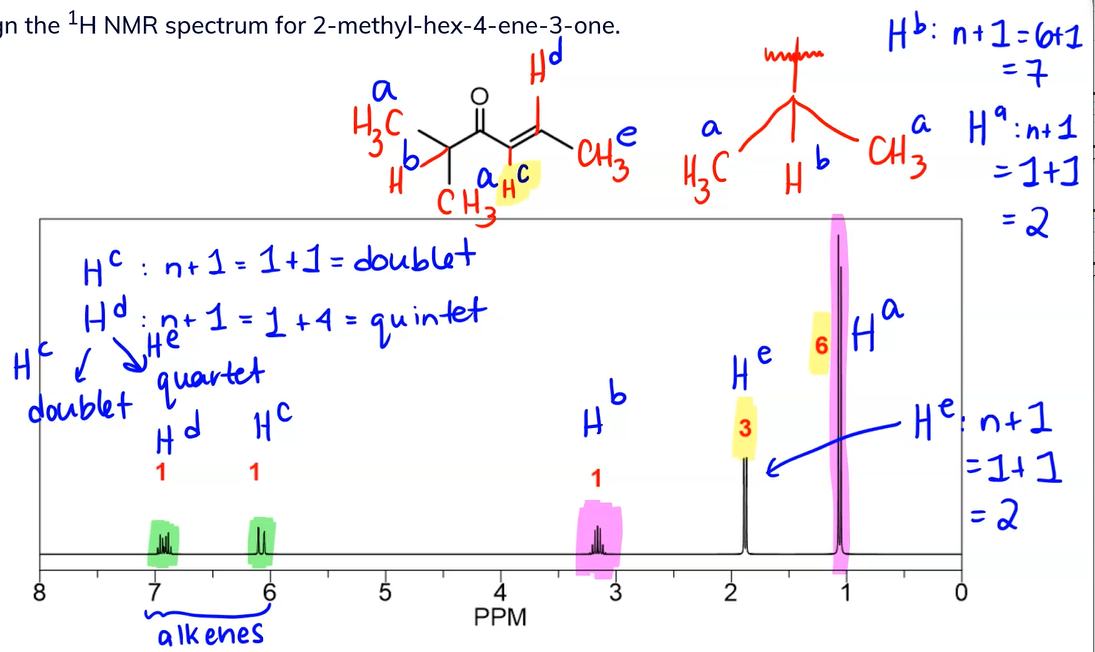

Mark Yourself Question
- Grab a piece of paper and try this problem yourself.
- When you're done, check the "I have answered this question" box below.
- View the solution and report whether you got it right or wrong.
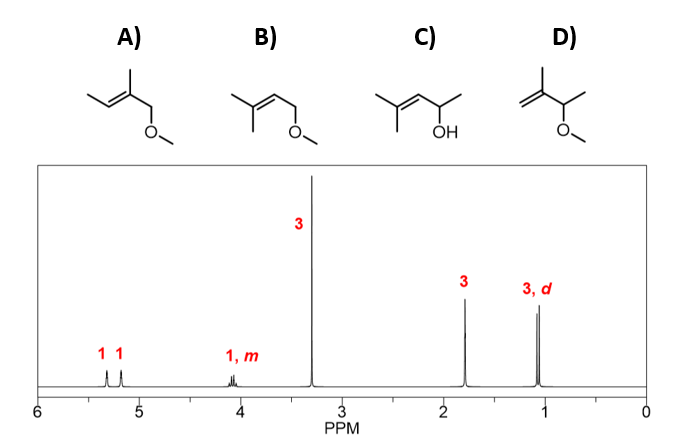
The 1H NMR spectrum belongs to which of the following molecules?

The 1H NMR spectrum provided belongs to which of the following molecules?

The 1H NMR spectrum provided belongs to which of the following molecules?
Mark Yourself Question
- Grab a piece of paper and try this problem yourself.
- When you're done, check the "I have answered this question" box below.
- View the solution and report whether you got it right or wrong.
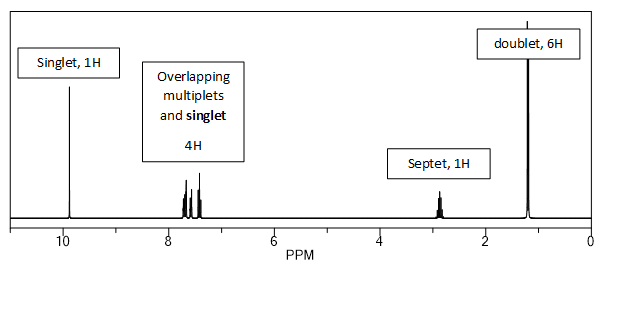
Determine the structure for C10H12O the 1H NMR spectrum shown and labeled below.