Popular Courses
DAT
General Course
Organic Chemistry
University Study Guides
Organic Chemistry
General Course
Organic Chemistry
University Study Guides
CHEM 231
University of Victoria
CHEM 2223B
Western University
CHEM 282
Queen's University
CHY 142
Toronto Metropolitan University
CHEM 222
McGill University
CHEM 2401
Dalhousie University
CHEM 281
Simon Fraser University
CHEM 266
University of Waterloo
CHEM 250
University of Saskatchewan
CHM247H1
University of Toronto
CHEM 213
University of British Columbia
CHEM 40A
University of California - San Diego
CHEM 2100
University of Manitoba
CHEM*2700
University of Guelph
CHEM 164
University of Alberta
CHEM 280
Simon Fraser University
0:00 / 0:00
UV-vis Interpretation
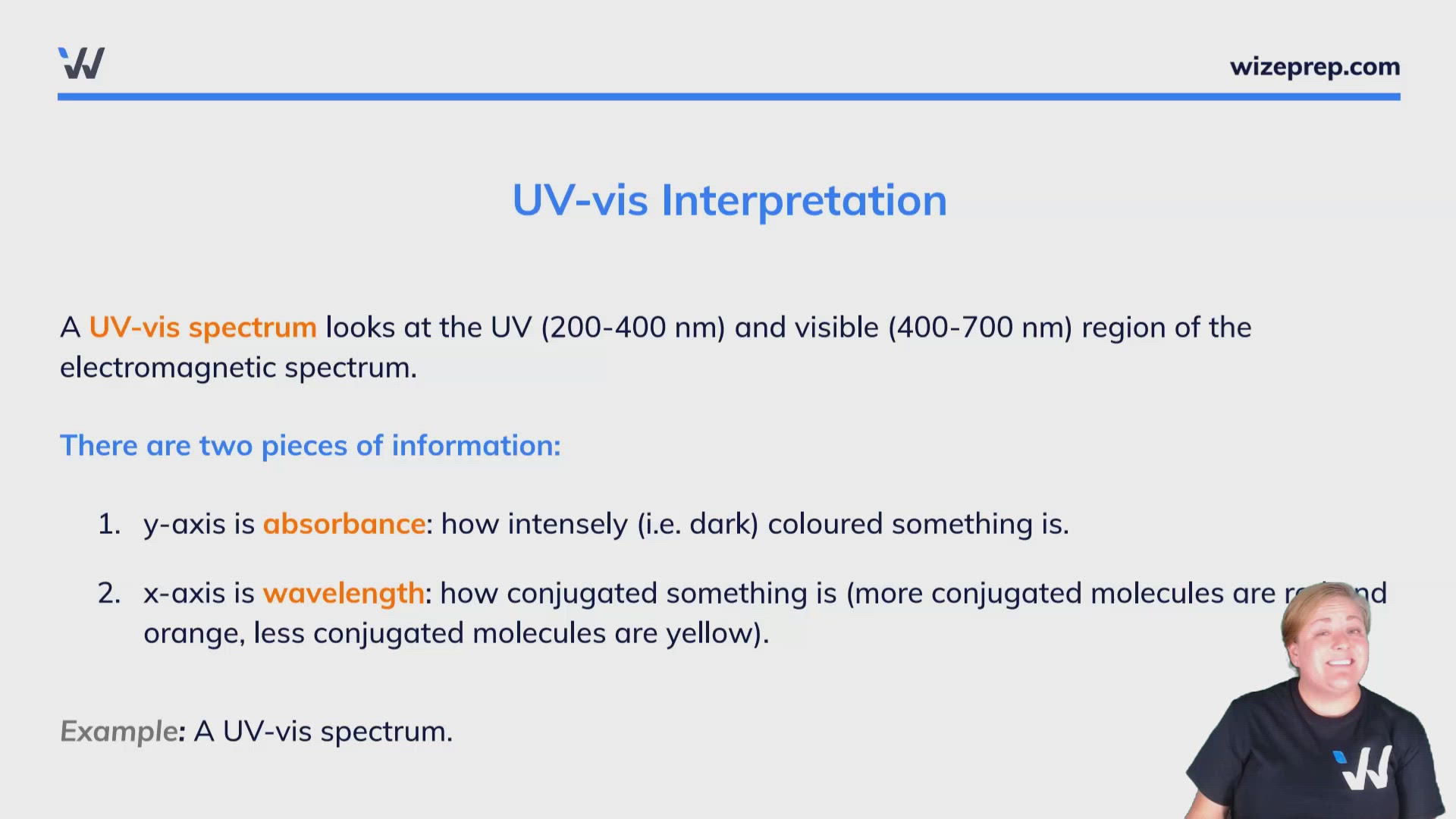
A UV-vis spectrum looks at the UV (200-400 nm) and visible (400-700 nm) region of the electromagnetic spectrum.
There are two pieces of information:
- y-axis is absorbance: how intensely (i.e. dark) coloured something is.
- x-axis is wavelength: how conjugated something is (more conjugated molecules are red and orange, less conjugated molecules are yellow).
Example: A UV-vis spectrum.

UV-vis Study Sheet
What makes a molecule absorb in the UV-Vis region? Two things: lone pairs and pi bonds! On the MCAT, the pi bond will be most important.
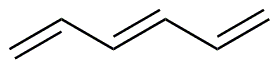
Conjugated systems have double bonds in sequence without interuption (beware the CH2!). You will remember conjugation from your lesson on aromaticity.
Example: a conjugated system (note the double bonds in sequence!)
The more conjugated a molecule is, the "more coloured" it is!
Wize Concept
In other words: more double bonds means a molecule will have a larger λmax!
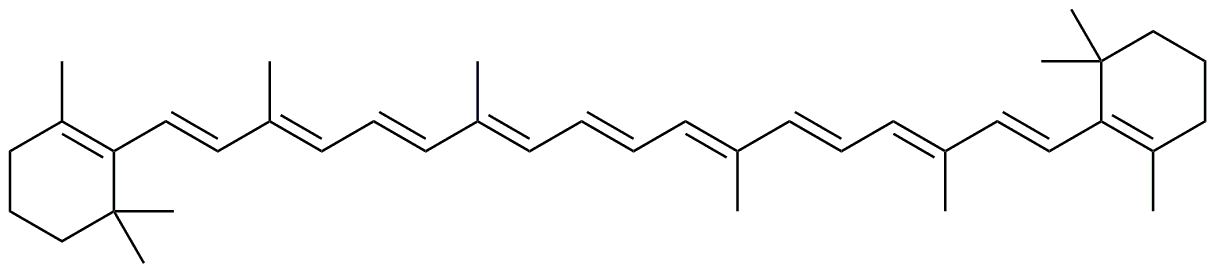
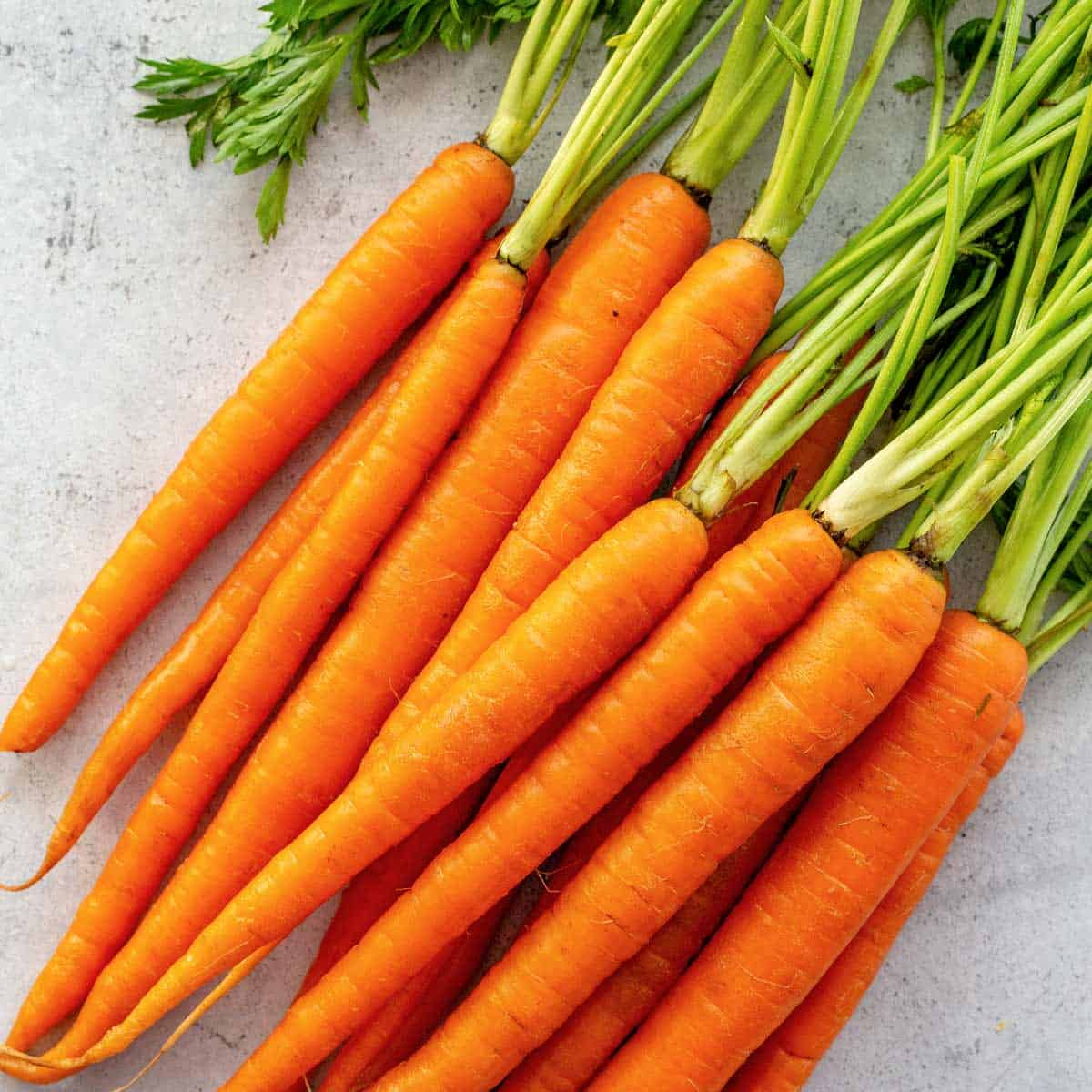
Example: beta-carotene (found in carrots!) is highly coloured as it has 11 sequential double bonds!