Electromagnetic Spectrum
Up until this point in history, scientists were unsure if light shared the properties of waves or particles...there was some evidence for both!
The discovery of the electromagnetic spectrum showed the different wavelengths and frequencies that electromagnetic radiation could exist at. Since the different types of radiation in this spectrum behave as waves, and visible light is a part of this spectrum, it became clear to scientists that light acts as waves!
Types of Electromagnetic Radiation
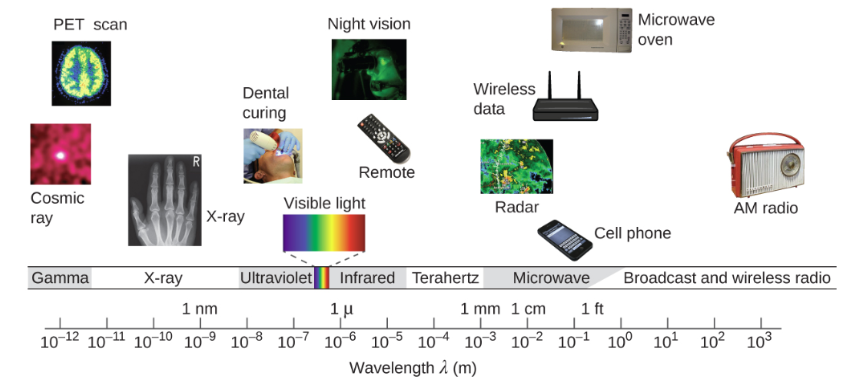
Photo by Rice University/ CC BY
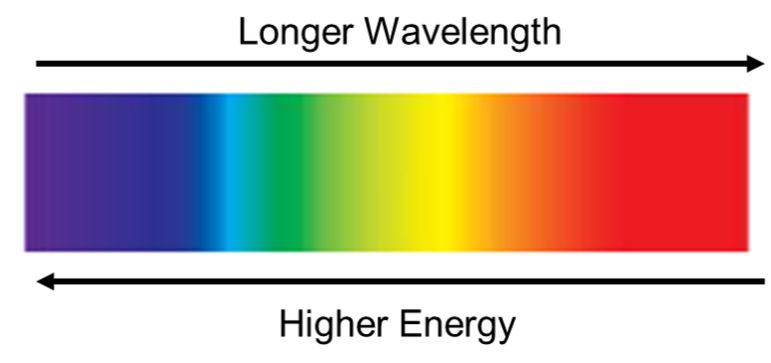
- In the diagram above, the electromagnetic radiation is organized from the types of radiation that are highest in energy (gamma rays) to the types of radiation that are lowest in energy (radiowaves)
- You might recognize a lot of common household objects on the side of the spectrum with lower amounts of energy!
Photon Equations
Electromagnetic Radiation Waves
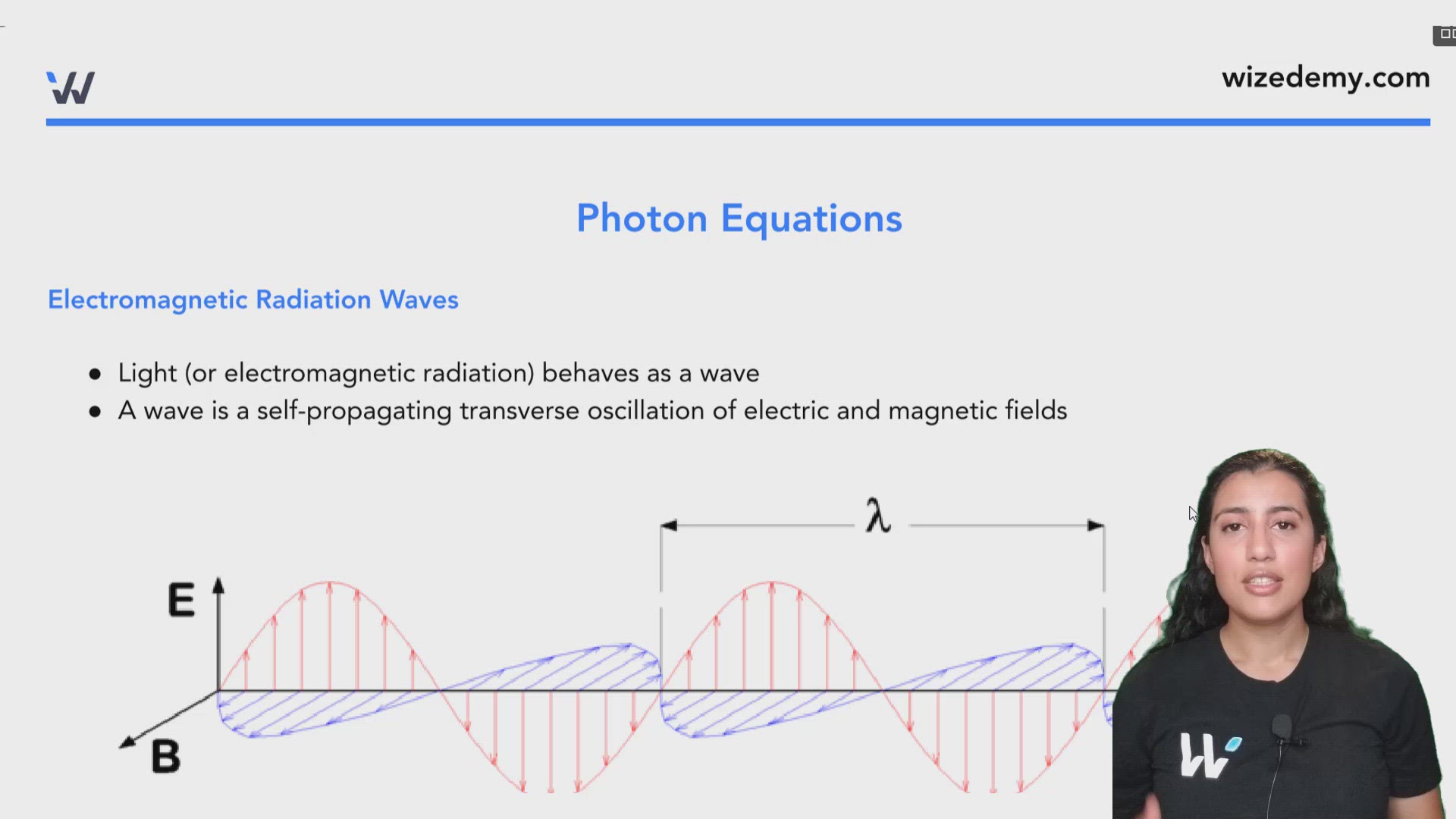
- Light (or electromagnetic radiation) behaves as a wave
- A wave is a self-propagating transverse oscillation of electric and magnetic fields
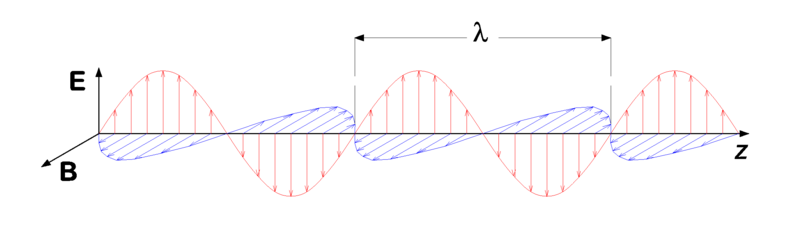
where E is the electric field and B is the magnetic field
- To describe waves, we can use the following terms:
- Amplitude (A): the height of a wave crest or depth of a trough
- Wavelength (λ): The distance a wave travels in one cycle (m)
- Frequency (v): cycles per second (s-1 or units Hz)
- Energy (E): units are Joules (J)
Energy of a Photon Equations
where h is Planck's constant: 6.626x10⁻³⁴ Js
and c is the speed of light: 3.0 x10⁸ m/s
Photon Equations (Cntd.)
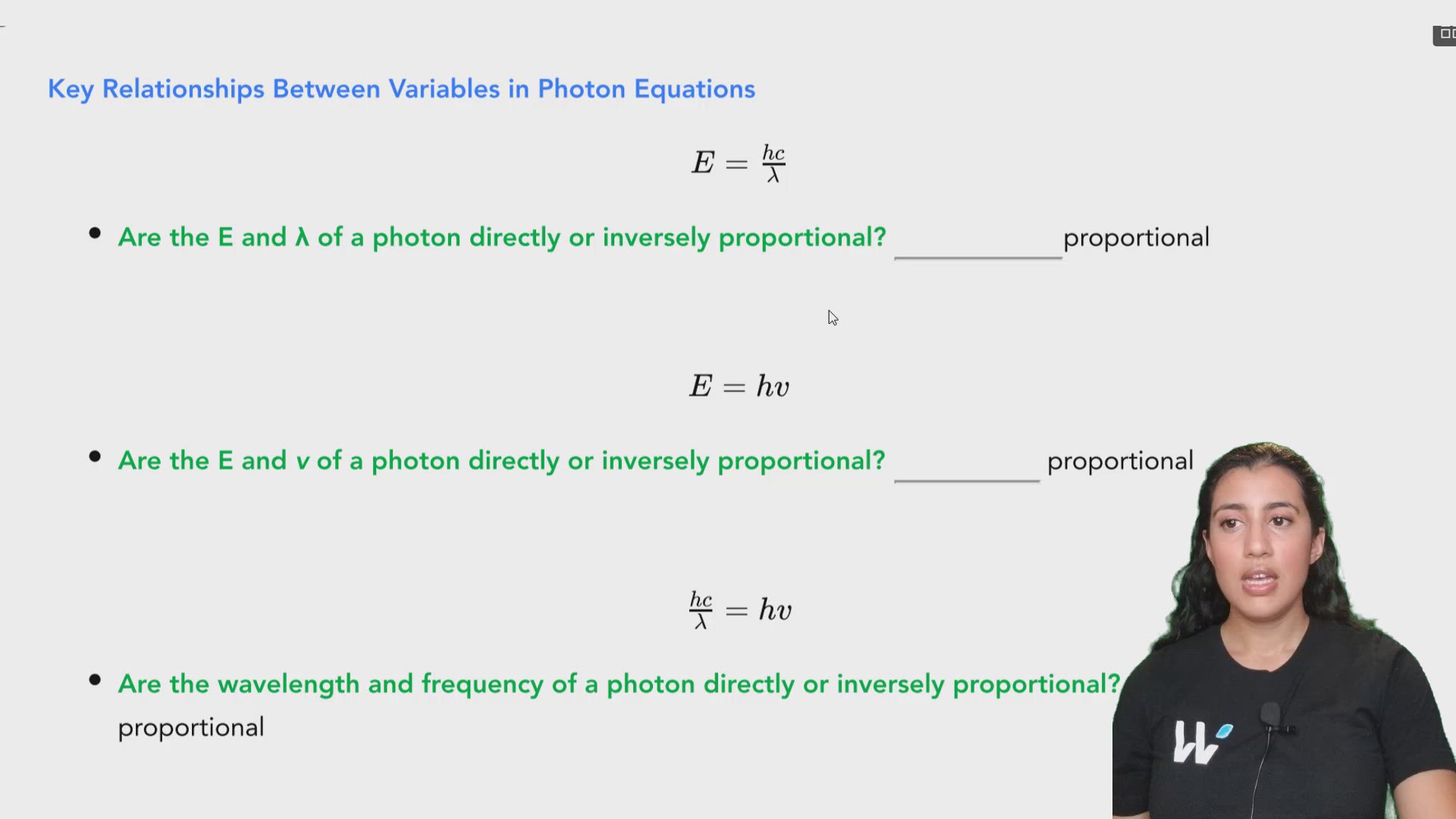
Key Relationships Between Variables in Photon Equations
- Are the E and λ of a photon directly or inversely proportional? ________proportional
- Are the E and v of a photon directly or inversely proportional? ________ proportional
- Are the wavelength and frequency of a photon directly or inversely proportional? ________ proportional
Summary
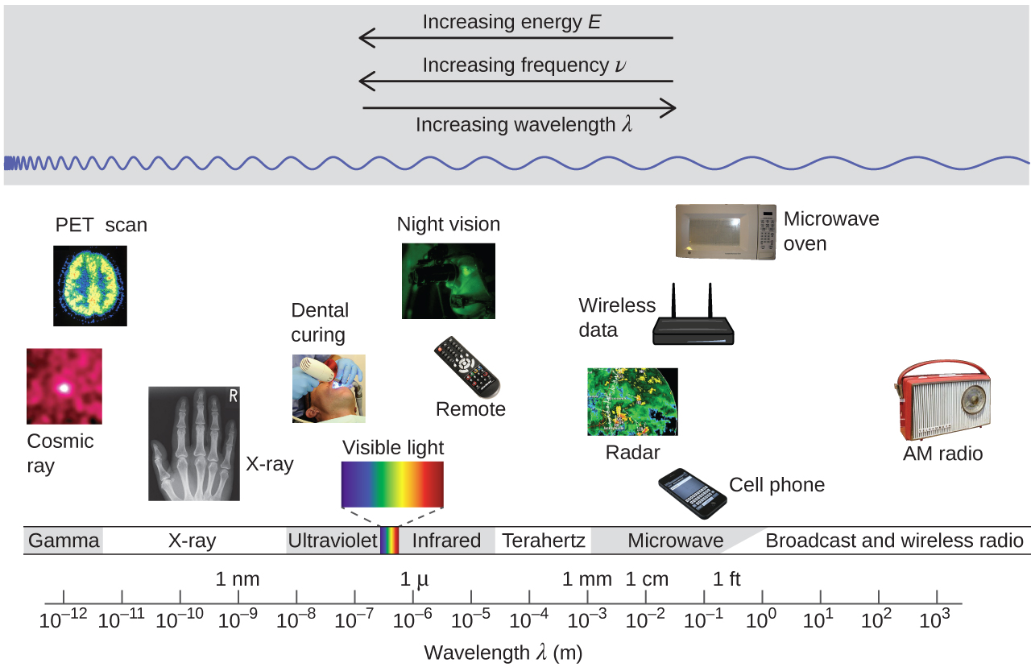
Photo by Rice University/ CC BY

Example: Calculating Energy of a Photon Given Wavelength
A photon of light was found to emit light at 723 nm. How much energy is associated with this light?
h=6.626x10⁻³⁴ Js
Wavelength and energy are related through this equation:
We have Planck's constant (h) and know that the speed of light is 3x10⁸m/s
The wavelength (λ) =723 nm
First, we must convert 723 nm to m.
723 nm x= 7.23 x10⁻⁷ m
We can now plug in our values and solve for E:
E =
E = 2.75 x 10⁻¹⁹ J
Example: Calculating Frequency of a Photon Given Energy
Calculate the frequency of a photon with an energy of 236 kJ.
h=6.626x10⁻³⁴ Js
The following equation has both E and frequency (v) in it. Rearrange to solve for v:
E must be in joules. Right now it is in kJ, so we must convert kJ to J:
Now we can plug in all values and solve for v: