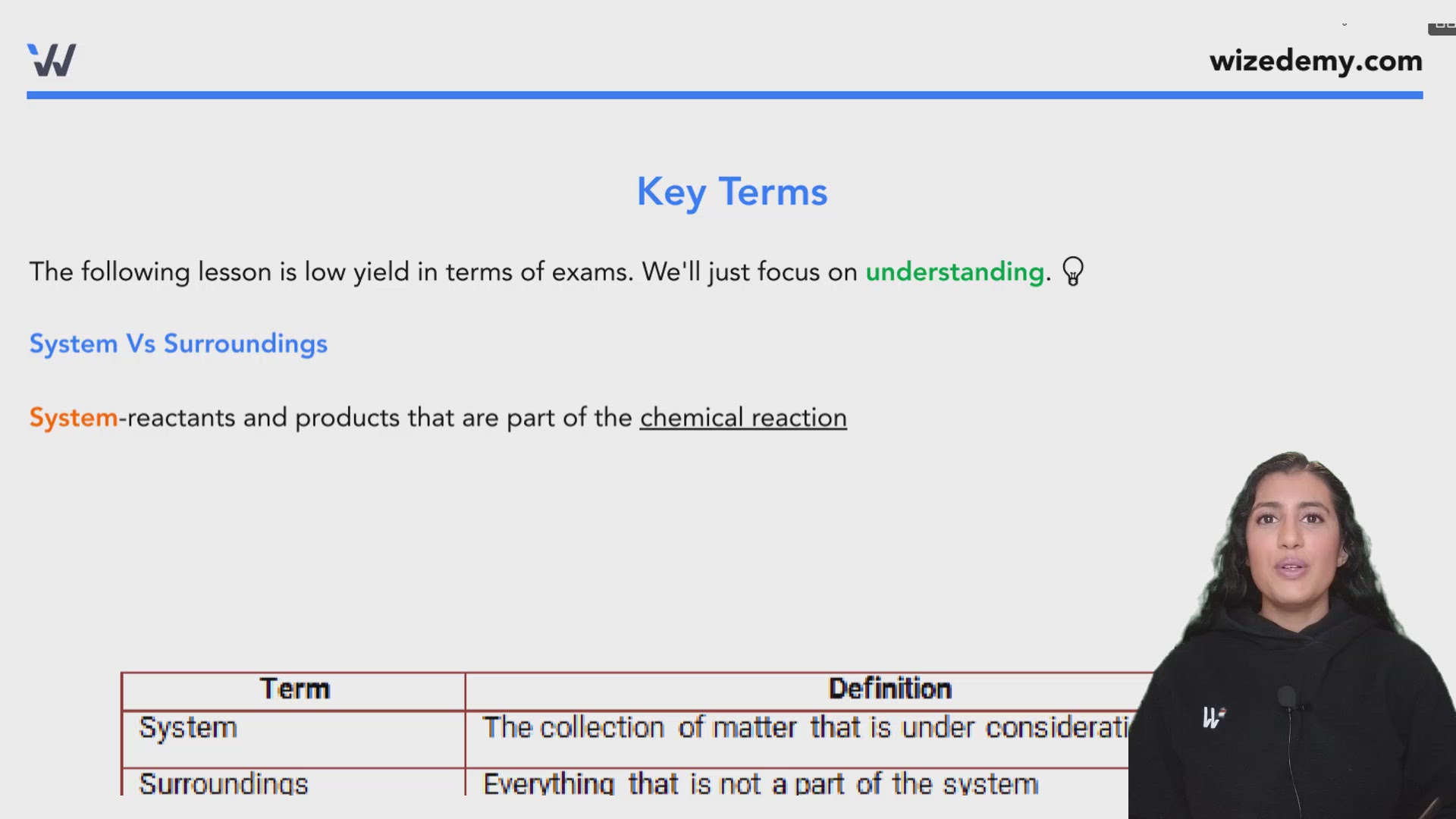
Key Terms
The following lesson is low yield in terms of exams. We'll just focus on understanding. 💡
System Vs Surroundings
System-reactants and products that are part of the chemical reaction

Open Vs Closed Vs Isolated Systems

Examples:
- open system → cup of coffee
- closed system → bottle of pop
- isolated system → perfect thermos
1st Law of Thermodynamics
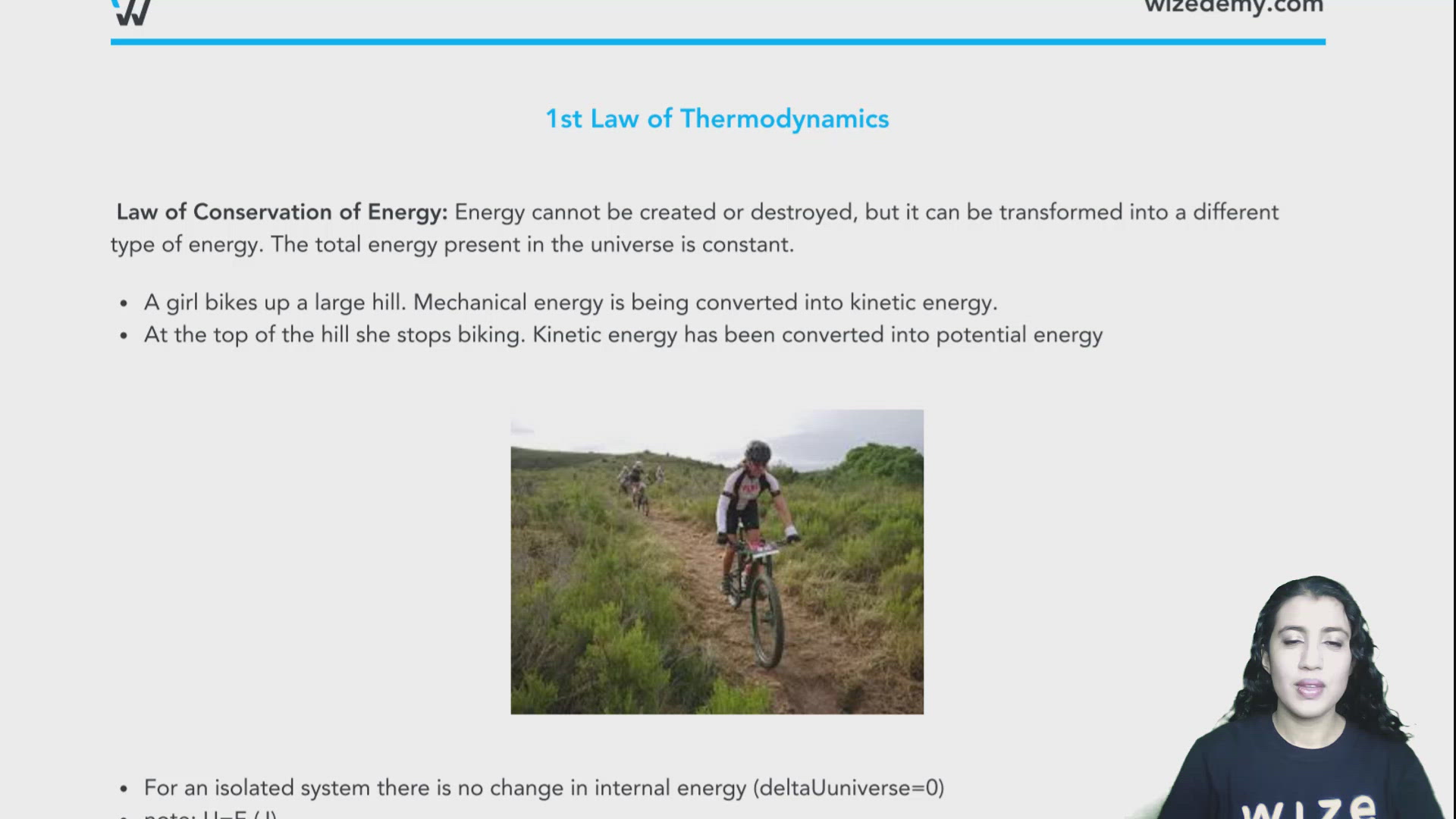
Law of Conservation of Energy: Energy cannot be created or destroyed, but it can be transformed into a different type of energy. The total energy present in the universe is constant.
- A girl bikes up a large hill. Mechanical energy is being converted into kinetic energy.
- At the top of the hill she stops biking. Kinetic energy has been converted into potential energy

- For an isolated system there is no change in internal energy (deltaUuniverse=0)
- note: U=E (J)
For example, if the reaction (system) gains 5 J of energy what happens to the surroundings?
a) The surroundings gains 5 J of energy
b) The surroundings loses 5 J of energy
c) The surroundings gains 10 J of energy
d) The surroundings loses 10 J of energy
* We will see this concept again when we learn about calorimetry!
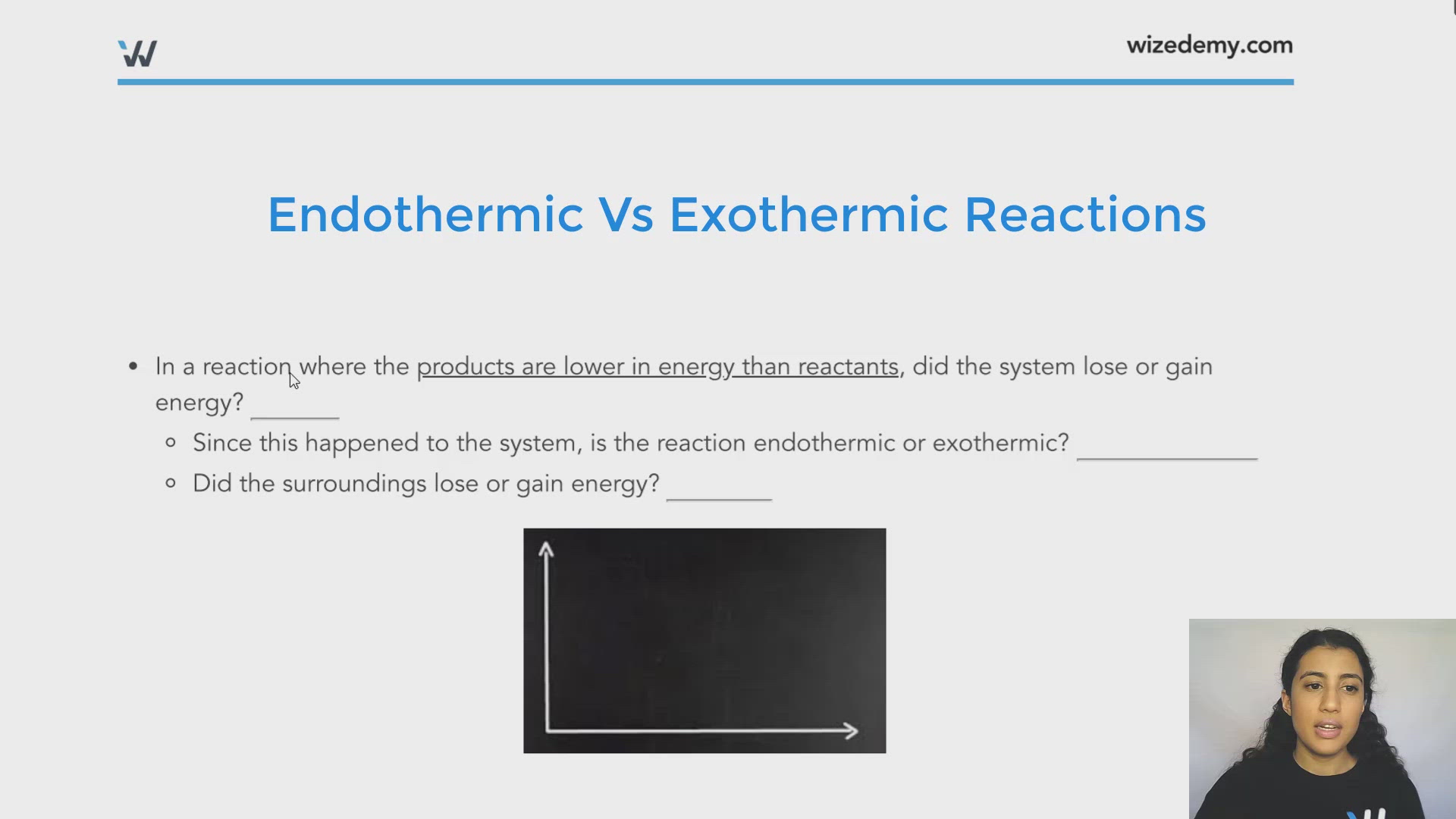
Endothermic Vs Exothermic Reactions
- In a reaction where the products are lower in energy than reactants, did the system lose or gain energy? ________
- Since this happened to the system, is the reaction endothermic or exothermic? ________
- Did the surroundings lose or gain energy? ________
- In a reaction where the reactants are lower in energy than products, did the system lose or gain energy? ________
- Since this happened to the system, is the reaction endothermic or exothermic? ________
- Did the surroundings lose or gain energy? ________
- Apply: If we were observing a chemical reaction inside a flask and we touched the flask and it felt hot, does that mean the reaction was endothermic or exothermic? Or do we need more information in order to choose endothermic or exothermic?
- If we feel the flask is hot, the flask is part of the: system or surroundings: ________
- If the flask is hot then does it mean the surroundings gained or lost heat energy: ________
- Does this tell us that the system gained or lost heat energy? ________
- If this is the case, then the reaction would be endothermic/exothermic: ________