Reaction Rates
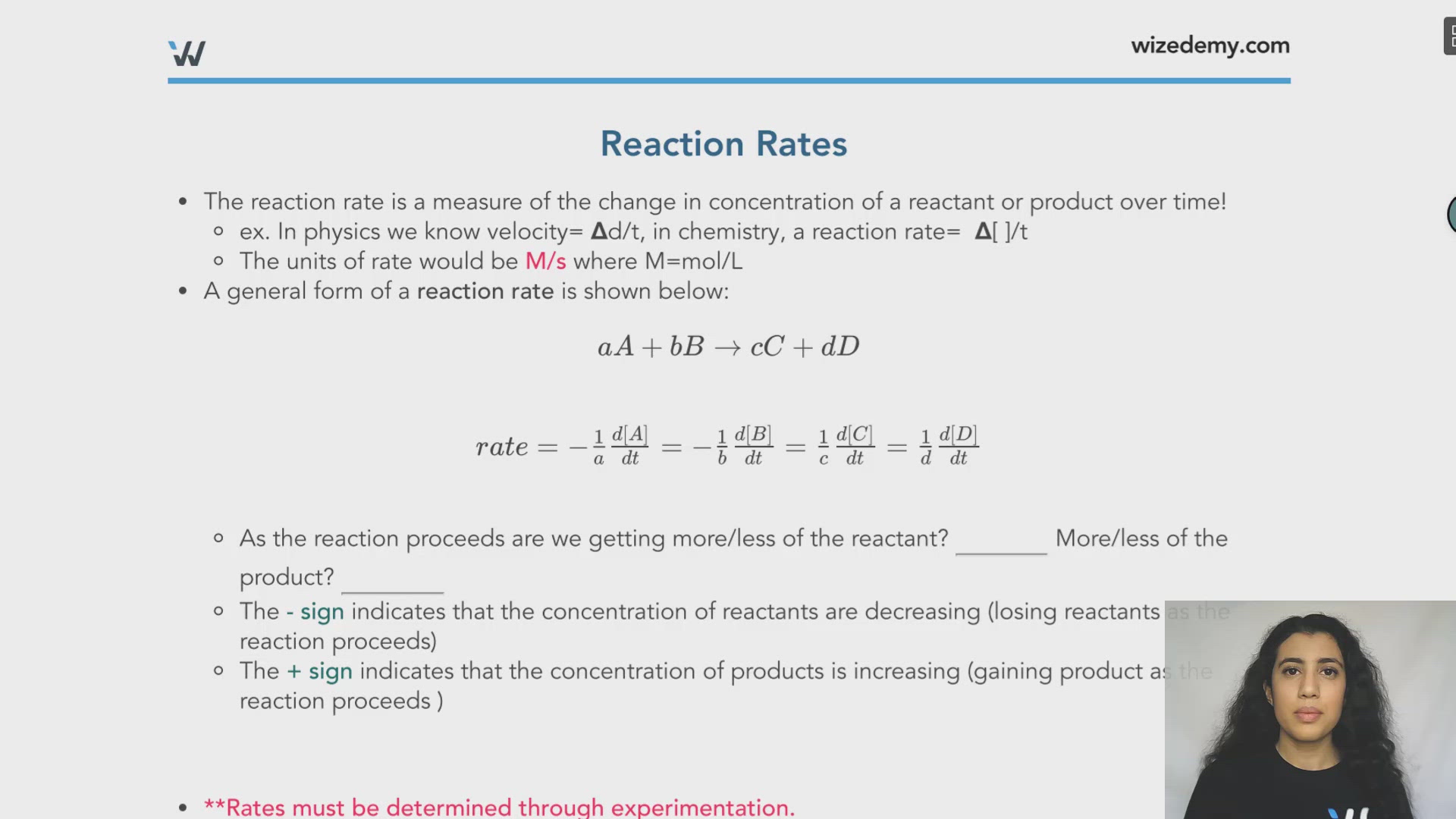
- The reaction rate is a measure of the change in concentration of a reactant or product over time!
- eg, in physics we know velocity = Δd/t, in chemistry, a reaction rate = Δ[ ]/t
- The units of rate would be M/s where M = mol/L
- A general form of a reaction rate is shown below:
- As the reaction proceeds are we getting more/less of the reactant? ________ More/less of the product? ________
- The - sign indicates that the concentration of reactants are decreasing (losing reactants as the reaction proceeds)
- The + sign indicates that the concentration of products is increasing (gaining product as the reaction proceeds )
- **Rates must be determined through experimentation.
Measuring Reaction Rates
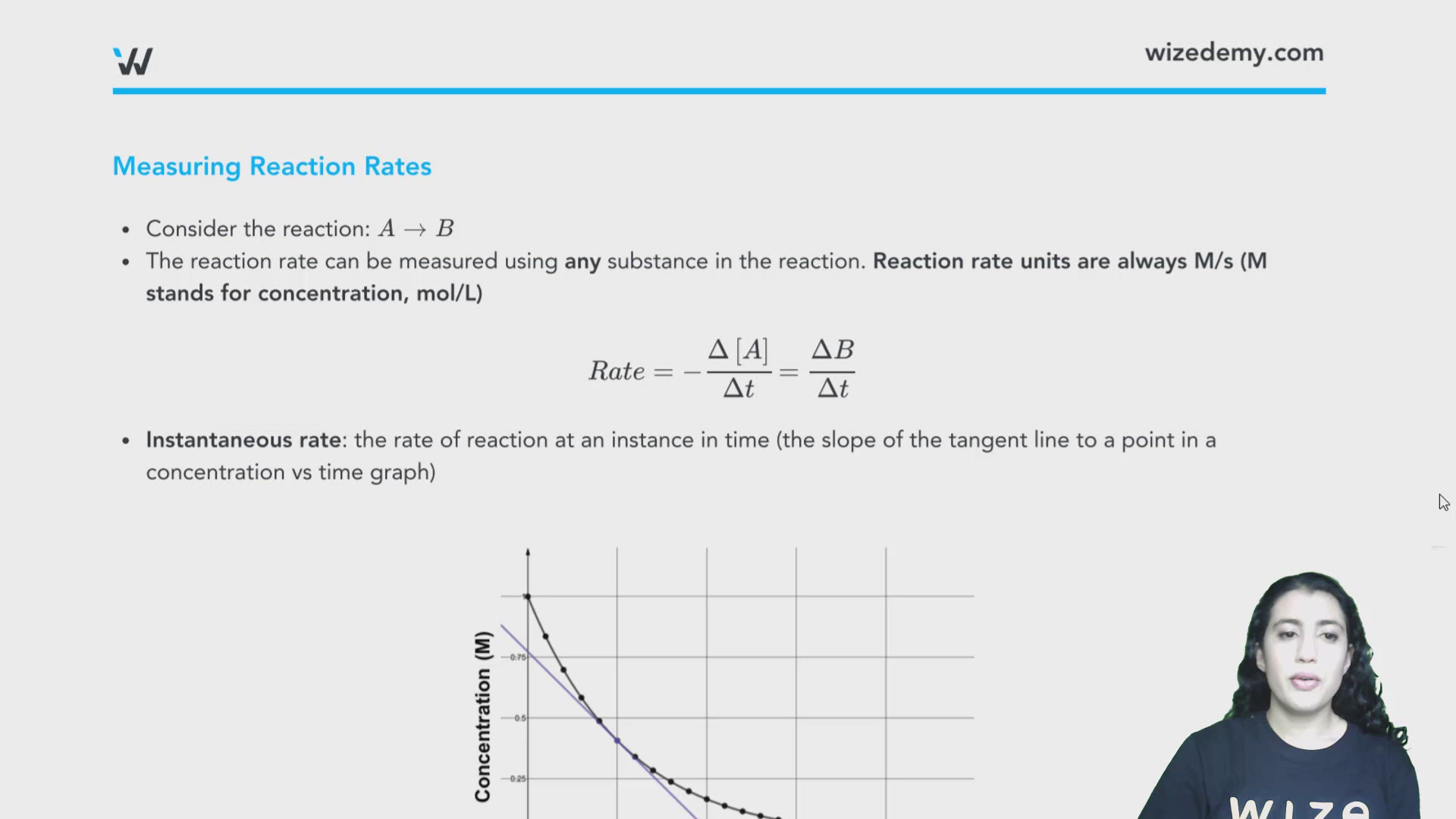
- Consider the reaction:
- The reaction rate can be measured using any substance in the reaction. Reaction rate units are always M/s (M stands for concentration, mol/L)
- Instantaneous rate: the rate of reaction at an instance in time (the slope of the tangent line to a point in a concentration vs time graph)
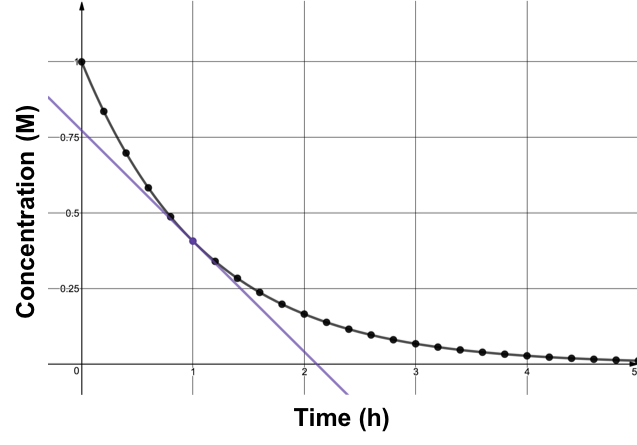
- Initial rate – instantaneous rate of a chemical reaction at t = 0, immediately after the reaction has begun

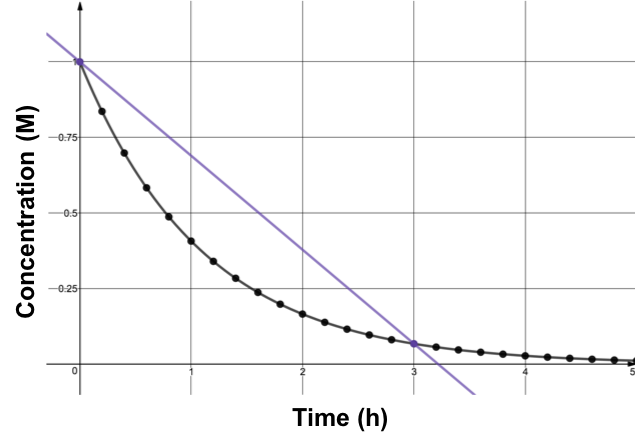
- Average rate: the rate of reaction over a period of time (the slope of the line connecting 2 points in a concentration vs time graph)