Introduction to Kinetics
Kinetics is the study of the rates of chemical reactions.
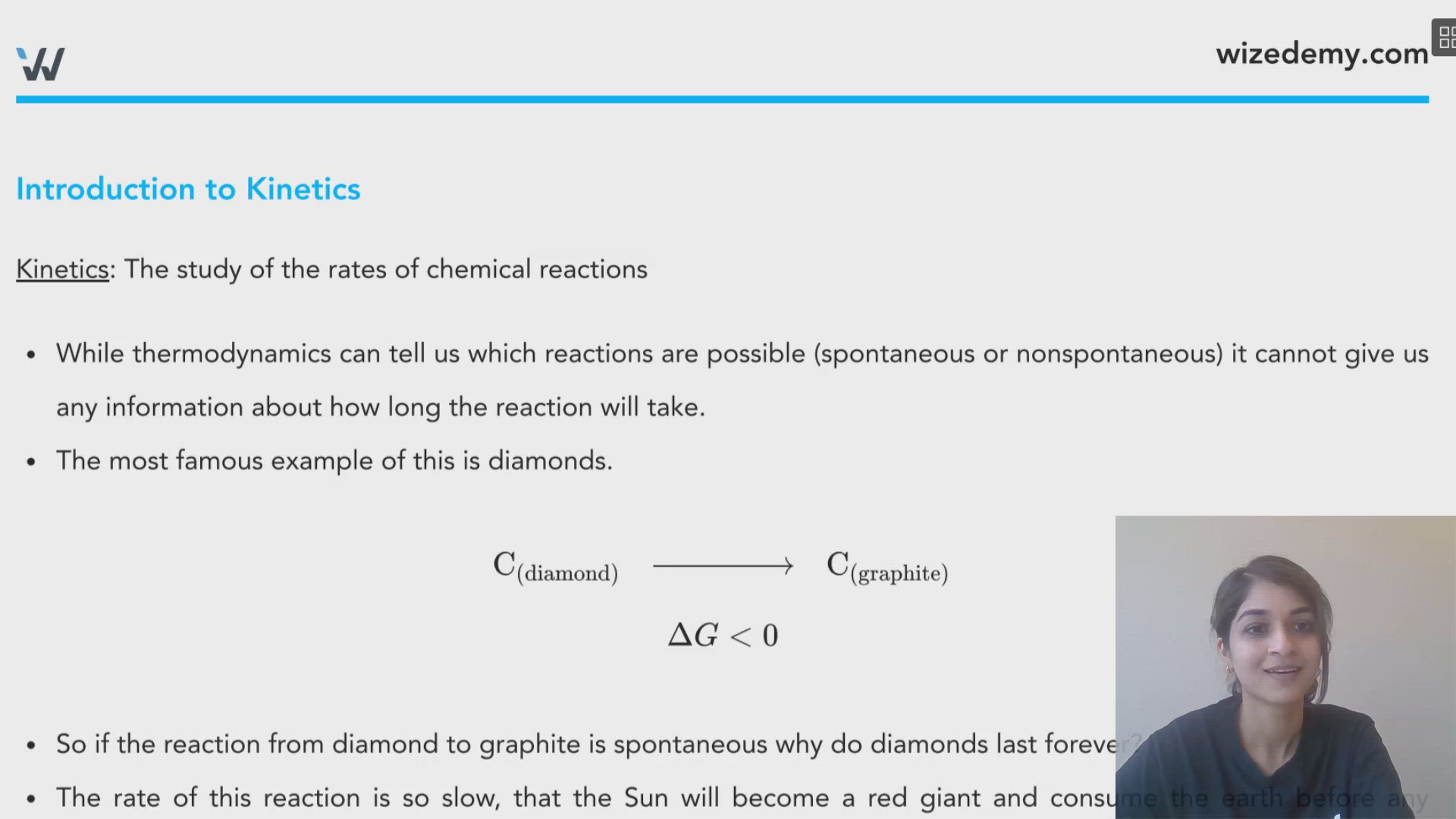
- While thermodynamics can tell us which reactions are possible (spontaneous or nonspontaneous) it cannot give us any information about how long the reaction will take.
- The most famous example of this is diamonds:
- If the reaction from diamond to graphite is spontaneous why do diamonds last forever?
- The rate of this reaction is so slow, that the Sun will become a red giant and consume the earth before any diamonds spontaneously change phase to graphite.
