Indicators
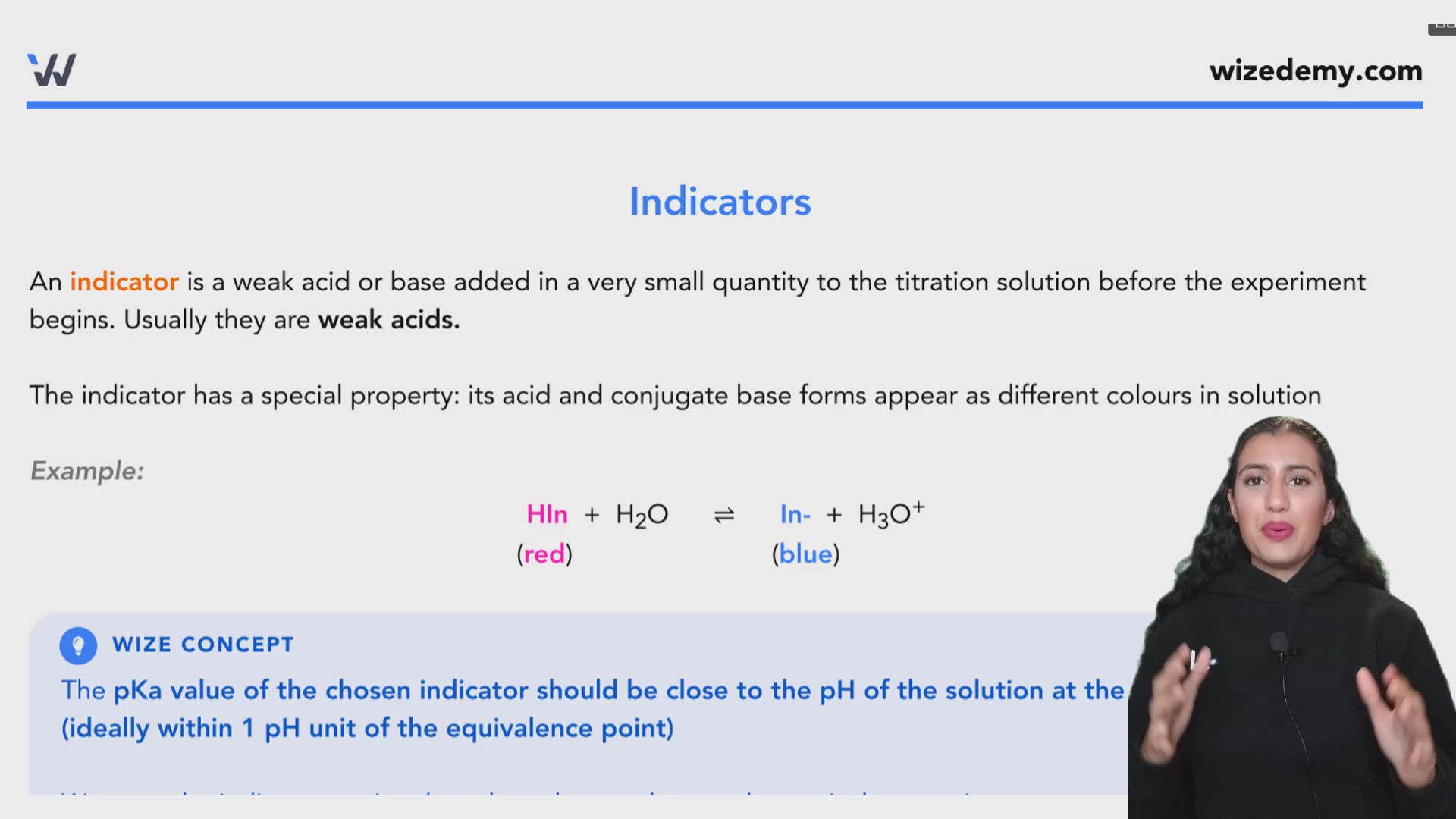
An indicator is a weak acid or base added in a very small quantity to the titration solution before the experiment begins. Usually they are weak acids.
The indicator has a special property: its acid and conjugate base forms appear as different colours in solution
Example:
HIn + H2O ⇌ In- + H3O+
(red) (blue)
Example:
In our example above, we'd see a ________ colour
Equivalence Point vs Endpoint
Equivalence point: moles of H+=moles of OH-
End point: when we see a colour change because of the indicator
Example:
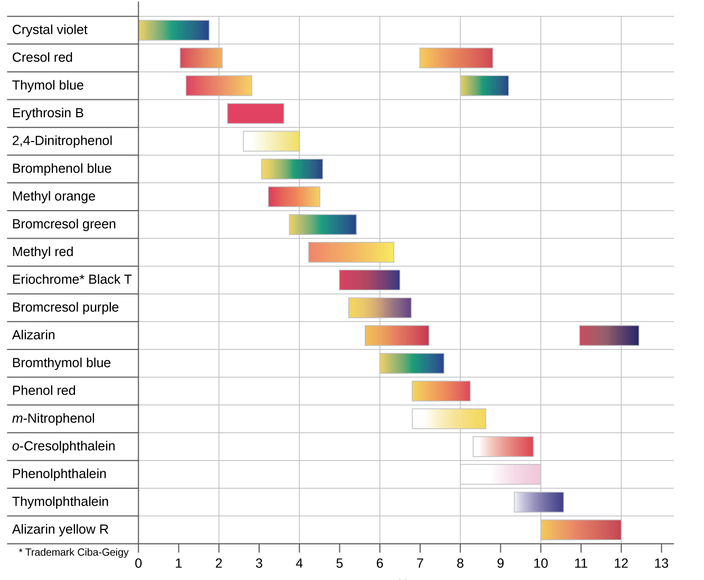
Look at methyl orange in the table below. Indicate an endpoint and a possible equivalence point.

HIn + H2O ⇌ In- + H3O+
(red) (blue)
1) When pH=pKa of indicator:
- [HIn]=[In-]
- red + blue → we'd see ________!
2) When pH < pKa
- [HIn] > [In-]
- we'd see ________!
3) When pH > pKa
- [HIn] < [In-]
- we'd see ________!