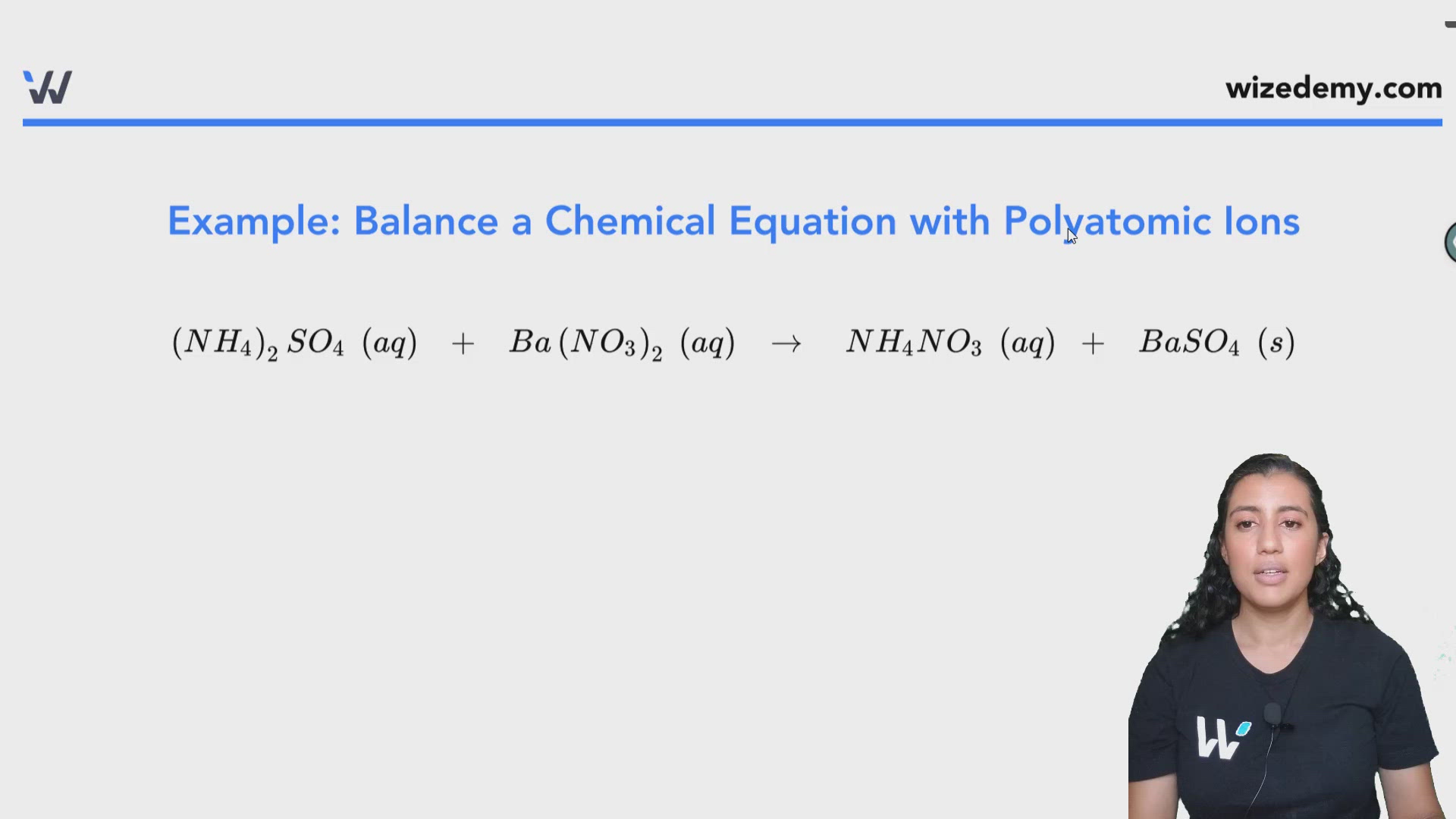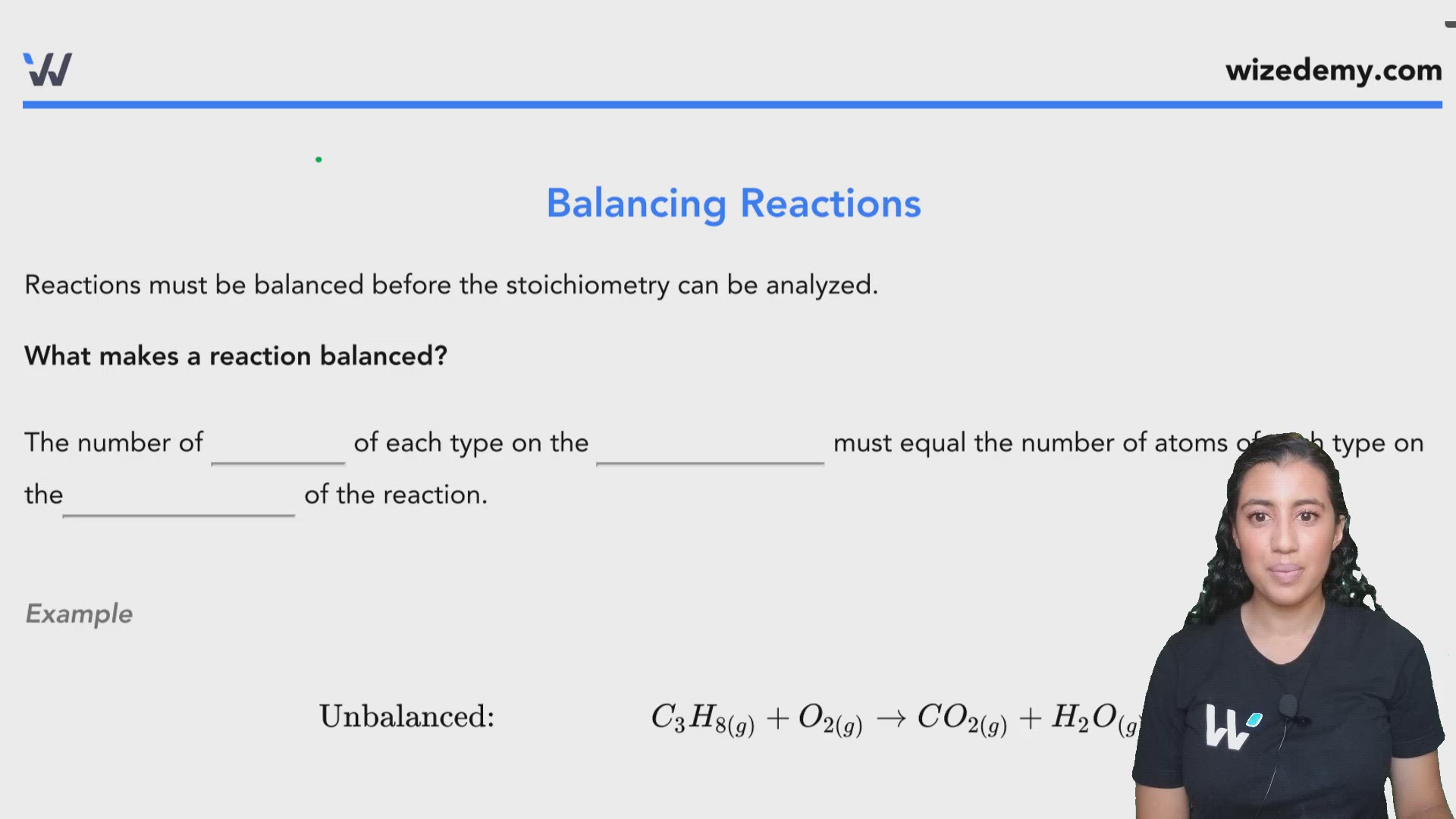
Balancing Reactions
Reactions must be balanced before the stoichiometry can be analyzed.
What makes a reaction balanced?
The number of ________ of each type on the ________ must equal the number of atoms of each type on the________ of the reaction.
Example:
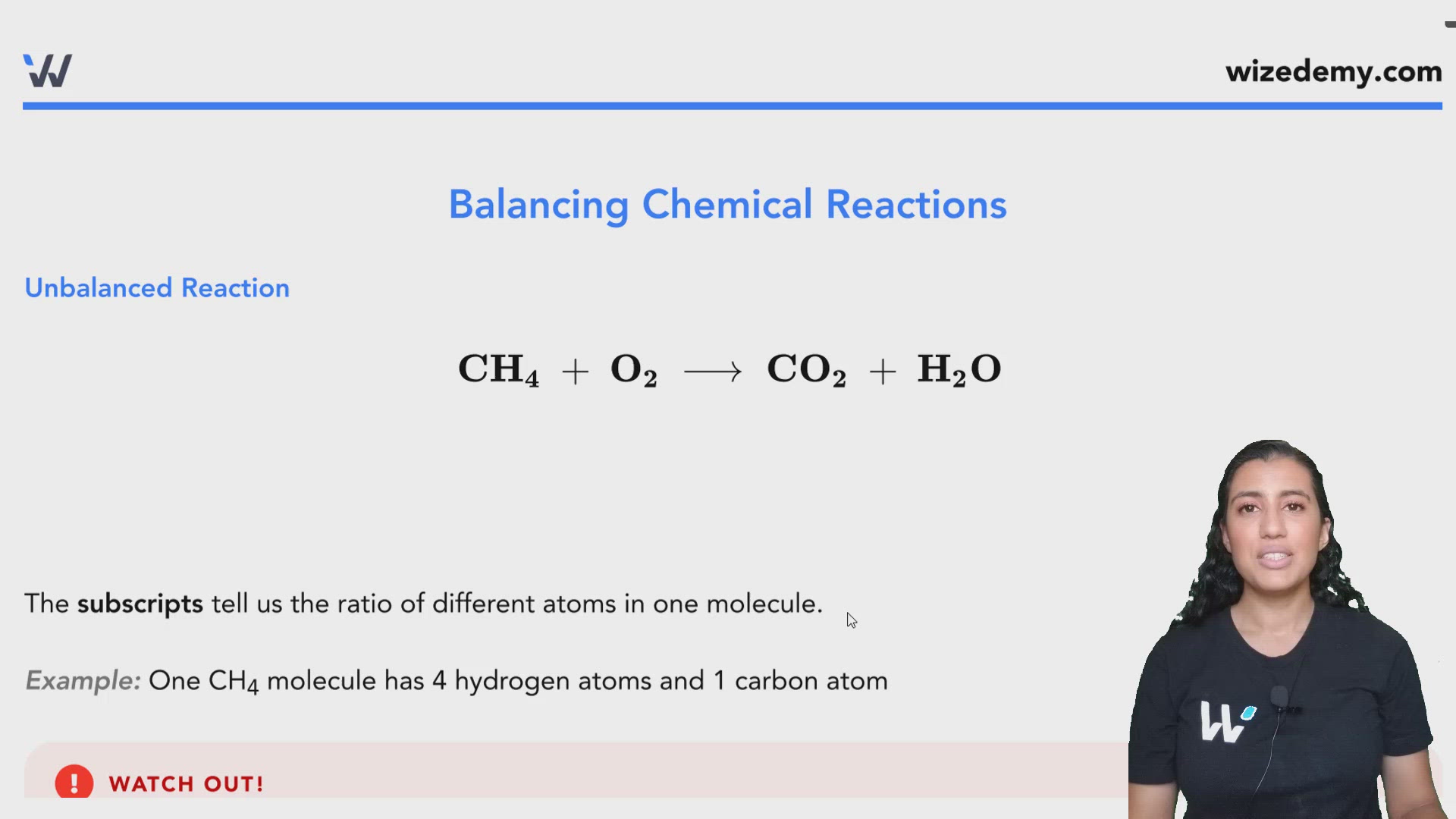
Balancing Chemical Reactions
Unbalanced Reaction
The subscripts tell us the ratio of different atoms in one molecule.
Example: One CH4 molecule has 4 hydrogen atoms and 1 carbon atom
Steps to Balance Chemical Equations
- Balance elements that only appear once on the reactant side and once on the product side (typically elements not including C, N, H, O)
- Group polyatomic ions and balance them as a group (not as separate elements, e.g. balance NO3 as 1 NO3 group, not 1 N and 3 O)
- Balance all other elements, starting with the least common elements to the most common elements
- Make sure all coefficients are whole numbers AND are represented in the simplest integer ratio possible
- Check to make sure all elements are balanced on each side of the chemical equation
Balanced Reaction

- The stoichiometric coefficients of the balanced equation tell us that we need ________ oxygen molecules for each methane (CH4) molecule and we produce ________ waters for every methane consumed.
- It also tells us that for every 1 mole of methane used we produce ________ mole of CO2.
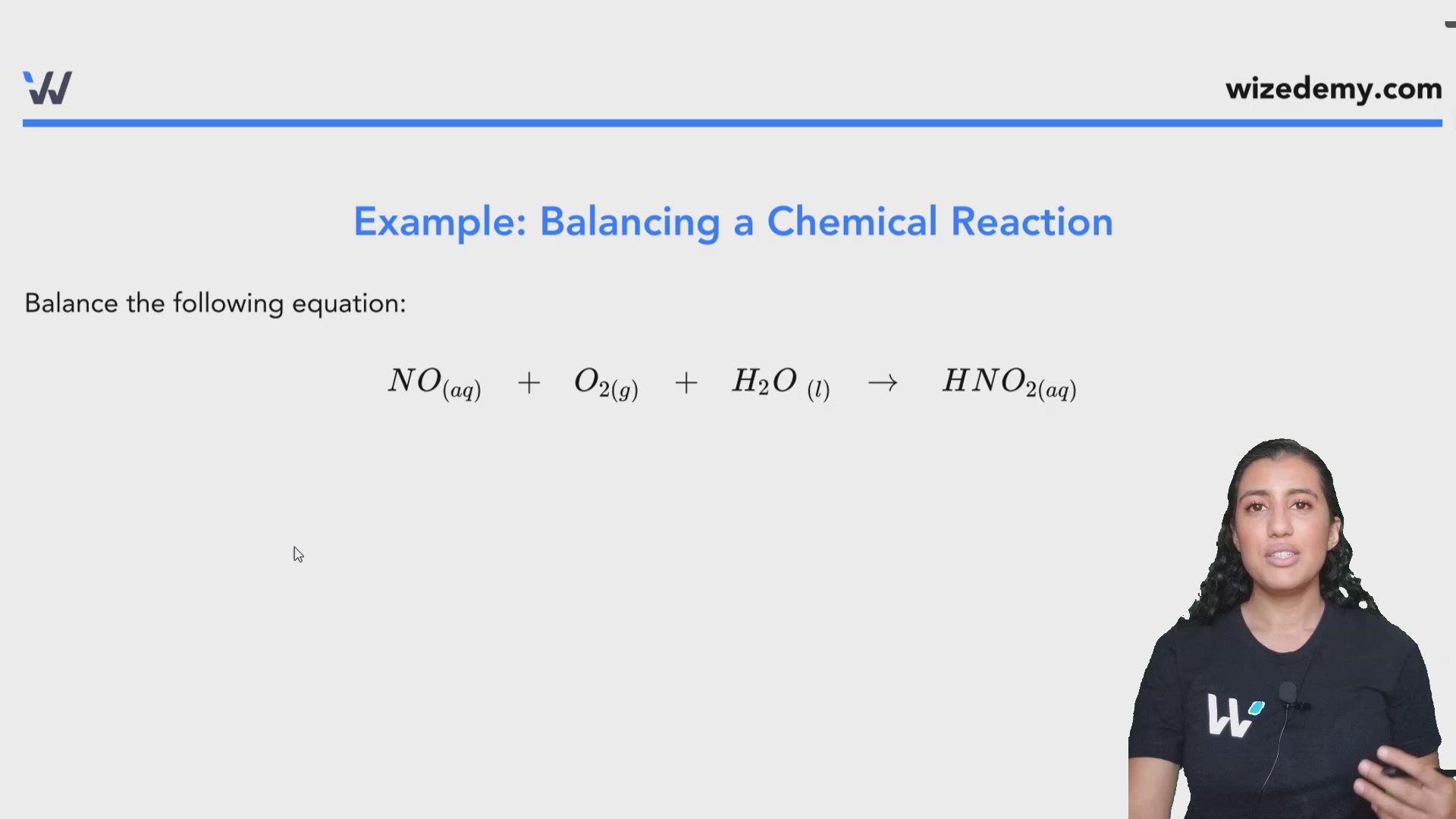
Example: Balancing a Chemical Reaction
Balance the following equation:
Balanced chemical equation:
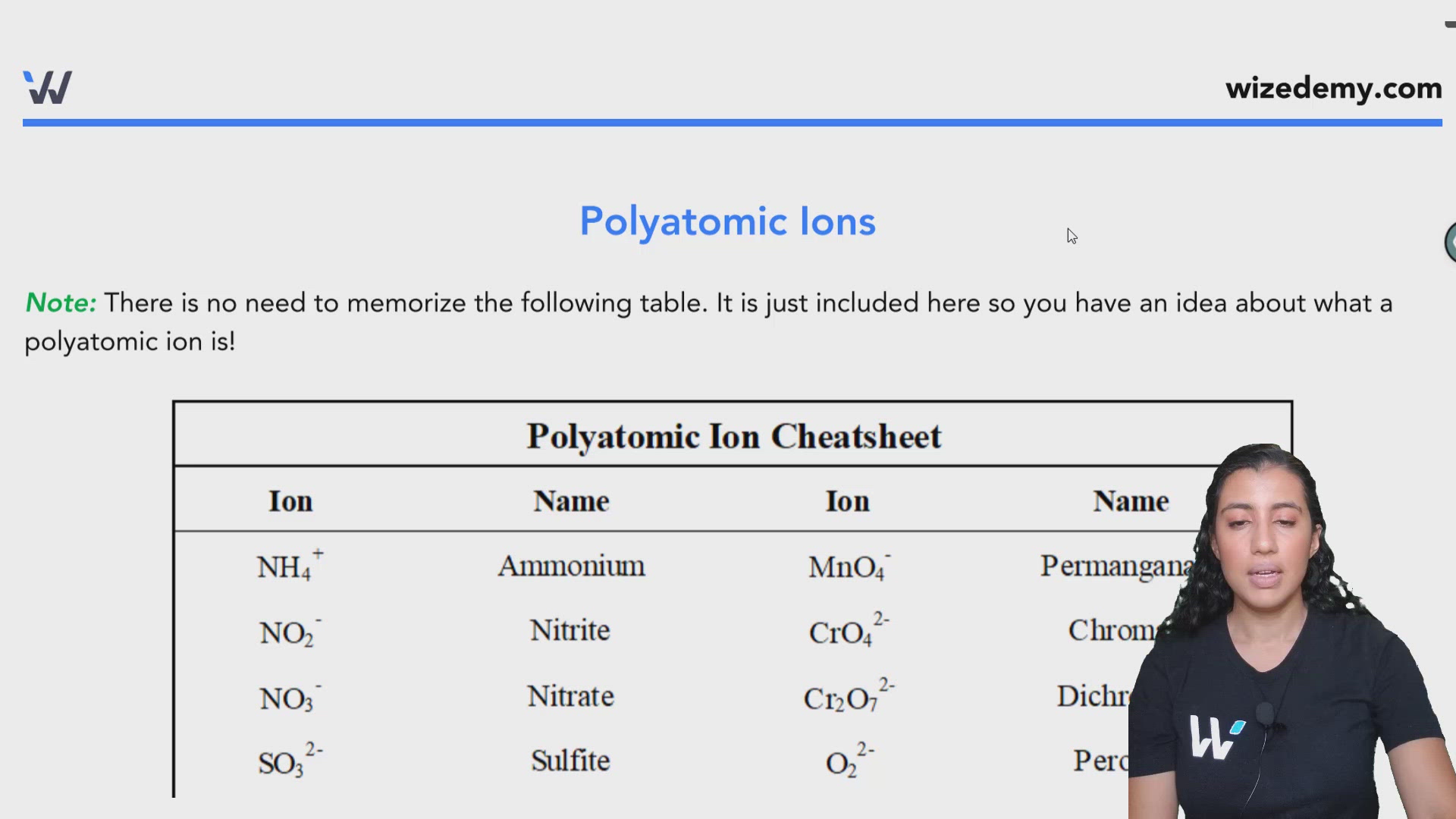
Polyatomic Ions
Note: There is no need to memorize the following table. It is just included here so you have an idea about what a polyatomic ion is!