Polymerization Reactions
Polymers are usually made using two methods:
1. Addition polymerization
- Monomer repeating unit is coupled together with another monomer.
- The monomer unit usually has a double bond that breaks apart to form a chain of single bonds.
Three steps: initiation, propagation, termination
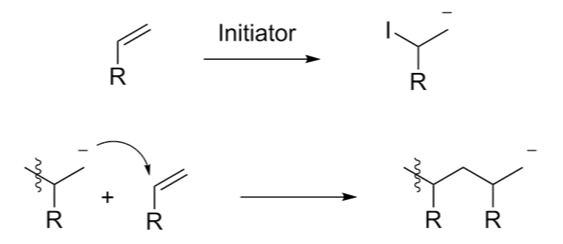
- Once the chain is “initiated” it will continue to add on monomers (propagation) until there is no more monomer left or a termination event occurs.
- Therefore, as we increase the amount of initiator in our reaction mixture, we will have more chains and therefore each chain will end up being shorter.
- Peroxides are common initiators because light can be used to leave the O-O bond resulting in two initiators.

How Does the Polymerization Stop?
Polymerization is halted during a termination event. A termination event can occur in a variety of ways but typically involves an initiator and a growing chain.

Degree of Polymerization = (molar mass of polymer) / (molar mass of monomer)
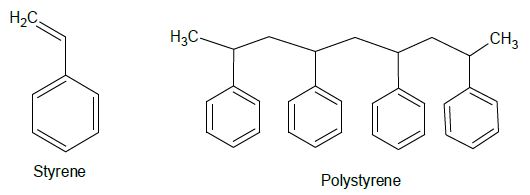
Example of addition polymerization
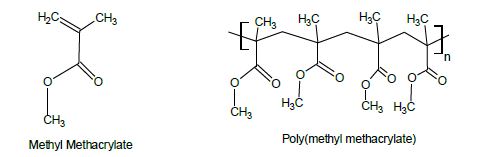
Example of addition polymerization
There are several addition polymers you should be familiar with. These are included in the figure below.
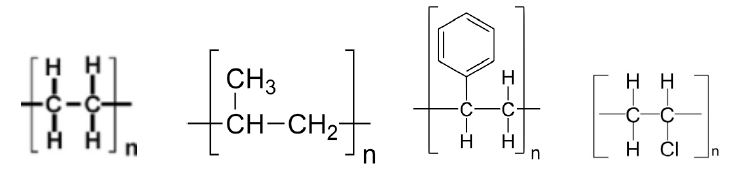
Examples of common addition polymers.
Polyethylene (PE) (left) , polypropylene (PP) (next to left),
polystyrene (PS) (next to right), polyvinylchloride (PVC) (right).
2. Condensation polymerization
When two different monomer units are joined to form a polymer and a small molecule is eliminated.

Example of condensation polymerization: a carboxylic acid reacts with an amine to form an amide and water. Acid chlorides can also react with amines--this will form an amide and HCl instead of H2O.
There are several condensation polymers you should be familiar with. These are included in the figure below.
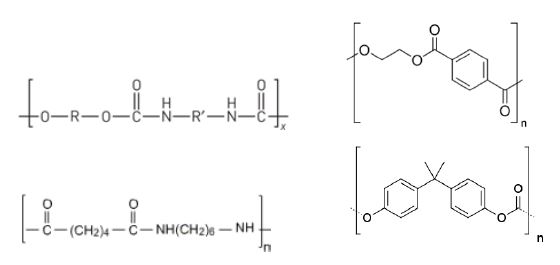
Examples of common condensation polymers.
Polyurethane (top left), polyethylene terephthalate (top right),
nylon 6,6 (bottom left), polycarbonate (bottom right).
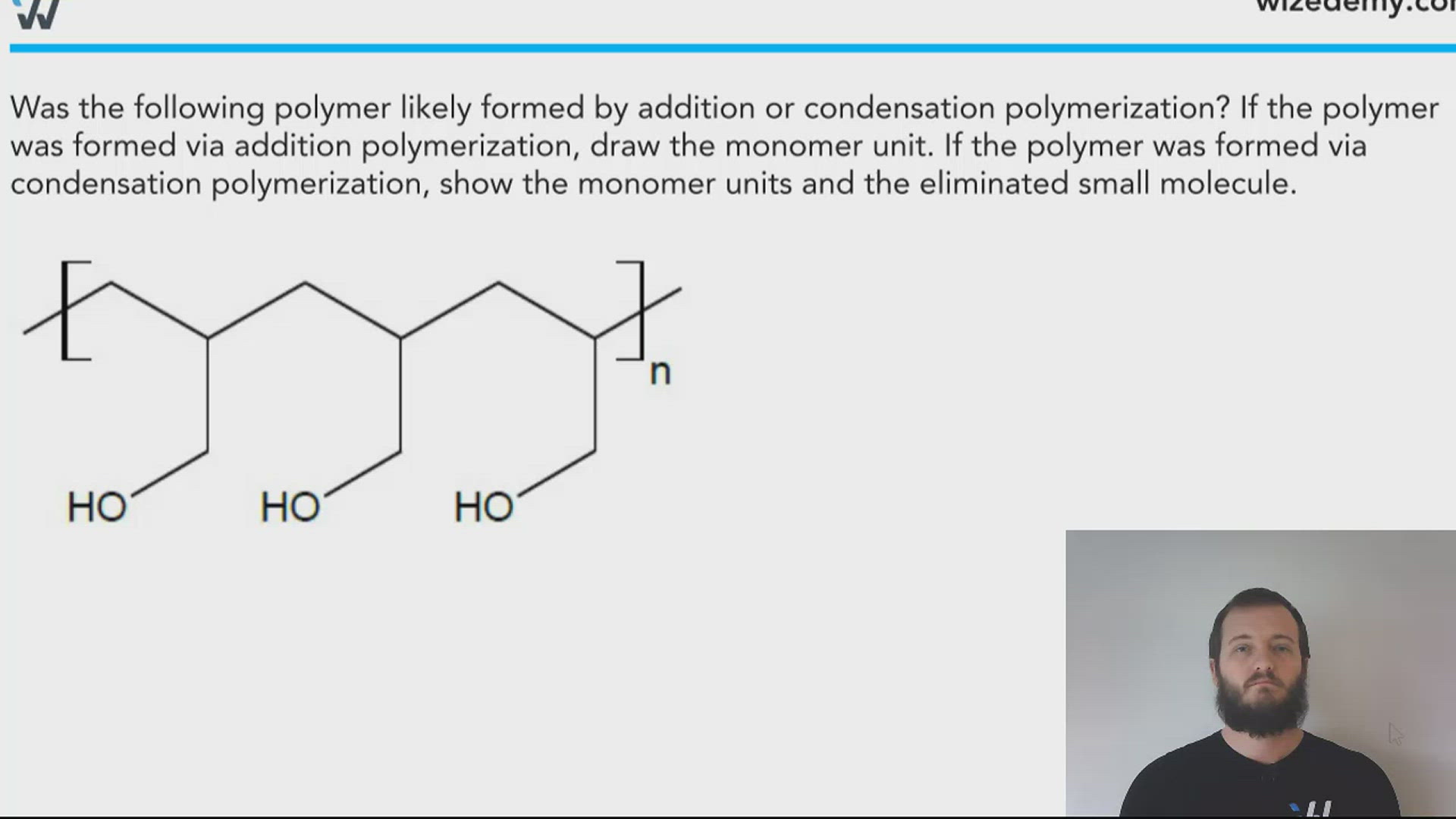
Example: Identify the Monomer
Was the following polymer likely formed by addition or condensation polymerization? If the polymer was formed via addition polymerization, draw the monomer unit. If the polymer was formed via condensation polymerization, show the monomer units and the eliminated small molecule.
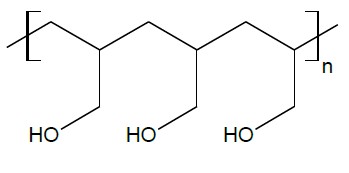
This is an addition polymer. The monomer unit is below.