Optical Isomers
When considering optical isomers, you are comparing two different molecules with one or more stereocenters or a molecule with two or more stereocenters within itself. They are called optical isomers because we use something called optical activity to "quantify" chirality. If a molecule is chiral, it will rotate plane polarized light!
Enantiomers
Enantiomers are non-superimpossible mirror images. In order to have enantiomers, a molecule must have one or more chiral centres. Enantiomers differ at all chiral centres. Enantiomers of each other rotate plane polarized light with equal magnitude by opposite sign.


Diastereomers
Diastereomers are not mirror images at all. In order to have diastereomers, a molecule must have two or more chiral centres. Diastereomers differ at some by not all chiral centres. There is no relationship for optical activity and diastereomers.

Meso Compounds
A meso compound is a molecule with two or more chiral centres and an internal plane of symmetry. A meso compound does not rotate plane polarized light.

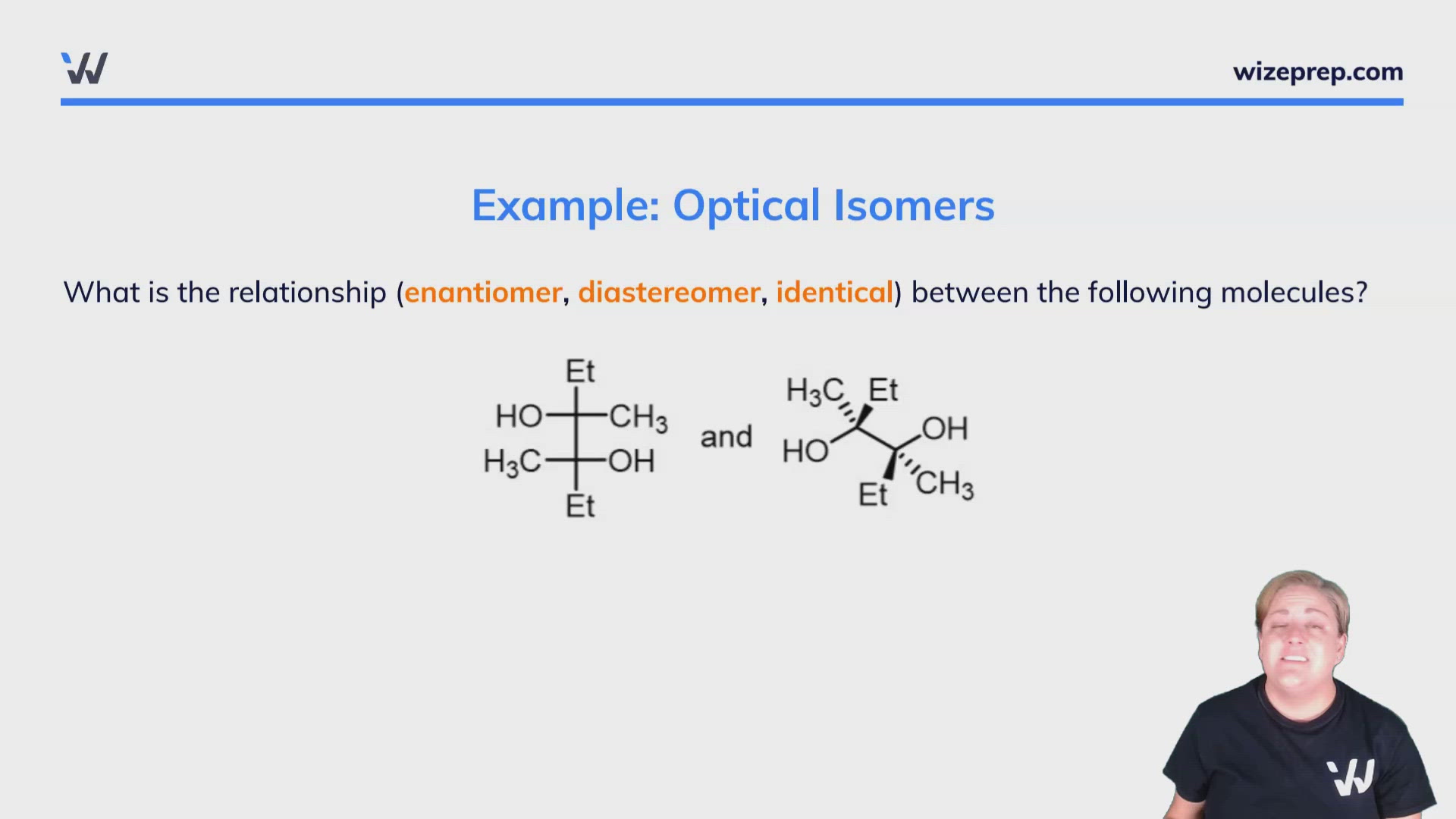
Example: Optical Isomers
What is the relationship (enantiomer, diastereomer, identical) between the following molecules?
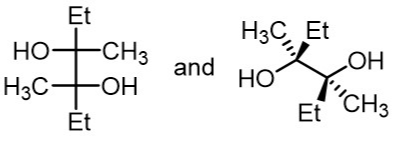
- first molecule is (R, R)
- second molecule is (S, S)
- these are enantiomers

Example: Optical Isomers
What is the relationship (enantiomer, diastereomer, identical) between the following molecules?
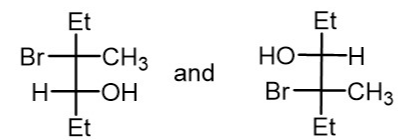
- first molecule is (R, R)
- second molecule is (R, S)
- watch out because the chiral centres are shown in a different order!
- these molecules are diastereomers