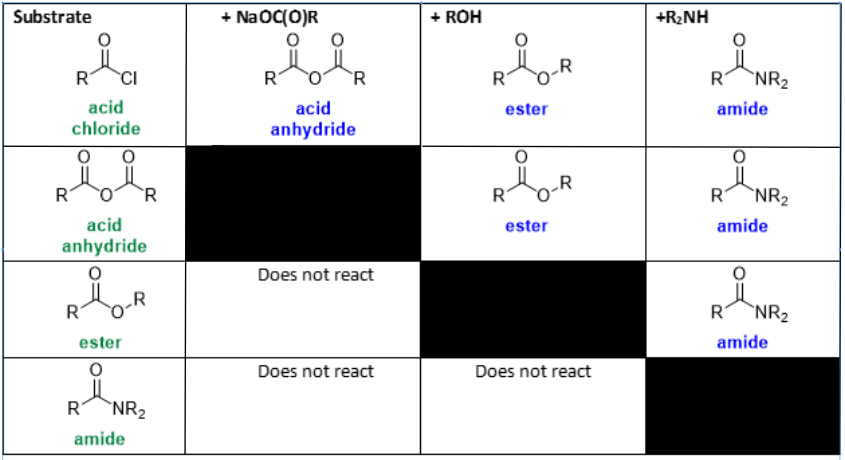
General Reactivity
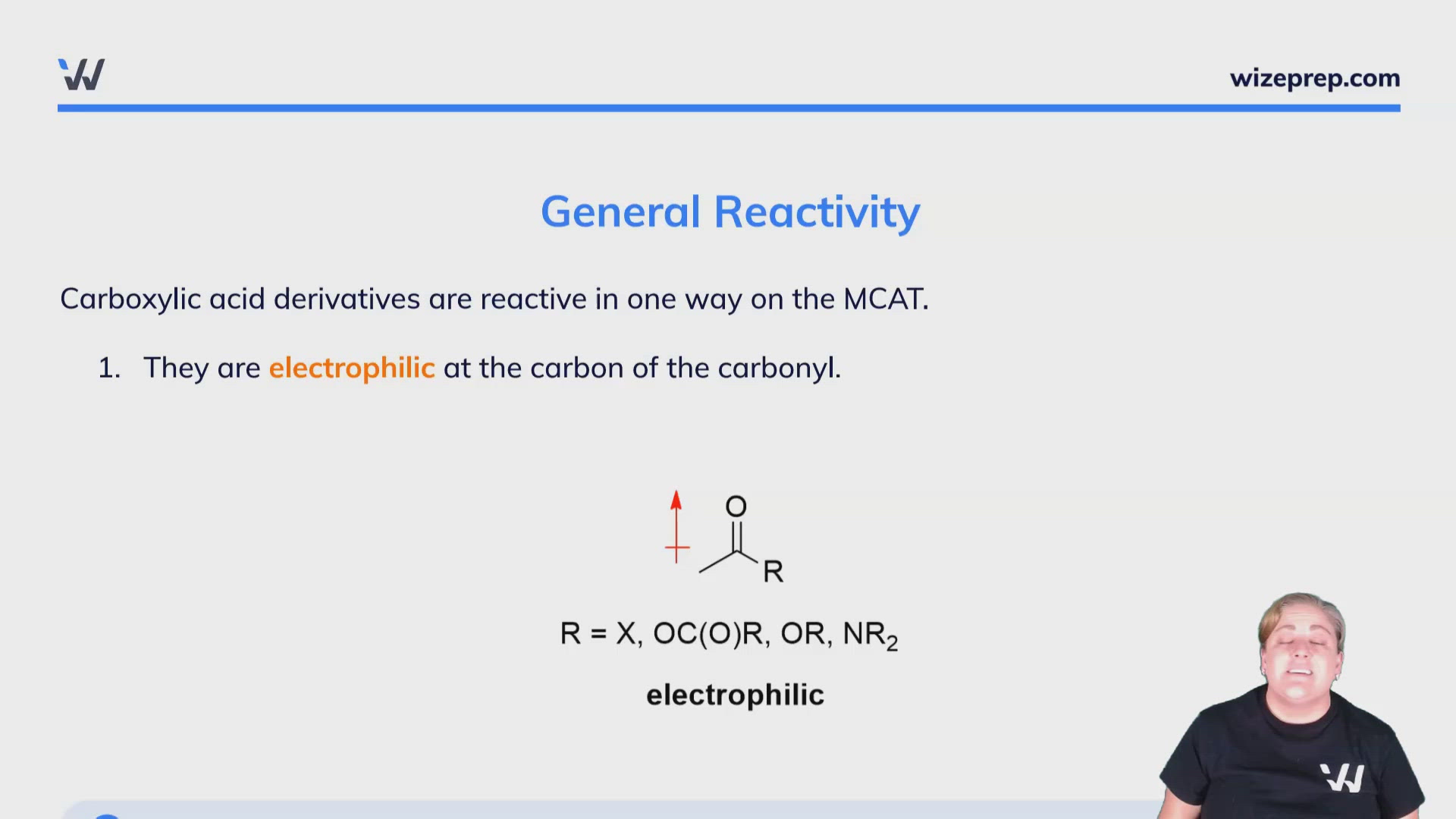
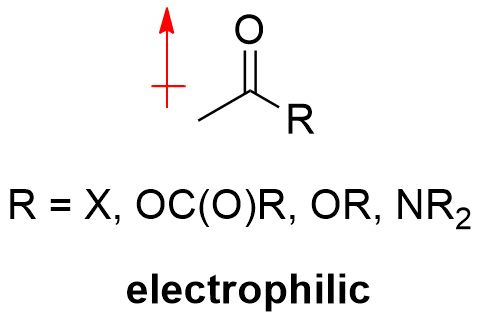
Carboxylic acid derivatives are reactive in one way.
- They are electrophilic at the carbon of the carbonyl.
There are some other (less important!) factors effecting the reactivity of the carboxylic acid derivatives. They are:
- steric effects: the smaller leaving groups (Cl-, in acid chlorides) will depart faster than larger leaving groups (-OC(O)R, in acid anhydrides) leading to greater reactivity
- electronic effects: larger bond dipoles between the carbon of the carbonyl and the leaving group will lead to greater reactivity
- ring strain: cyclic derivatives (lactones which are cyclic esters and lactams which are cyclic amides) react faster than their linear analogues (especially when they are in 3- or 4-membered rings.
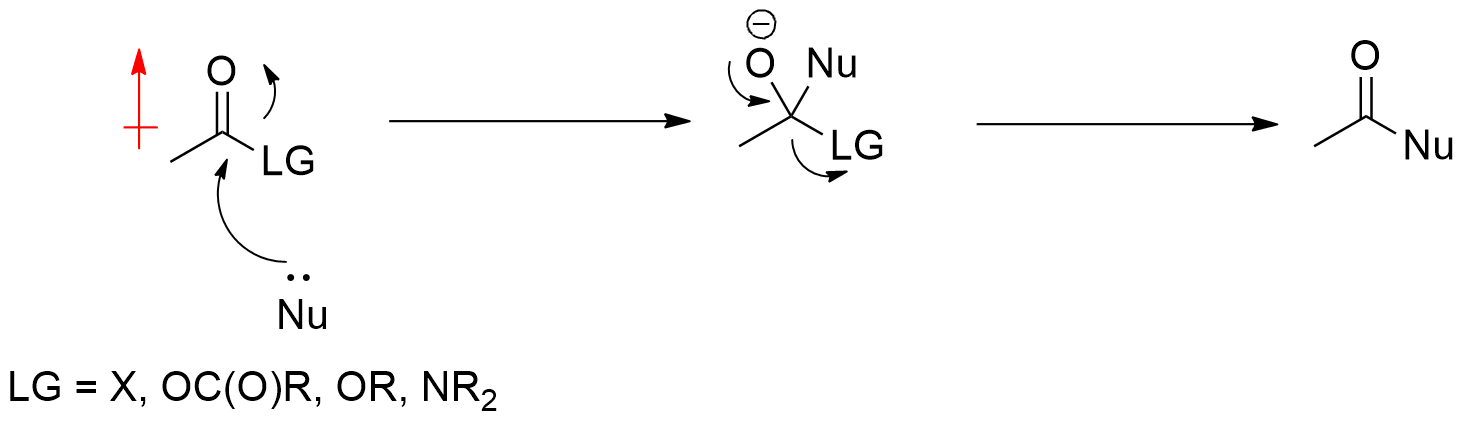
General Mechanism at the Carbonyl
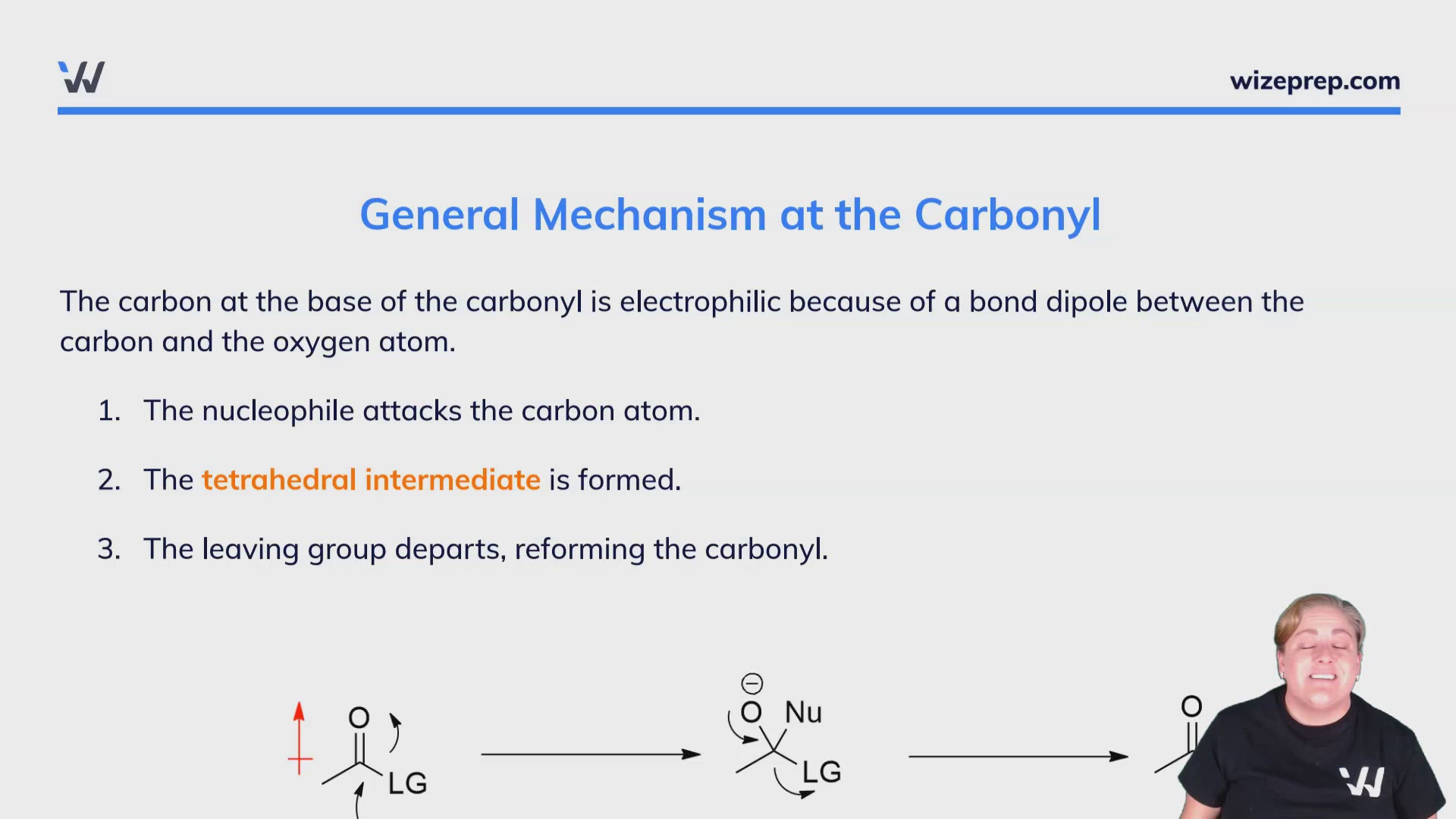
The carbon at the base of the carbonyl is electrophilic because of a bond dipole between the carbon and the oxygen atom.
- The nucleophile attacks the carbon atom.
- The tetrahedral intermediate is formed.
- The leaving group departs, reforming the carbonyl.
Summary Sheet: Carboxylic Acid Derivative Reactivity