Wize University Organic Chemistry Textbook > Carboxylic Acid Derivatives (Nucleophilic Acyl Substitutions)
Carboxylic Acid Derivatives
Popular Courses
MCAT
General Course
CHEM 2213A/B
Western University
Organic Chemistry
University Study Guides
DAT
General Course
Organic Chemistry
General Course
CHEM 233
University of British Columbia
Organic Chemistry
University Study Guides
CHM 1321
University of Ottawa
CHM136H1
University of Toronto
CHEM 231
University of Victoria
CHEM 2223B
Western University
CHM 2120
University of Ottawa
CHEM 263
University of Alberta
CHEM 282
Queen's University
CHY 142
Toronto Metropolitan University
CHEM 222
McGill University
CHEM 353
University of Calgary
CHEM 2E03
McMaster University
CHEM 266
University of Waterloo
CHEM 2OB3
McMaster University
0:00 / 0:00
Nomenclature and Physical Properties
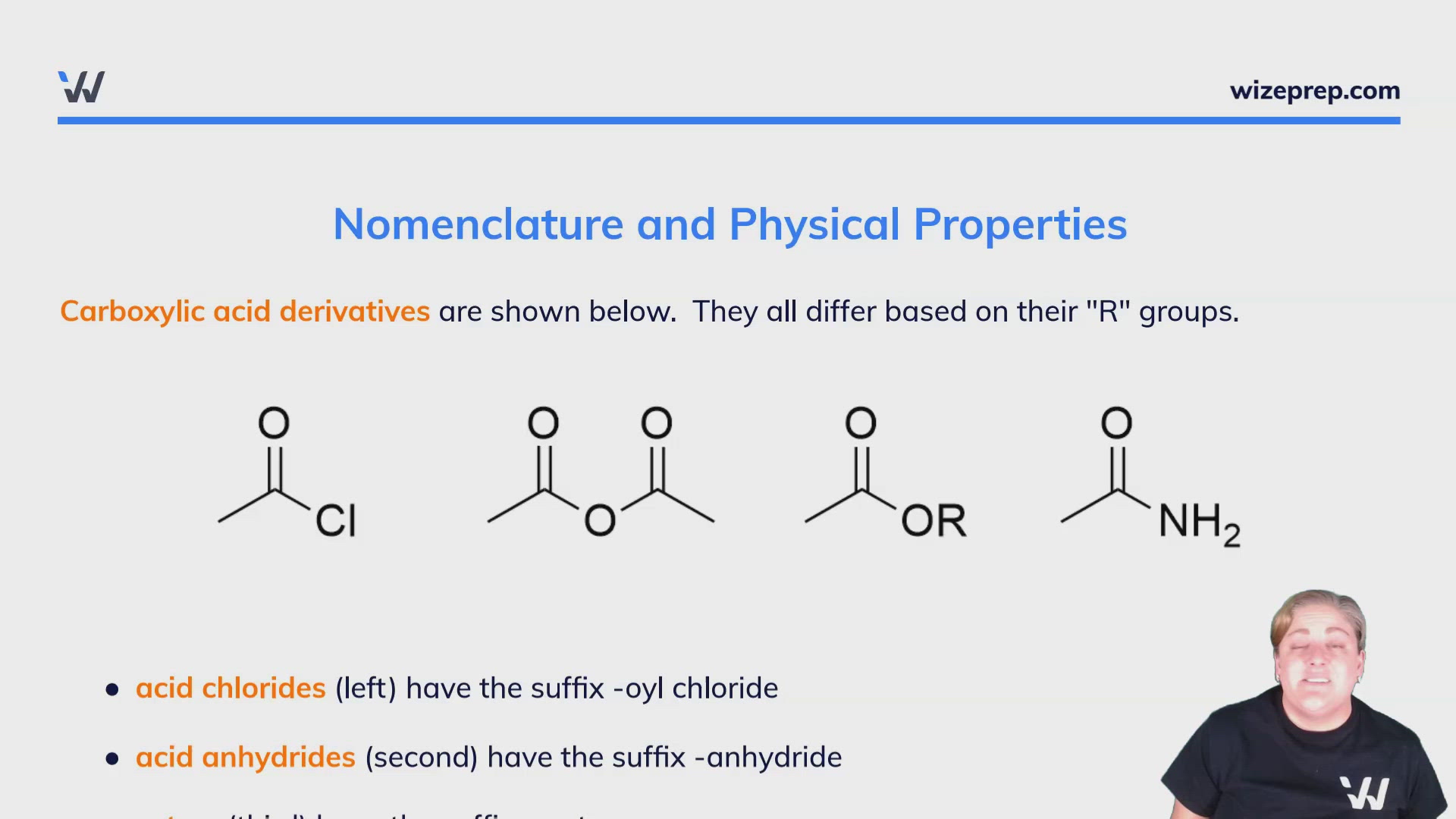
Carboxylic acid derivatives are shown below. They all differ based on their "R" groups.

- acid chlorides (left) have the suffix -oyl chloride
- acid anhydrides (second) have the suffix -anhydride
- esters (third) have the suffix - oate
- amides (right) have the suffix - amide
- amides have hydrogen bond donors and hydrogen bond acceptors
- other carboxylic acid derivatives experience dipole-dipole interactions
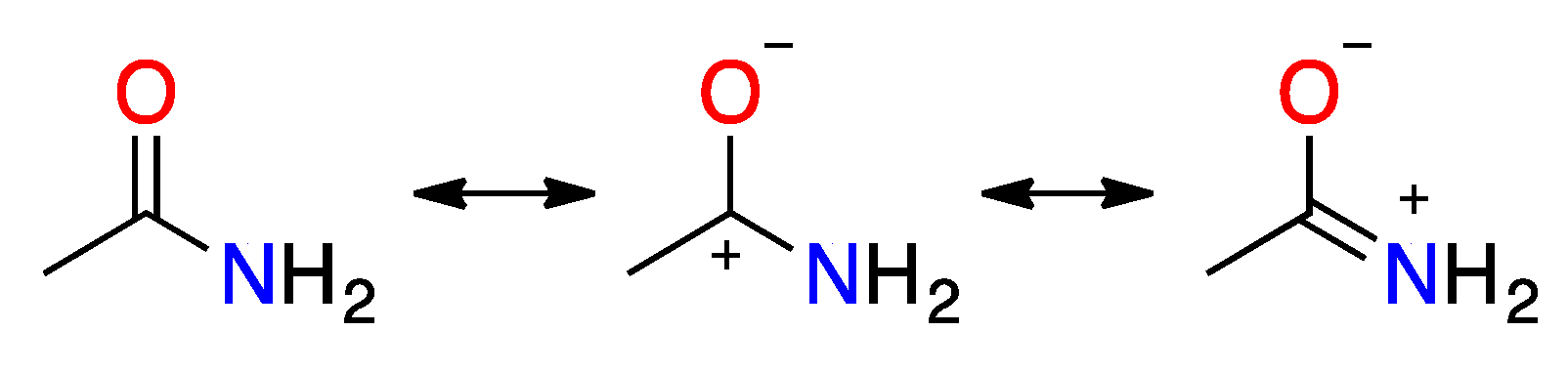
Important Resonance Structure in Amides
Amides have a major resonance structure that changes the hybridization of the nitrogen atom from sp3 to sp2. This also gives double bond character to the carbon-nitrogen bond and makes amides especially stable.
Watch Out!
Beware the hybridization of the nitrogen atom in an amide! It is sp2 due to the this resonance structure.