General Reactions with Oxygen Nucleophiles
Oxygen nucleophiles will be in the form of water (H2O) or alcohols (ROH). These reactions:
- Are reversible as the nucleophiles are weak (i.e. neutral).
- Are acid (H+) catalyzed.
- Proceed through unstable (non-isolable) intermediates called hemi-acetals and hemi-ketals.

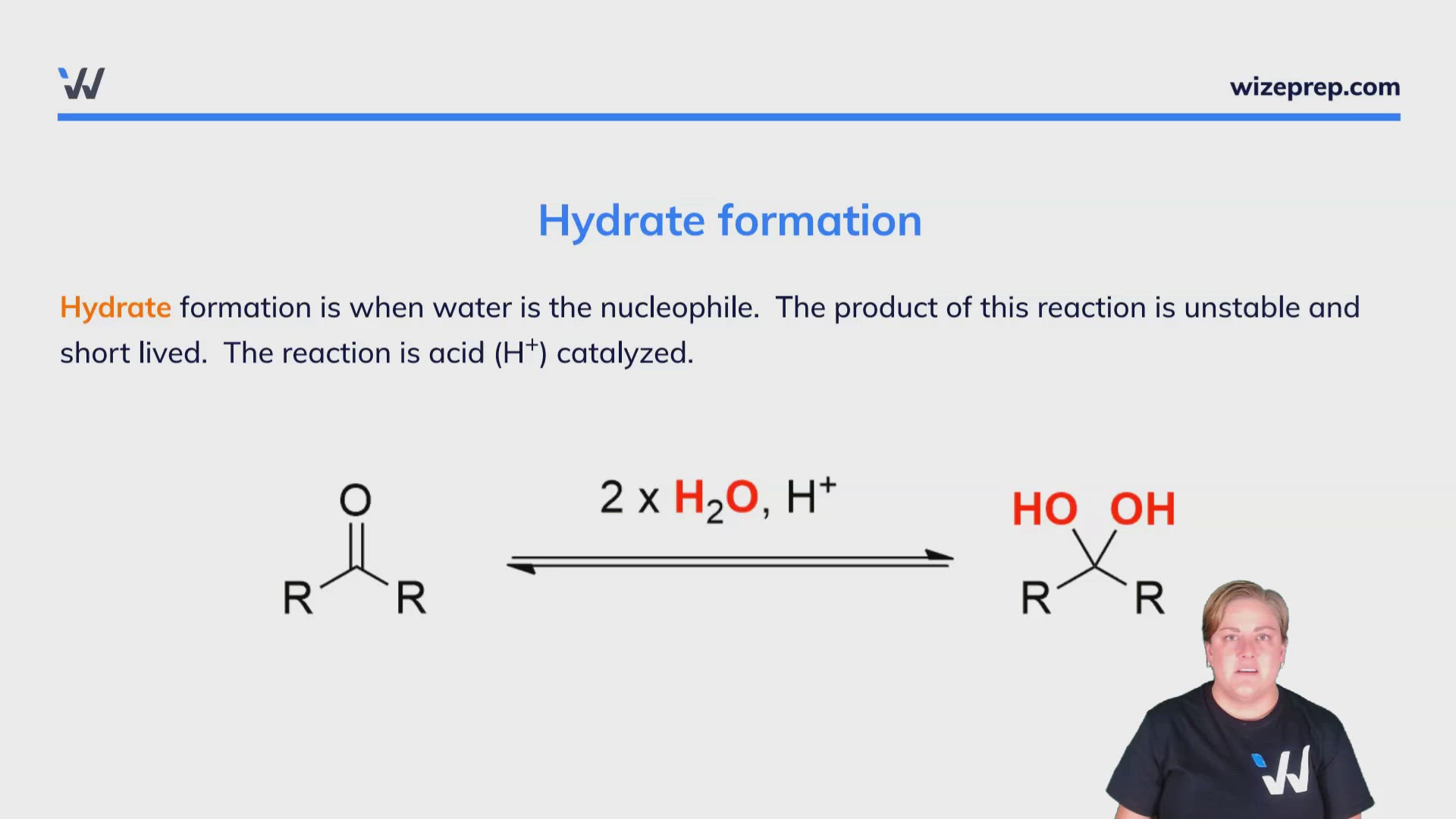
Hydrate formation
Hydrate formation is when water is the nucleophile. The product of this reaction is unstable and short lived. The reaction is acid (H+) catalyzed.

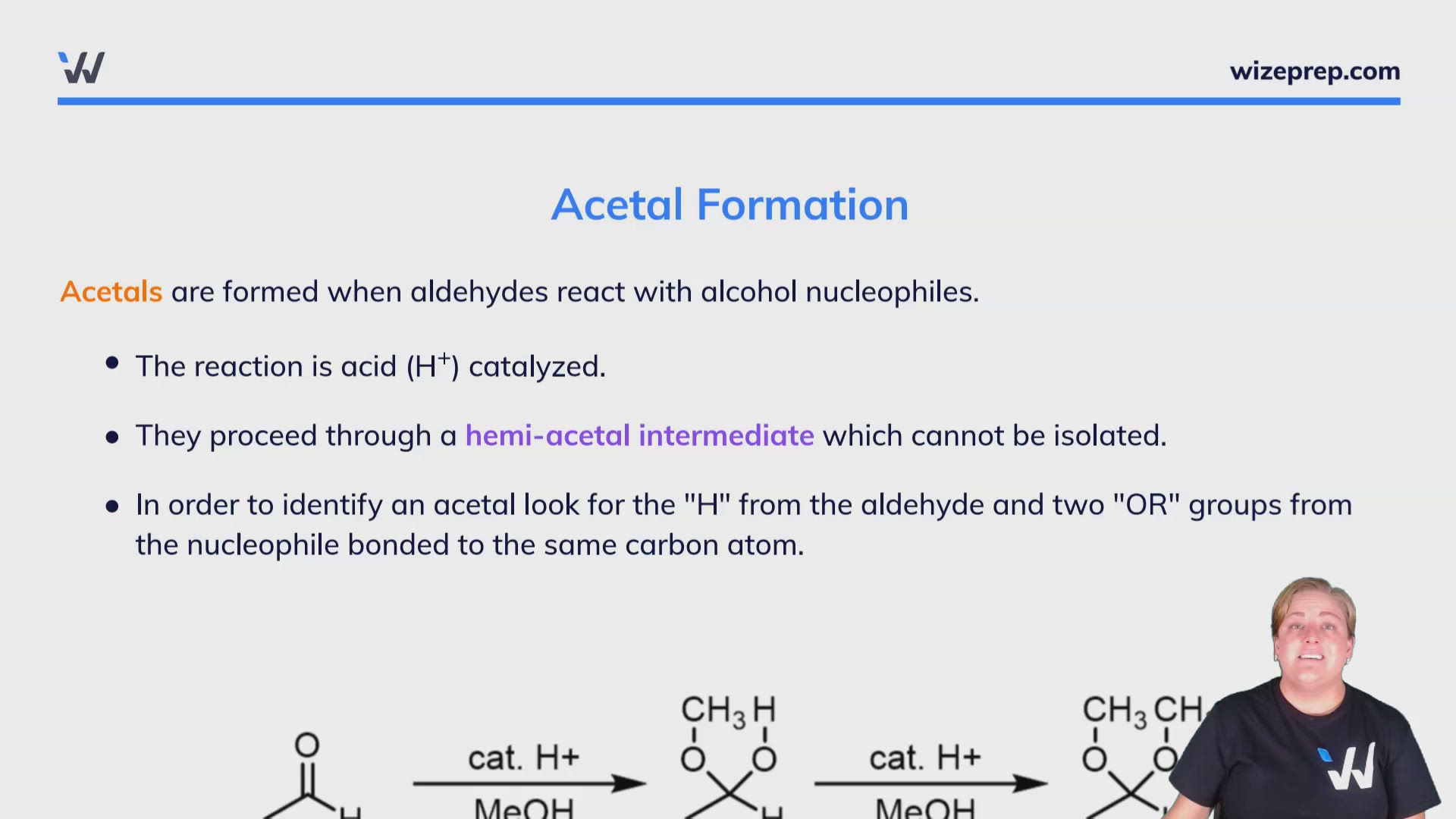
Acetal Formation
Acetals are formed when aldehydes react with alcohol nucleophiles.
- The reaction is acid (H+) catalyzed.
- They proceed through a hemi-acetal intermediate which cannot be isolated.
- In order to identify an acetal look for the "H" from the aldehyde and two "OR" groups from the nucleophile bonded to the same carbon atom.


Ketal Formation
Ketals are formed when ketones react with alcohol nucleophiles.
- The reaction is acid (H+) catalyzed.
- They proceed through a hemi-ketal intermediate which cannot be isolated.
- In order to identify an ketal look for the two "R" groups from the ketone and two "OR" groups from the nucleophile bonded to the same carbon atom.

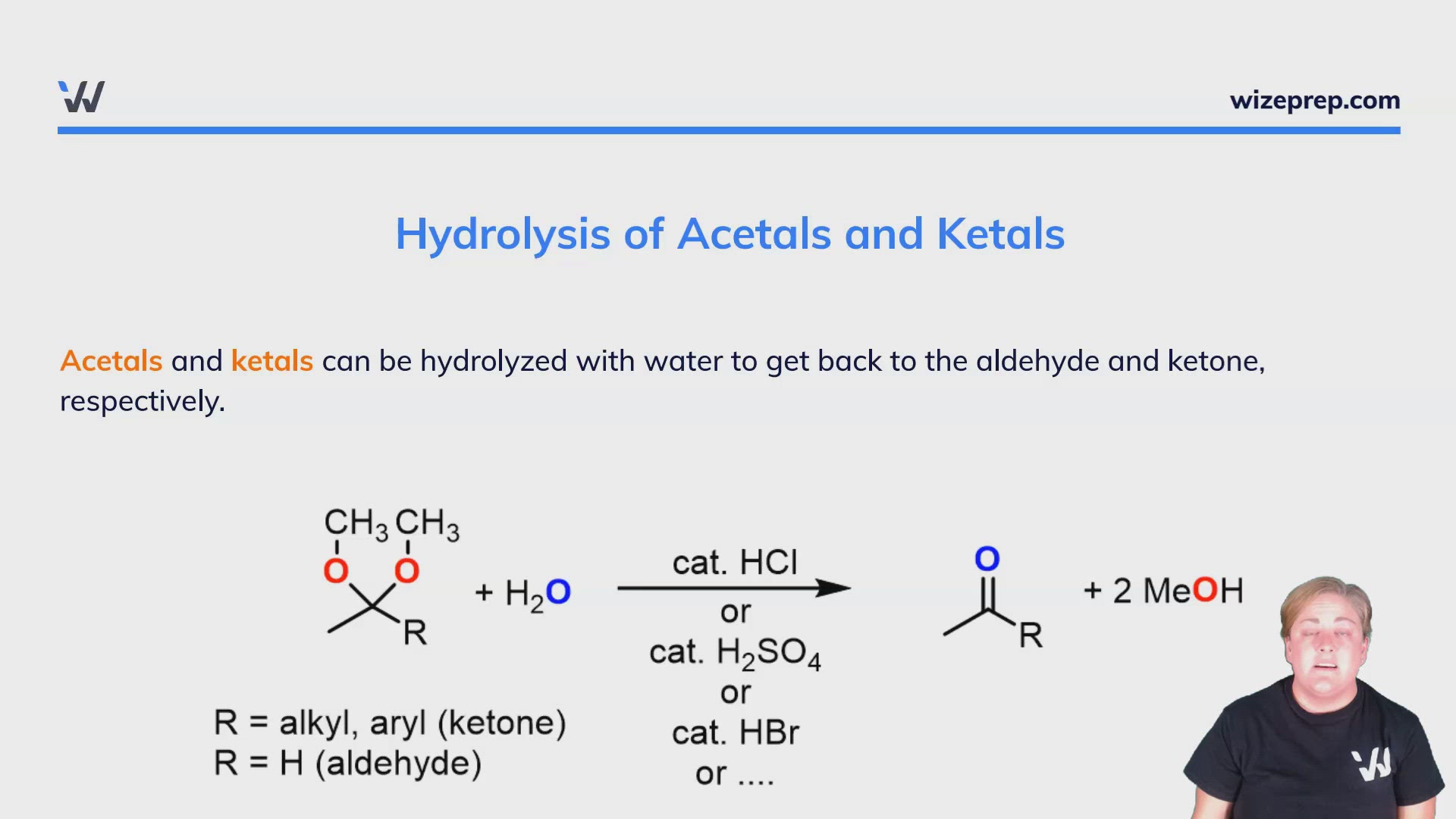
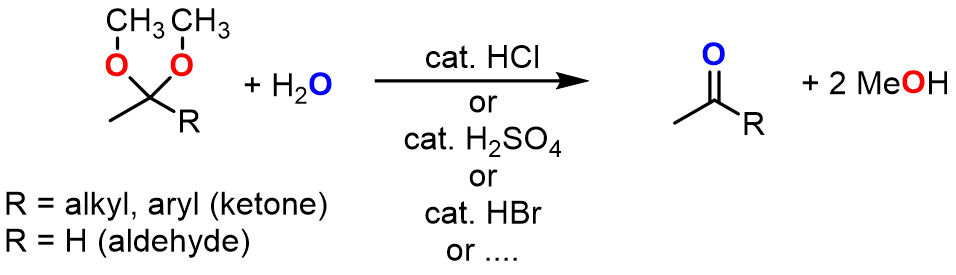
Hydrolysis of Acetals and Ketals
Acetals and ketals can be hydrolyzed with water to get back to the aldehyde and ketone, respectively.
General Mechanisms with Oxygen Nucleophiles
Steps to Reactions with Oxygen Nucleophiles:
- activate the electrophile with an acid catalyst
- attack the carbon of the carbonyl with the oxygen nucleophile
- proton transfer from the -OR group to the -OH group to make it a good leaving group
- intramolecular attack to eject the OH2 leaving group
- attack of a second equivalent of the oxygen nucleophile
- deprotonation of the new -OR group to regenerate the catalyst
Mechanism:

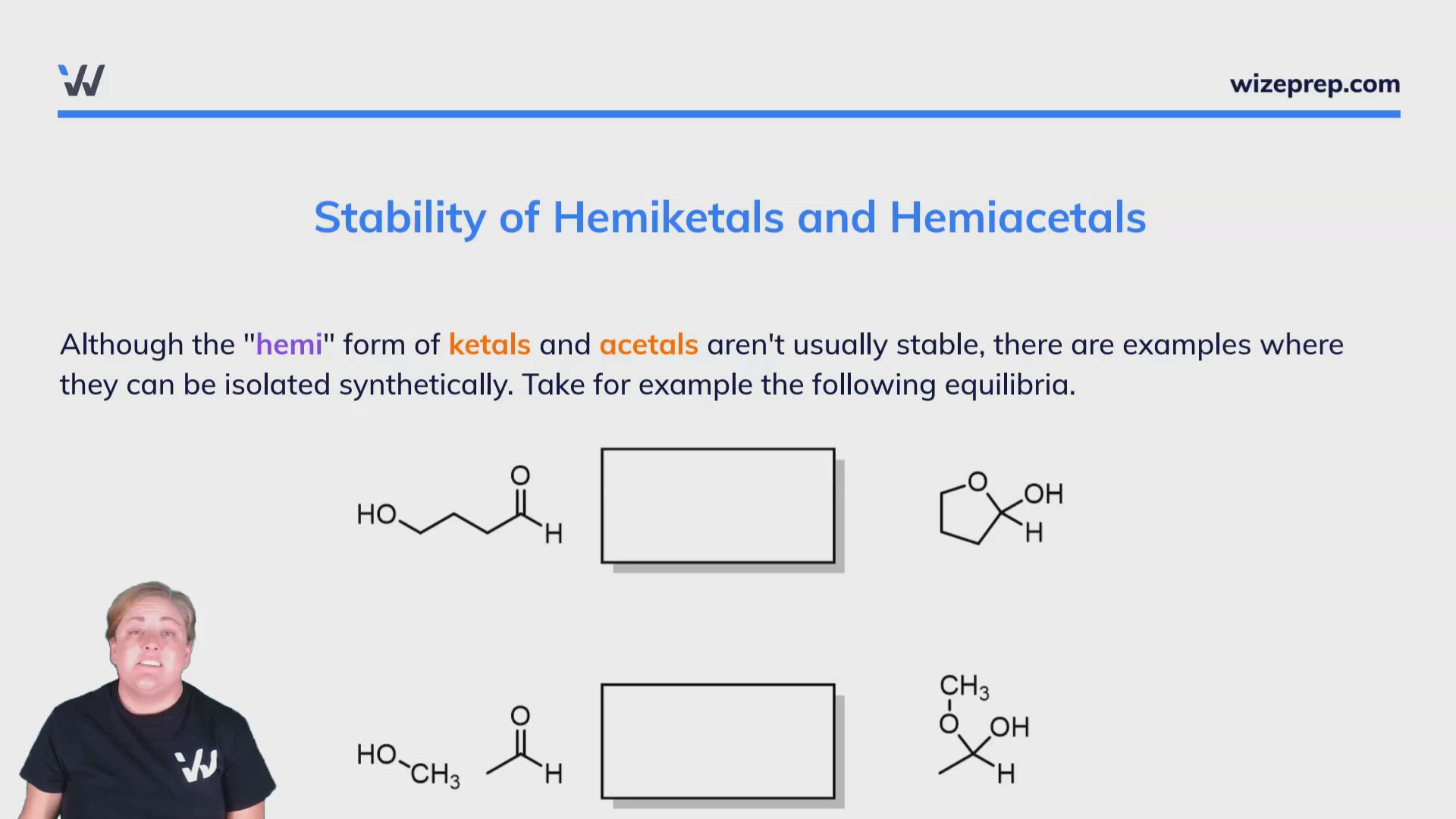
Stability of Hemiketals and Hemiacetals
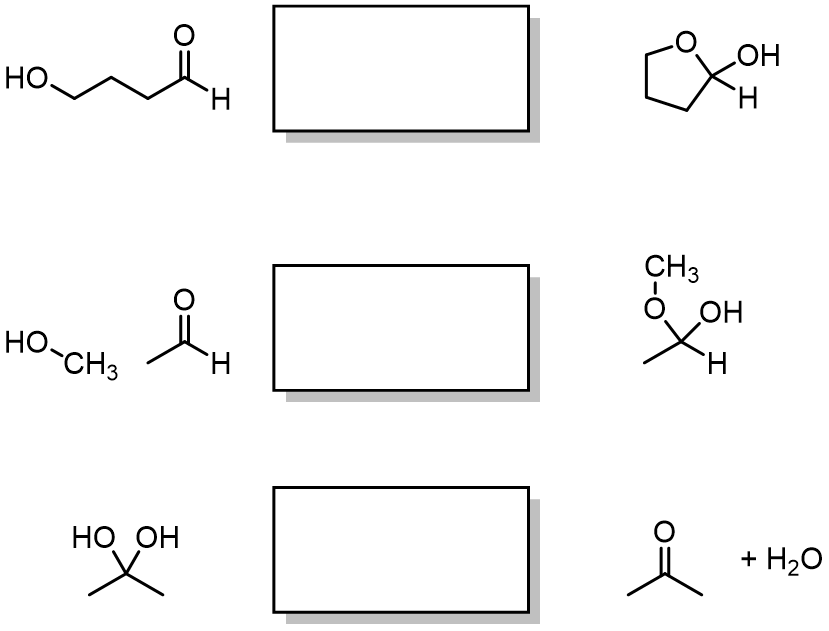
Although the "hemi" form of ketals and acetals aren't usually stable, there are examples where they can be isolated synthetically. Take for example the following equilibria.
Practice: Ketals and Acetals as Protecting Groups
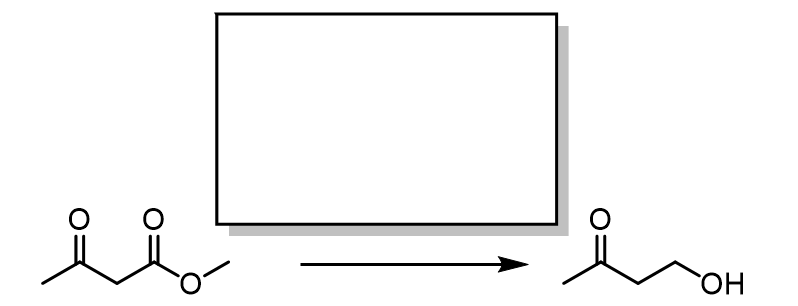
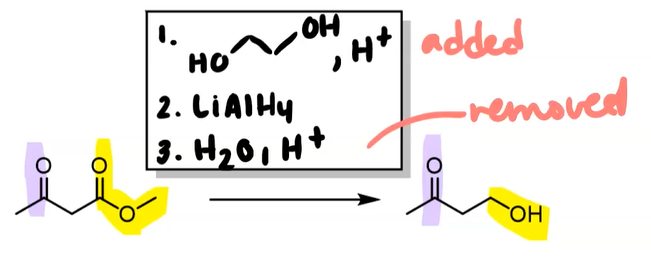
The synthetic application of ketals and acetals is primarily are protecting groups. This is because they are easy to install (ketone, alcohol, acid), easy to remove (ketal, acid, water), and stable under strongly basic and reducing (e.g. NaBH4, LiAlH4) conditions.
With this information in mind, propose a step-wise synthesis for the transformation below.
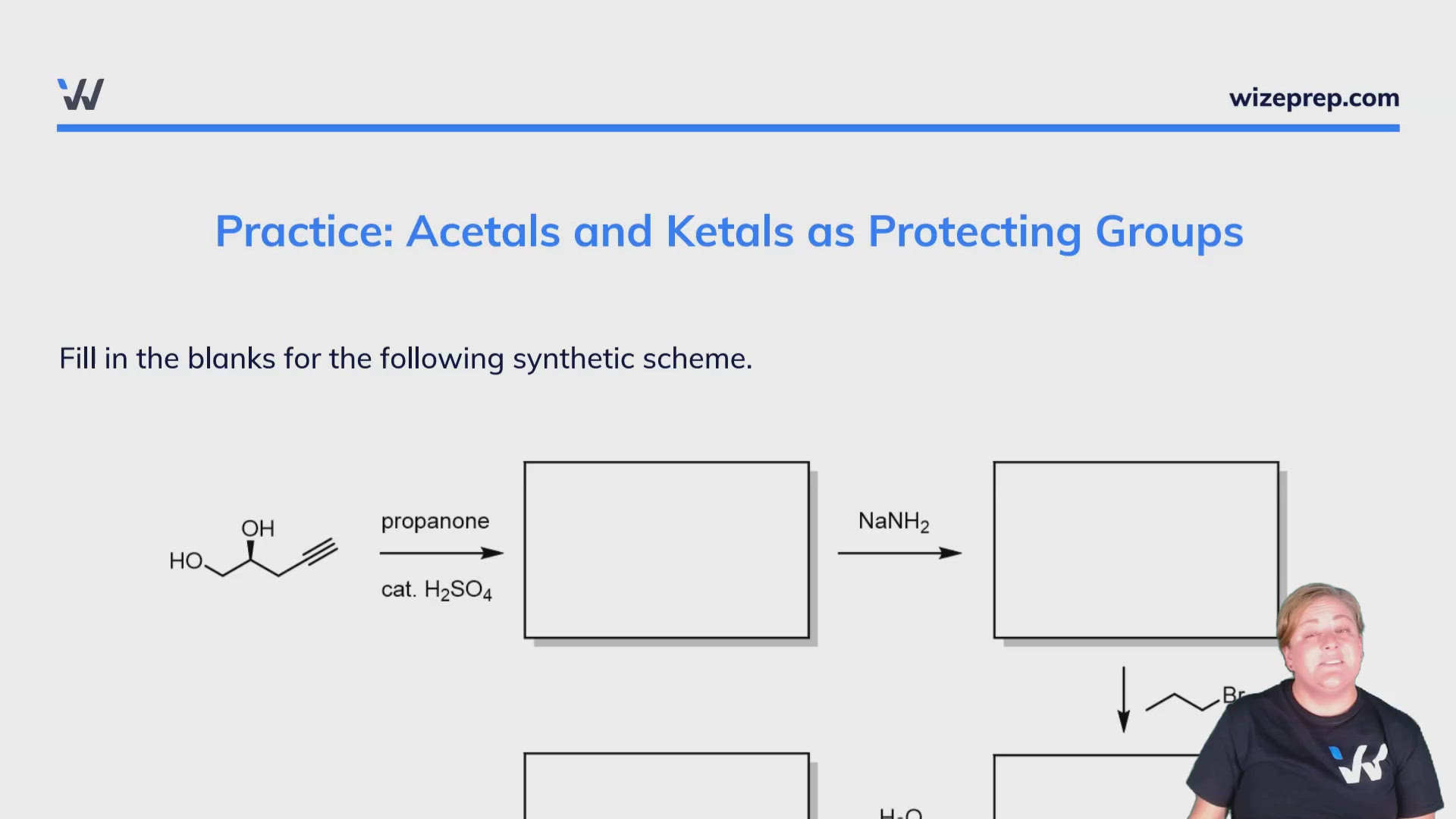
Practice: Acetals and Ketals as Protecting Groups
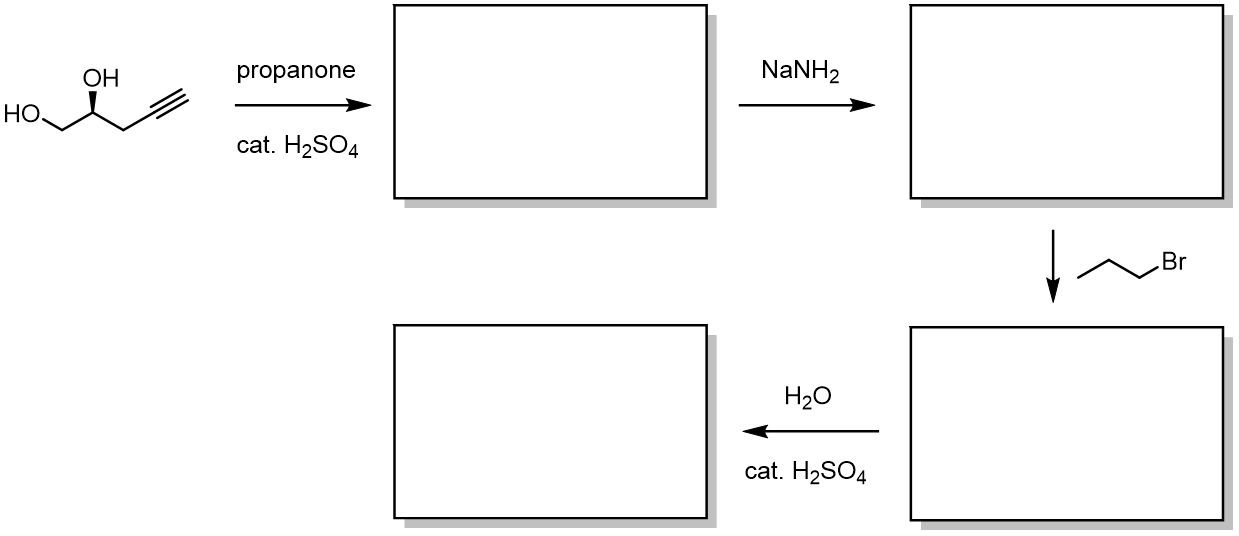
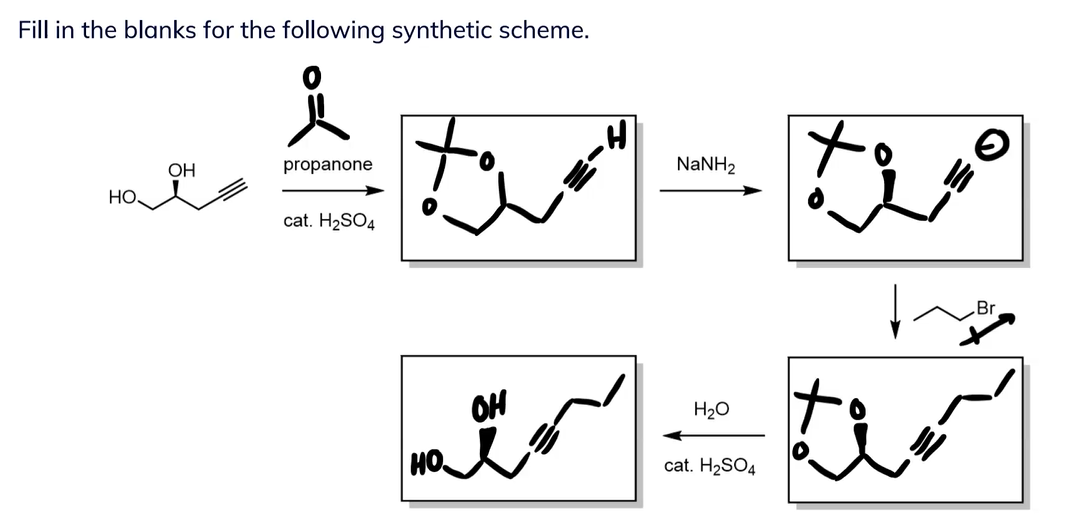
Fill in the blanks for the following synthetic scheme.