
Synthesis and Hydrolysis of Imines
Imines are carbon-nitrogen double bonds.
- They are formed when an aldehyde or ketone is reacted with a primary amine.
- Require an acid (H+) catalyst.
- Are a condensation reaction (proceed with the loss of water).
- Proceed through an unstable hemiaminal intermediate.

Example: predict the starting material for each of the following imines

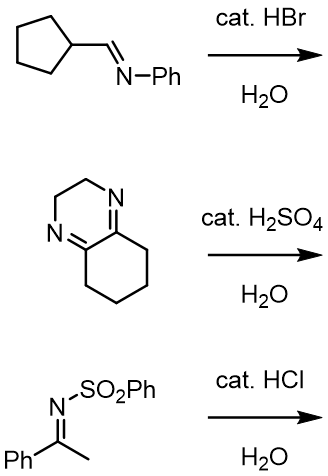
The hydrolysis (addition of water) of an imine can be achieved by heating an imine with water with an acid catalyst.

Example: predict the product of the following hydrolysis reactions
Synthesis of Enamines
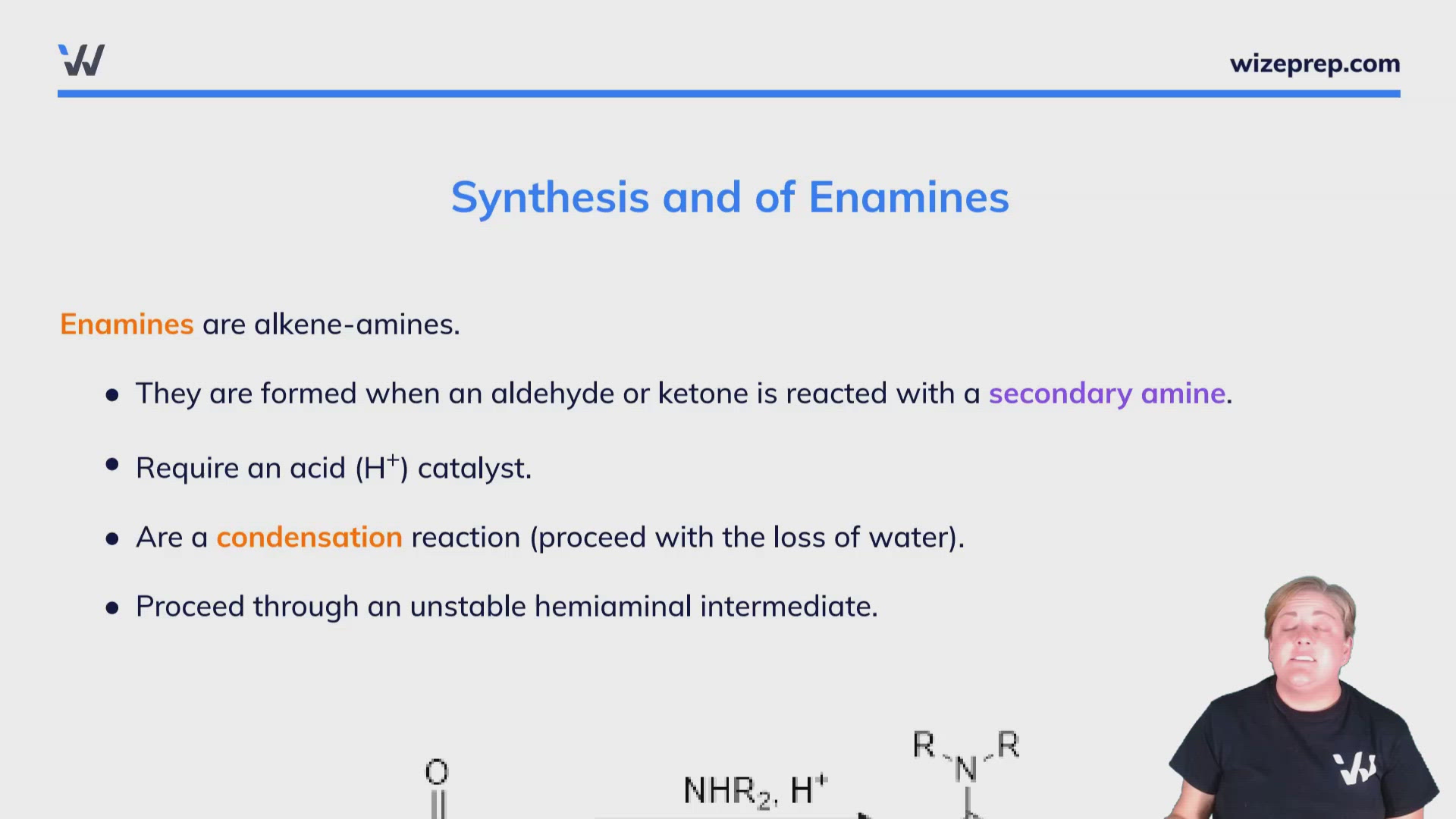
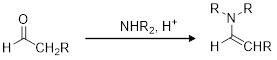
Enamines are alkene-amines.
- They are formed when an aldehyde or ketone is reacted with a secondary amine.
- Require an acid (H+) catalyst.
- Are a condensation reaction (proceed with the loss of water).
- Proceed through an unstable hemiaminal intermediate.
Mechanism for Imine Formation
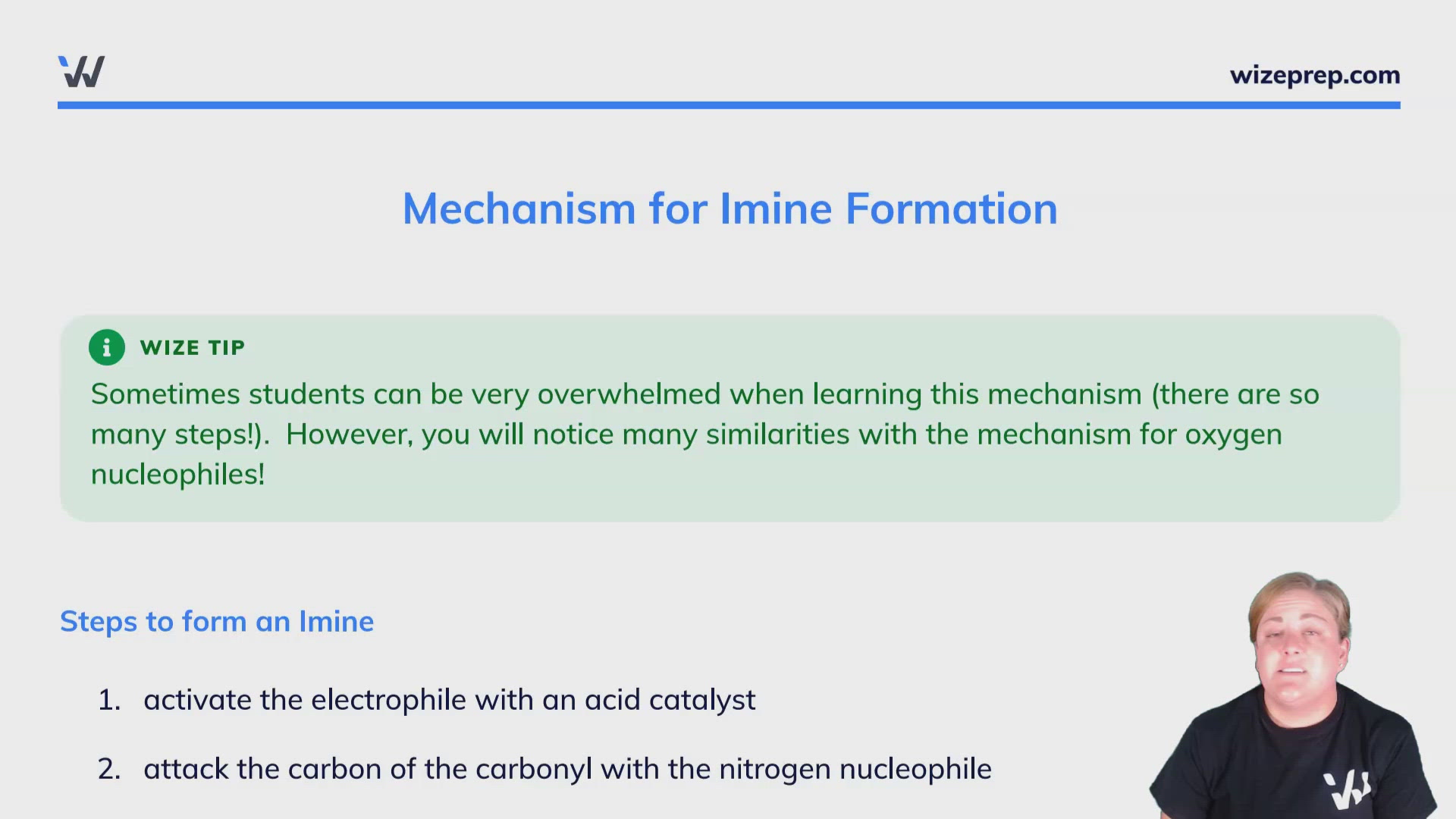
Steps to form an Imine
- activate the electrophile with an acid catalyst
- attack the carbon of the carbonyl with the nitrogen nucleophile
- proton transfer from the -NR2 group to the -OH group to make it a good leaving group
- intramolecular attack to eject the OH2 leaving group
- deprotonation of the nitrogen atom to give the resultant imine

Reductive Amination
A reductive amination is a special kind of two step reaction. The two steps are:
- formation of an imine from a carbonyl with a primary amine
- reduction of the imine into an amine using sodium borohydride (NaBH4)
